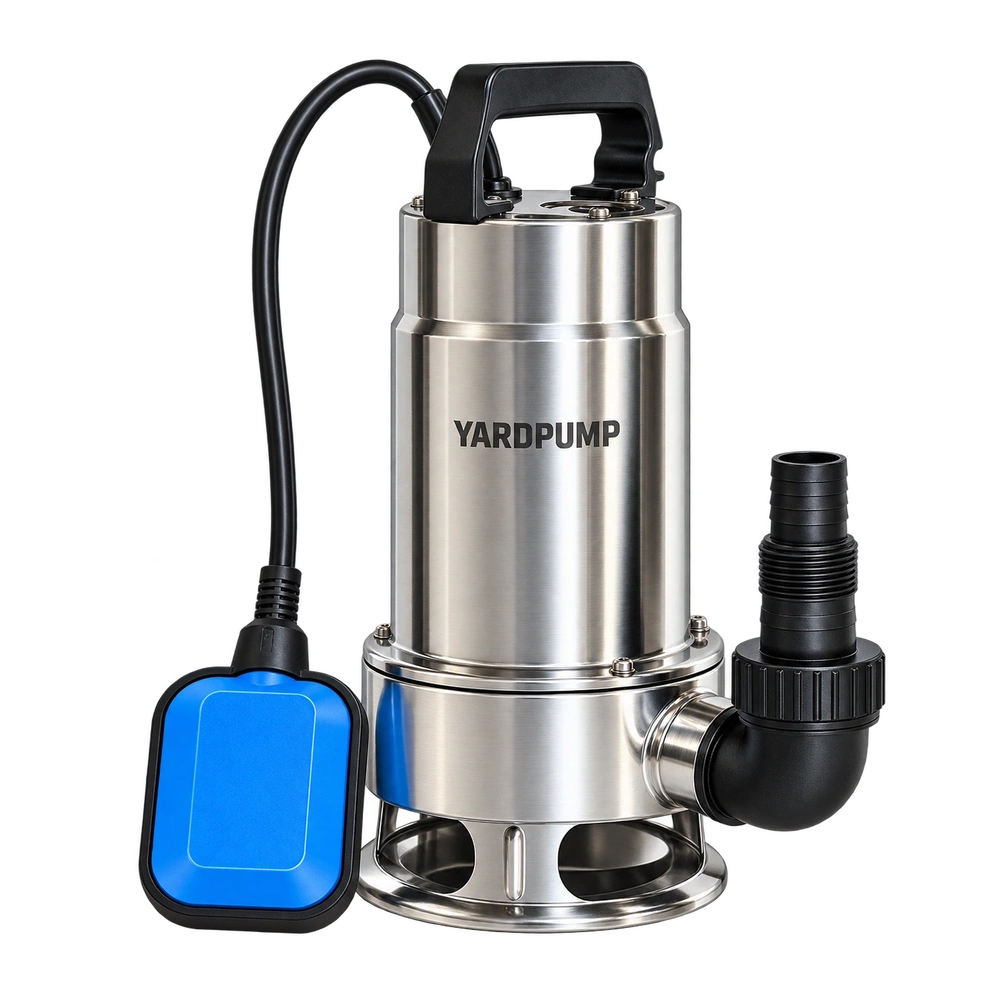
Imagine a purchase order specifies a 10 microfarad run capacitor for a submersible pump. The supplier delivers parts marked 10 microfarads, but the tolerance has changed from five percent to ten percent. Can they be received as equivalent? Check the approved part and the range covered by the motor validation. The two versions share a nominal value but allow different upper and lower values. One reading close to ten does not establish that the replacement lot meets the original requirement.
Separate the nominal value from its allowed range
The marked tolerance describes the capacitor version’s stated range. The purchase specification describes what the buyer accepts. They can match, or the purchase window may be narrower because of the validated design, but that distinction should be agreed before delivery. For illustration, 10 microfarads plus or minus five percent spans 9.5 to 10.5. Plus or minus ten percent spans 9.0 to 11.0. An illustrative part measuring 10.7 could be within the wider marking while outside the original window. This is not a recommended capacitance or tolerance for a pump model.
In a single-phase motor, the run capacitor is part of the auxiliary circuit. Capacitance can affect current and phase relationships, which in turn can affect starting margin or heating. The response depends on the winding, supply and load. A change in one direction does not always make the motor run better or worse. Verify AC voltage rating, temperature, construction, terminals and the approved series separately; capacitance alone cannot replace those checks.
Make identity and measured values traceable
Check the part number, markings, batch, packaging and released specification. A supplier statement should cover the delivered lot and its allowed range. A catalogue page for the same family may not do that. Define sampling and the decision rule at the limits, including measurement temperature, instrument mode, frequency and uncertainty. Use the approved equipment and record actual results. “Around ten” is not useful at the boundary. Follow the agreed retest rule for borderline results; extra digits on a display are not proof of accuracy.
Capacitors can retain energy. Only qualified personnel should remove them from pumps, disconnect terminals or test parts after the required isolation and safe handling of stored energy. Use unattached incoming samples when suitable. A reading from an unknown assembled circuit may include other components. Do not measure in a live installation or reinstall an unknown capacitor as a substitute.
Know when the pump needs further validation
If the delivered revision and tolerance are already within approval, follow the established incoming rules. If the supplier wants to widen the range, review it as a change before release. Under an approved test plan, engineering can compare representative parts near the low and high boundaries at matching voltage, frequency and hydraulic conditions. Starting, auxiliary current, protective behaviour and temperature rise may all matter. A single capacitor at the nominal centre does not validate either newly permitted edge.
The order can state the manufacturer's marked tolerance and the buyer's incoming window as separate fields. It can also identify changes that need approval. Even if several samples fall inside the old limits, that does not automatically qualify a wider, unapproved version. The decision covers the variation the buyer accepts, as well as the numbers recorded on the inspection bench.
Record the marking and the measured value in separate fields. A printing mistake, mixed lot and measurement issue each call for a different investigation.
Frequently asked questions
Can a reading of exactly ten microfarads qualify a wider-tolerance lot?
No. An individual reading does not establish the allowed range of the version. Check approval, lot identity and the agreed sampling decision.
Does a capacitance pass establish that the part will not overheat?
No. Operating voltage, losses, temperature and mounting also matter. Verify thermal behaviour under the appropriate conditions.
Can the buyer specify a narrower window than the marking?
Yes, by agreement. Define the method, decision rule and supplier screening before shipment rather than changing the requirement after inspection.