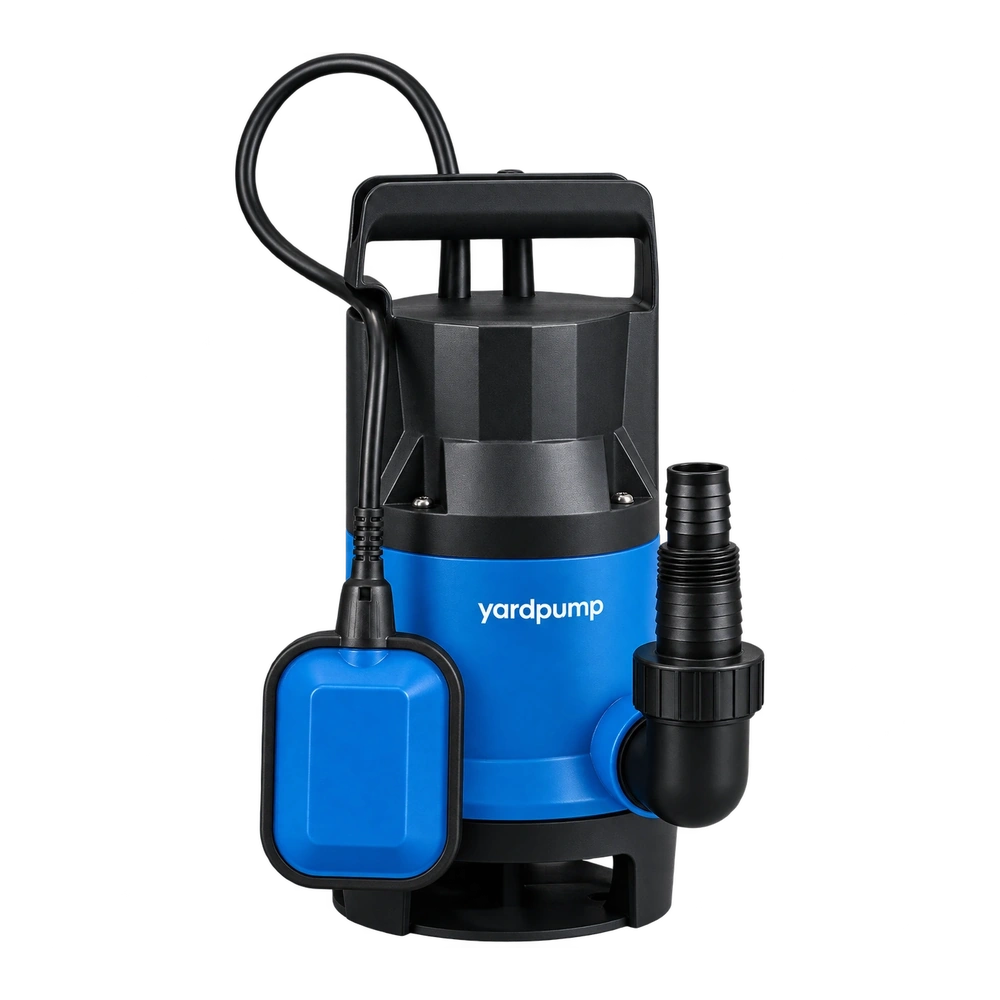
Suppose a private-label drainage pump ships with a stepped hose tail. A distributor fits a hose marked one inch, but delivery at the outlet is weaker than expected. Inspect the narrowest internal opening and confirm the as-shipped state of the adapter. Check which step is intended to take the hose and whether any smaller section may be removed under the approved instructions. Fitting over the largest outside step does not establish that the entire water path has the same internal diameter.
Three different dimensions can share the same label
The threaded or sealing part connects to the pump. The outside of the barb fits a hose. The smallest opening inside governs the section that water passes through. A drawing that simply says one inch can leave all three ambiguous. An internal shoulder, thread root area or smaller step left in place can make the passage narrower than the largest outside barb suggests.
Ask for a section drawing, supported hose inside diameters, clamp positions, the minimum through bore and the condition in which the adapter is packed. Distinguish a removable insert, a fitting that may be trimmed at an approved mark and a fitting that cannot be modified. If the documentation does not establish which design you have, assess it as supplied. Cutting arbitrarily may damage the structure, sealing surface or usable clamp engagement. The appropriate method can differ even when two fittings look alike.
Measure the delivered arrangement
Use a suitable gauge at the location agreed on the drawing. Do not force a gauge through a flexible opening or measure only the easy-to-reach end. When trimming is part of the approved design, have the supplier or qualified staff prepare a controlled example and check the edge, retention and clamp length. Test a non-modifiable fitting unchanged. Then use the delivered adapter, hose, clamp and a representative outlet elevation for the wet test. Record flow and joint leakage separately. Meeting the bore dimension narrows the diagnosis; it does not replace delivered-flow or connection acceptance.
As an illustration, the same 30 litres per minute would have mean velocities of about 2.49 m/s through a 16 mm internal section and 1.02 m/s through a 25 mm section. Greater velocity can make local losses more consequential, but geometry and the rest of the system determine the final operating point. These numbers do not predict how much flow a particular pump will lose. They show why a purchase specification should identify the actual bore and the delivered configuration, not just a hose marking.
Make the assembly part of the purchase record
Request competing quotes against the same hose, fitting state and target duty. Agree on the dimension, where to measure it, the permitted assembly and the acceptance condition. Use pack-out photos to check which adapter actually ships. For a weak-flow complaint, collect photos of both ends of the supplied fitting and the hose marking. Compare the same pump at similar water level and outlet elevation with the approved arrangements. A controlled comparison can distinguish a narrow adapter from a small hose or a pump issue. It is more informative than replacing the complete pump before looking at the kit.
A practical receiving sheet uses one section drawing to identify the thread, clamping step, minimum bore and measuring point. If a universal kit and a factory-prepared larger kit are both offered, list their part numbers and acceptance conditions separately. Also check the instruction sheet against the actual contents. A sheet that calls for a larger hose paired with a kit that cannot provide the agreed bore is a package discrepancy, even if the bare pump meets its curve.
Frequently asked questions
If a one-inch hose fits, is the bore necessarily large enough?
No. The outside diameter used to fit the hose and the minimum inside passage are different dimensions.
Should I cut away every unused step?
Only if the documentation for that exact adapter allows it, and then at the specified position using the approved method.
Why test the kit if the pump passed a wet test?
A bare outlet and a packed adapter with a real hose give different operating conditions. The buyer needs evidence for the combination that will be used.