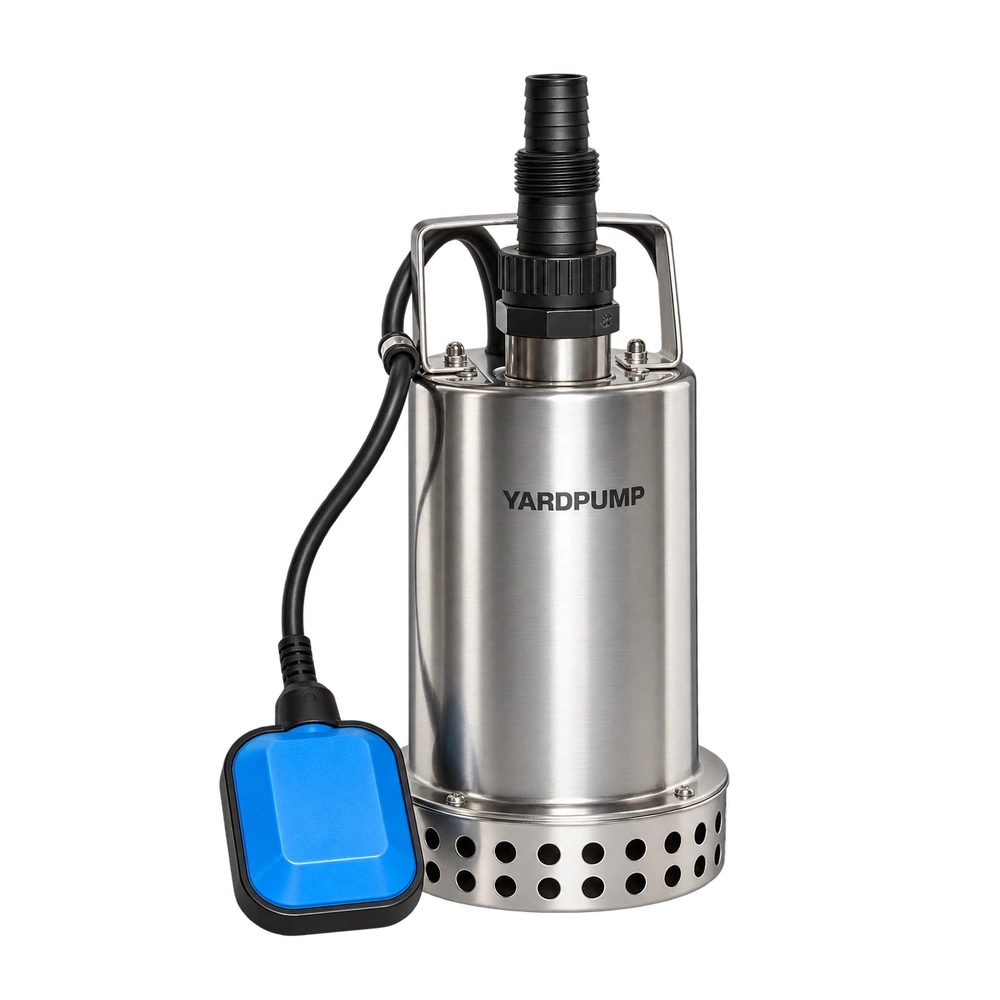
After replacing a sump pump, the installer secures the extra cord along the discharge riser. The arrangement looks neat and the float moves by hand. Check two other things: whether a tie, cover edge or cable exit is squeezing or pulling the cord, and whether any slack can enter the float's travel once the pit fills and the pipes move. The supports are for routing the cord. The cord is not meant to hold the pump in place or pull the piping into alignment.
Identify the cables before securing them
Some pumps have a single power cord and an integral float. A separate float or high-water alarm can add more cords to the basin. Identify each by the model instructions and markings. Color does not identify its function. Some pump instructions allow the power cord to be attached to the discharge riser to keep it clear of the float. Use the specified supports, positions and cover fittings for the actual installation. Routing the power cord is separate from setting the active tether length for a float. Do not gather different cords in a bundle without checking their functions.
Inspect or change routing only with the equipment isolated and protected against automatic restart. If electrical equipment or access is flooded, stay out and have qualified personnel act from a safe location. Keep the pump isolated if the sheath has cuts, significant crushing, exposed conductors or a protective device has operated. Have authorized service assess it. Do not wrap damaged cord with tape and put it back in the water, make an improvised splice through a sealed entry, or lift the pump by its cord.
Inspect support points, slack and the cover
Follow the route from the pump entry to the plug and record the tie points, bends, cover penetrations and any contact points. A suitable support keeps the cord in place without a tight bend, flattened jacket, sharp edge or pull at the entry. Check around riser couplings, bracket edges and any spot hidden by the cover. A mark left by an old tie deserves inspection after isolation; removing the tie does not establish that the cable is sound. If the cover pinches it or an approved pass-through is missing, loosening a tie farther down will not address the contact.
Leave enough slack for installation and approved servicing without pulling an entry or connector. Avoid a loop that moves into the float's travel as water rises or the piping shifts. Use the actual cover, elbow, float and cords when reviewing the isolated installation. Check the area the float sweeps through as it rises, drops or swings. An open-cover test with the float lifted by hand does not reproduce that space. For a separate float tether, check its specified anchor and active length. Do not shorten its travel by pulling the loose cable tight to change the operating levels.
Verify the installation with the cover in place
In an illustrative case, a dry inspection with the cover fitted shows a 15 mm gap from the cord to the edge of the float. A loose loop nearby can shift about 20 mm. There is no contact at rest, but the loop could enter the travel area if it moves toward the float. Correct the route as allowed and check again. Those example distances are not clearances for any model. Record routing, observed start and stop levels and evidence of contact, rather than signing off one dry dimension.
For installation acceptance, use the agreed supports and cover fittings for the cables. Have the installer carry out the specified wet start and stop check with the installation closed as designed and in conditions safe for observation. Record the switching levels, any shift at the attachments and whether the cover pulls the cord. Isolate again if changes are needed. If the pump and separate float come from different suppliers, record the approved versions and compatibility. Clear float travel does not release a damaged cord for service.
Frequently asked questions
Can the ties be very tight if the float is clear?
No. The supports also need to avoid crushing and sharp bends and leave room for approved service. Use the fastening arrangement specified for the equipment.
Can I tie the moving float cable to the power cord?
Identify the part that has to move first. Bundling the cords can change the float travel. Use its proper anchor and active tether length.
Why repeat checks with the cover fitted?
The cover, pass-through and riser can change the cord's route. Moving the float with the cover open cannot show whether the final arrangement pulls the cord or blocks the float.