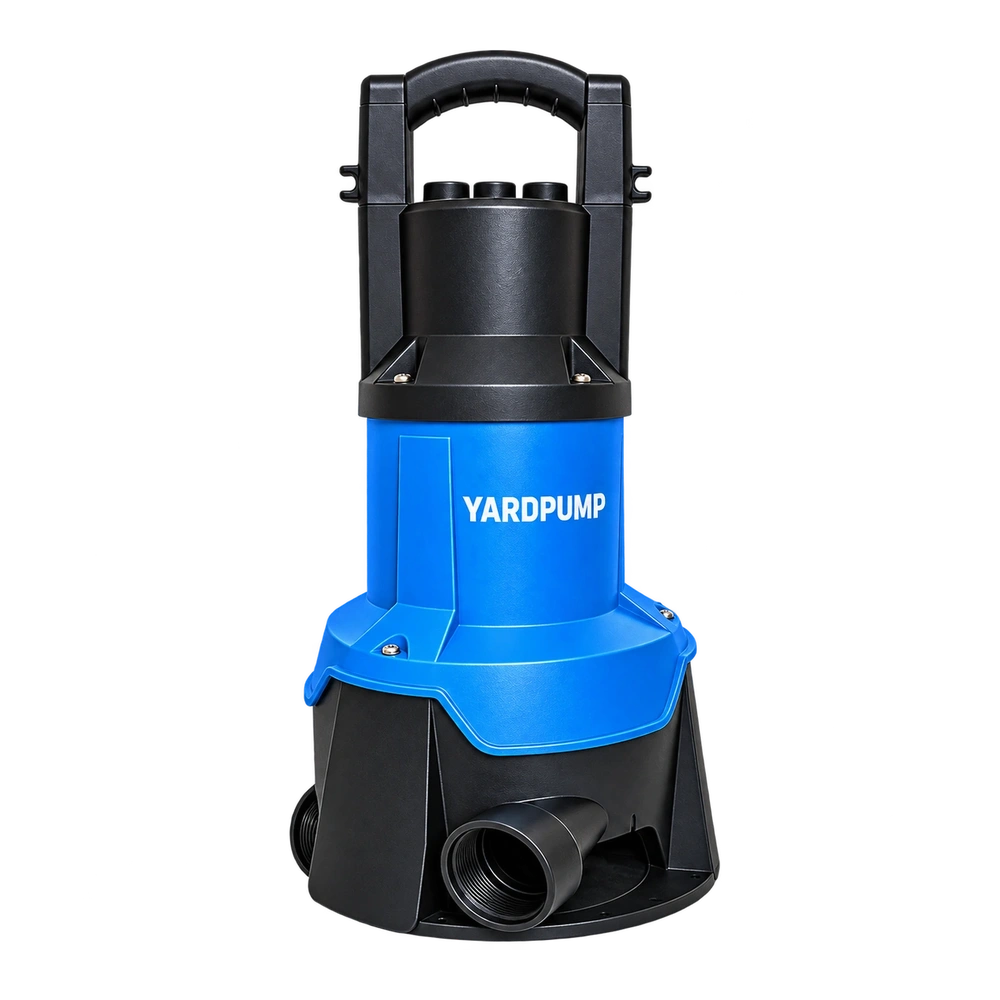
Suppose a basement sump has two automatic drainage pumps. An installer runs each by itself and checks off both pumps on the commissioning sheet. That tells you each pump can be commanded to run. It does not establish that the next normal rise will call the other pump. Verify alternation with two complete, comparable water-level cycles. Prove high-level assistance and the alarm separately, using the approved controls and test procedure. Those are different events, even when one control panel handles them all.
What the second pump is there to do
A fixed duty and standby pair may use the same lead pump for most cycles. An alternating controller gives each pump a turn to start first. A lag pump starts at a higher level to assist or take over as the system is designed. Two independent tethered floats at different heights can provide staged starts, but putting those pumps in the same pit does not by itself make them alternate. A label saying duplex does not tell the buyer whether a high-level alarm, alternation or common-discharge operation is included.
Start with the approved drawing or controller manual. Write down the stop, lead start, lag start and alarm events and what calls each of them. Confirm which features the equipment actually supports. Where pumps share a discharge, the two installed flow rates depend on the common pipe and individual pump curves; two catalogue maximum flows do not add up to the available delivery. Confirm the safe discharge route and whether the alarm has an independent warning function if one pump is isolated for service.
Repeat the same rise, from the same starting state
A qualified installer should first confirm the power arrangement, check valves, float travel and an approved route for the test water. Label the pumps A and B. With safe access, refill from the normal stop level according to the controller instructions. Record the first pump called, the water level at start, evidence of steady discharge and the level where it stops. Allow the cycle and any specified delay to finish. Repeat from the same starting state. Do not reach into an energized sump to move a float or bridge a protective circuit to create a test condition.
If A leads the first cycle and B the second and both deliver water, the result demonstrates much more than two running lights. If A leads both, check whether the control is in manual or fixed duty mode, whether the first cycle completed and when that controller changes lead assignment. Some designs use logic other than changing after every cycle. Compare the observed sequence with the approved design before assuming that wiring is wrong or accepting the result as intended.
Make the high-level test a separate line
For illustration, a pit with an effective plan area of 0.50 square metres has about 60 litres between the lead and lag levels if the levels are 12 centimetres apart. At a steady inflow of 24 litres per minute with no discharge, it takes about 2.5 minutes to cross that interval. If the lead pump is delivering some water, the rise will take longer or may never reach the lag level. A lag pump staying idle through a normal cycle therefore says little about whether it can respond when called.
Have the installer use the approved test procedure and a safe buffer of pit volume to check the lag event, the alarm and any documented failure mode. Do not block a discharge or disable protection to force the water level higher. Record when the second pump established flow and when the alarm was received at the intended location. Leave a clear commissioning record: the cycles in which each pump led, the assistance and warning functions that actually operated and any feature not tested.
Frequently asked questions
Will two independent float pumps alternate by themselves?
Do not assume it. Independent floats can stage two pumps; alternation requires a controller or another documented control logic.
Both pumps ran together at high water. Does that prove alternation?
No. That shows a simultaneous or lag event. An ordinary fill cycle started from the normal stop level tests which pump leads.
Is motor noise enough to pass each cycle?
No. Confirm sustained discharge, drawdown and a correct stop. Noise does not prove the check valve or discharge route is working.