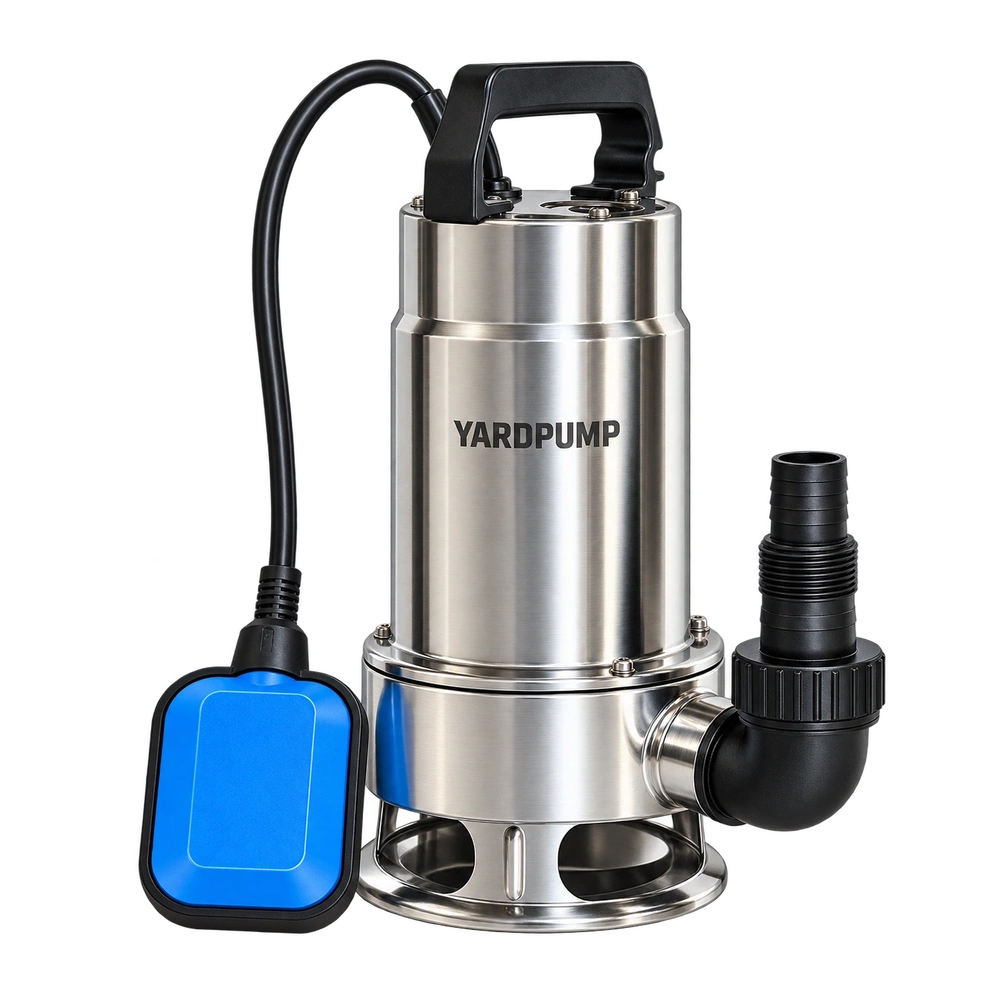
A rainwater downpipe is close to a proposed drainage pump. Can the discharge simply be connected to it? Physical connection is only one question. Confirm the existing pipe's purpose, incoming water, downstream capacity, backpressure and permitted connection conditions before designing the arrangement. A gravity rainwater pipe is not automatically suitable for an additional pumped discharge.
A fitting does not establish system capacity
During rainfall, the downpipe already receives water, potentially from several catchments. Pump discharge may coincide with the rainfall peak. A successful dry-weather trial does not prove that the route remains adequate when those flows occur together.
Downstream obstruction or changing outfall conditions can also affect the connection point. Pipe joints, supports and pressure suitability need to match the proposed duty. Do not convert an existing gravity route into a pressurised discharge without design confirmation.
The responsible drainage designer or facilities party should assess the existing system. Selecting an adapter from the pump outlet size alone leaves the main questions unanswered.
| Condition | Why it matters | Common omission |
|---|---|---|
| Existing purpose and destination | Establishes acceptable water and use | Assuming every apparent rain pipe is available |
| Simultaneous inflows and downstream route | Assesses peak combined conditions | Testing without rain only |
| Backpressure and reverse paths | Protects connected equipment and spaces | Assuming flow follows only the intended arrow |
| Connection and maintenance requirements | Establishes a serviceable arrangement | Treating equal diameters as approval |
Put the new flow into the complete balance
For a hypothetical example, assume 3 litres per second already reaches a connection under one condition, and a proposed pump adds 2 litres per second. Assessment must then consider the combined 5 litres per second and the downstream conditions.
That calculation does not establish that the pipe can carry 5 litres per second. It only defines the combined inflow assumption. Timing, restriction, connection geometry and local water level still matter.
Likewise, calculating cross-sectional area from a pipe diameter does not directly produce an allowable pumped flow. Even a relatively small pump needs a suitable destination for its actual liquid and a compatible connection arrangement.
A check valve does not answer every concern
A check valve may perform a specified directional-control function. Its installation, condition and maintenance affect the result. It does not increase downstream capacity or resolve unsuitable pressure service, an unacceptable liquid or an unconfirmed connection.
Consider where water can go after the pump stops, during heavier rain and when the downstream route is restricted. Building interiors or shared systems need clear responsibility for backflow protection, maintenance and abnormal conditions.
This article does not replace local drainage requirements or give a universal legal permission or prohibition. The actual site and responsible parties determine the applicable connection conditions.
Define selection and acceptance before installation
Obtain the existing route, purpose and connection constraints. Identify the discharged liquid, then establish the pump duty and connection design. Where facilities or other approval is required, resolve it before construction rather than after buying an adapter.
Qualified personnel should carry out the relevant installation and electrical work. Maintenance requires isolation and the applicable pressure-handling procedure.
Acceptance records should state the approved operating conditions, observed discharge behaviour and access for maintenance. If peak rainfall cannot be reproduced, identify the design evidence used instead. A dry-weather trial must not be described as validation of every condition.
Leave required connections and valves accessible. A design that cannot be inspected or maintained after completion may not remain suitable in service.
This discussion supplies a decision framework, not a universal pipe-size table or fixed connection method for YARDPUMP models. If existing-system information is unavailable, record the connection as unconfirmed and have the responsible party determine an appropriate alternative.
Frequently asked questions
Does a smaller pump outlet mean the downpipe has enough capacity?
No. Pump duty, simultaneous inflows and downstream conditions matter. Relative diameters alone cannot establish capacity.
Is confirmation necessary when the pump handles apparently clean rainwater?
Yes. Existing use, facility requirements and responsible-party conditions still apply. Appearance does not establish a suitable connection.
Does a ten-minute trial prove suitability during heavy rain?
No. It demonstrates only the conditions actually tested. Peak inflow and downstream behaviour need appropriate supporting evidence.