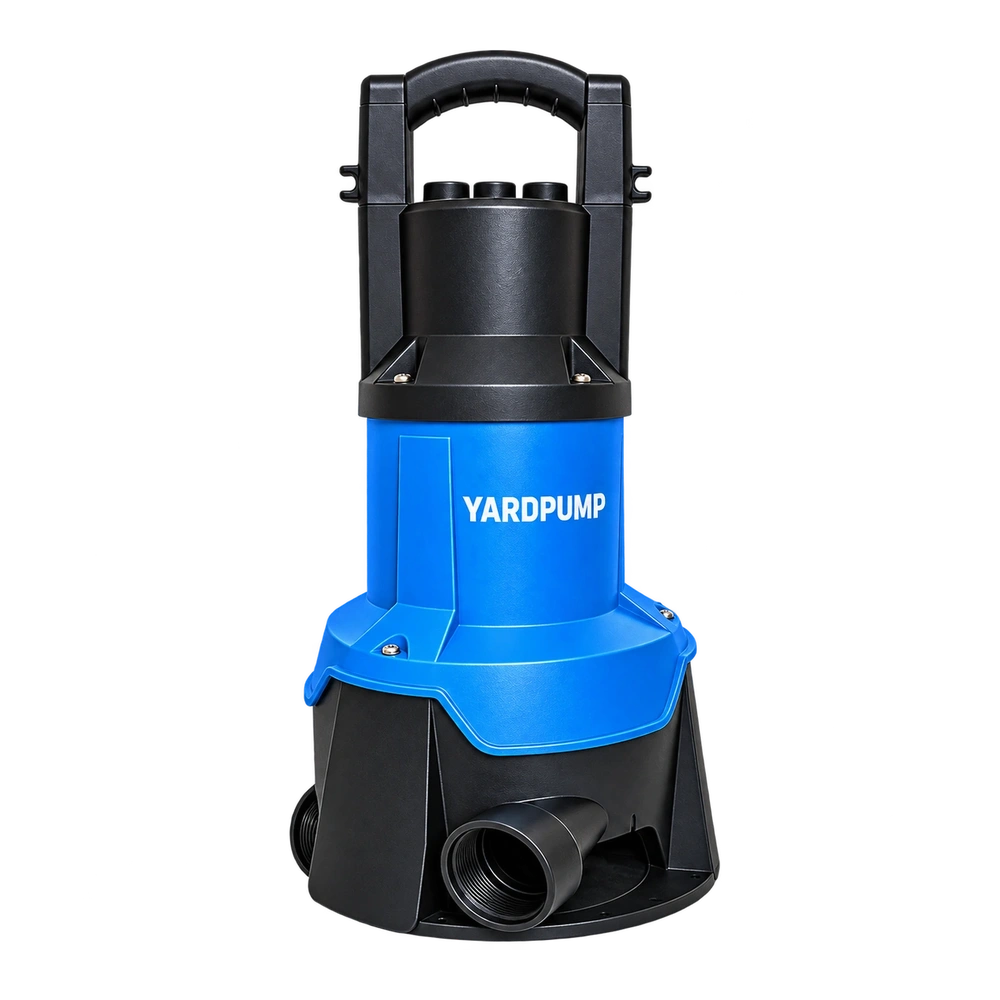
When a window well fills every time it rains, buyers often ask for the smallest automatic pump. A window well is not a standard sump basin. It may be narrow, full of leaves and soil, exposed to weather, and fed continuously by poor grading or a downspout. A supervised portable pump can handle an occasional clean-up. Repeated flooding should first trigger a review of grading, drainage and the well base, followed by a properly arranged collection and automatic system if still needed.
What drives the result
The important variables are inflow rate, usable water depth and switch clearance. A tethered float needs room to swing; contact with the wall, cover or ladder can stop it from turning on or off. Compact electronic sensors need less space but can be affected by dirt or deposits. The switch-on level must remain below the vulnerable window line, while the switch-off level must stay above the pump's permitted minimum. A discharge hose that ends beside the foundation simply recycles the water.
An illustrative way to check
For a method example, a 0.6-square-metre well rises by 80 millimetres in ten minutes. That represents about 48 litres of inflow. If the pump delivers only two litres per minute through the installed hose, the level continues rising. Measure several real storms where safe, size from the credible worst repeatable inflow, and allow margin for a dirty screen, supply variation and delayed maintenance.
An RFQ should not ask only for a window well drainage pump. It should state the liquid, highest and lowest water levels, vertical lift, hose bore and length, target emptying time, solids or fibres, electrical supply, and whether operation is supervised or automatic. The supplier can then identify a duty point instead of combining maximum flow, maximum head and rated power as though they occur together. Validate the first sample through a complete start-run-stop cycle in the intended piping. A brief no-load sound check does not represent the service.
Actions for the site or purchasing team
- Investigate downspouts, ground slope, the well drain and foundation leakage before treating the pump as the cure.
- Measure the narrowest clear space and both operating levels. Move the float through its full travel with the cover and piping in place.
- Support the pump on a stable base above loose soil. A removable coarse guard may help, but a tightly wrapped fine mesh can starve the inlet.
- Discharge well away from the foundation and prevent siphoning or return flow. Protect outdoor hose from kinks, traffic and freezing.
- Before severe weather, conduct a controlled water test. Permanent systems should add a high-level alarm and a plan for power failure.
Limits and application boundary
Where water threatens building electrics, contains sewage or indicates structural leakage, qualified local help is required. Do not apply a clean-water portable pump to mud, wastewater or continuous duty without model-specific approval.
Frequently asked questions
Will any float pump work automatically in a window well? Only when the switch has full clearance, the levels are suitable and the discharge path remains open.
Why can the pump run while the level keeps rising? Inflow may exceed duty-point flow, or discharged water may be returning to the foundation.
Should I wrap the pump in fine filter cloth? Fine fabric can clog and starve the inlet. Use a maintainable, verified intake arrangement instead.
Related reading
Will the Float Fit? Choosing a Submersible Pump for a Narrow Sump Pit
Unattended Basement Drainage: How Should the Main Pump, Backup and Alarm Work Together?