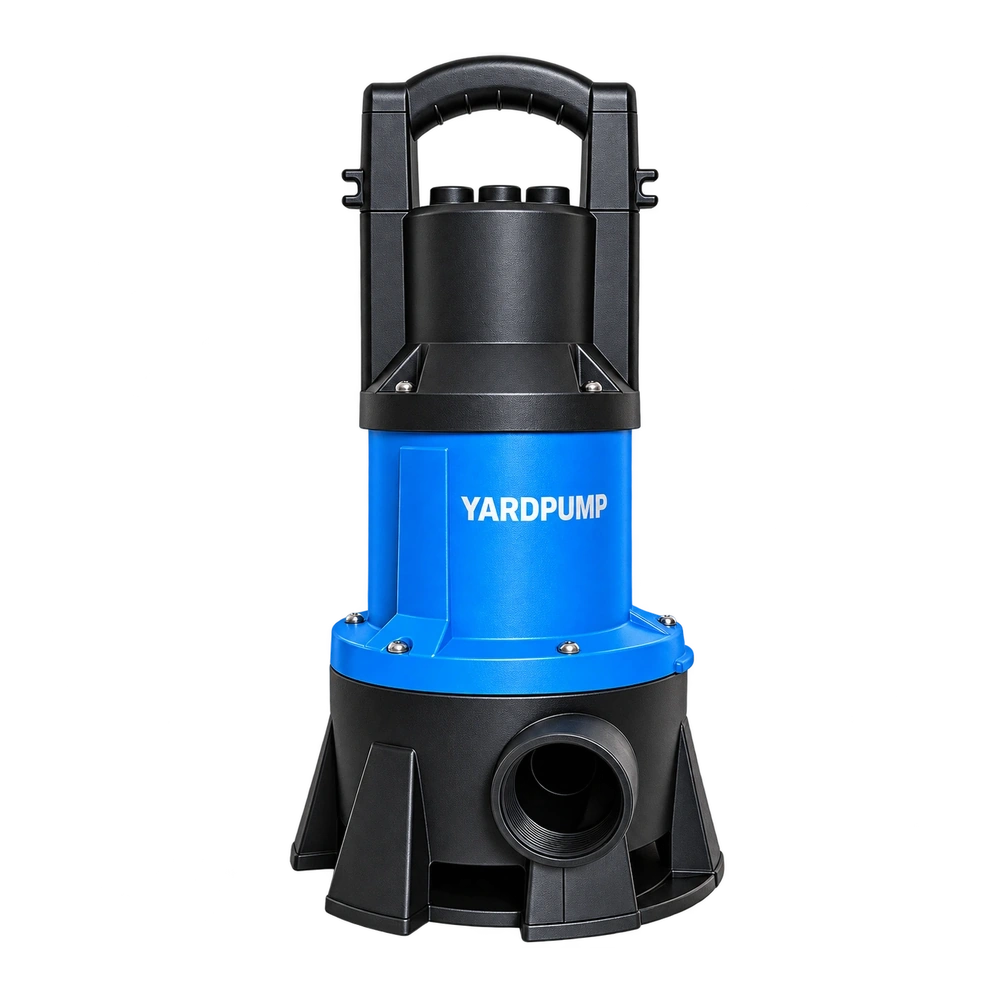
A garden misting line has water, but its nozzles drip instead of producing the expected spray. Would a pump with greater flow solve it? Not necessarily. Identify the nozzle type and specified working pressure, then check the pump's available head at the required flow, system losses and filtration. High maximum flow does not establish sufficient delivery at atomising pressure.
Start with the nozzle duty
Products described as misting devices can have different supply requirements. A garden sprinkler, hydraulic atomising nozzle and air-assisted atomising device are not interchangeable categories. Obtain the exact nozzle information, including the liquid, pressure and flow conditions supporting its performance.
Droplet behaviour depends on nozzle design and operating conditions. Appearance alone does not identify the required pump. If the device needs compressed air, increasing water pressure does not replace its air system. If it uses hydraulic atomisation, stay within the confirmed pressure range.
The pump is only one component. Pipes, connectors, valves and filters also need to suit the complete arrangement. Do not raise a low-pressure garden installation to an unverified pressure simply to change the visible spray.
| Observation or question | First evidence | Unsupported conclusion |
|---|---|---|
| Dripping or irregular spray | Pressure, blockage, nozzle identity and supply type | The pump must be too small |
| High advertised pump flow | Flow available at target pressure | Suitability for any misting nozzle |
| Poor performance at the far end | Distribution and line losses | Every nozzle needs replacement |
| Finer droplets desired | Nozzle performance at suitable conditions | More motor power guarantees the effect |
Convert pressure into a meaningful head requirement
For a hypothetical calculation, assume a nozzle requires 3 bar of water pressure. Using water density of 1,000 kg/m³, that corresponds to approximately 30.6 metres of water head before adding elevation and pipe losses.
A hypothetical pump with a maximum head of 25 metres corresponds to about 2.45 bar of water head at that maximum. It cannot be assumed to supply 3 bar at the required flow. Maximum head and maximum flow must not be combined into one imaginary operating point.
These figures are not universal nozzle requirements or YARDPUMP specifications. For an actual selection, identify total required head and read the available flow from the pump curve. Compare it with the demand from all nozzles intended to operate together.
Maintain suitable water and stable supply conditions
Small nozzle passages can be affected by debris or deposits. Match filtration to the nozzle and system requirements, and consider what happens as the filter loads. Installing a filter changes the hydraulic system; performance with a clean element does not cover every maintenance state.
Tank level, supply conditions and pipe arrangements may also change nozzle pressure. If regulation or control is needed, competent personnel should design it for the system. Do not bridge protections, arbitrarily restrict the outlet or improvise electrical modifications to force a visible mist.
Shutdown, intrusive inspection and pressure release should follow the equipment instructions. A disappointing spray pattern is not a reason to open a pressurised connection or work on powered equipment.
Accept the complete spray branch
Define nozzle quantity, simultaneous operation, supply location, line length, elevation, filtration and controls. During verification, record pressure at the specified point, actual delivery and the relevant spray behaviour. Identify which operating conditions were covered.
Visible mist does not establish a measured droplet-size distribution or a particular process result. If quantitative spray performance is required, specify how it will be verified rather than relying on a photograph.
Applications involving special water-quality or operating requirements need their own assessment. This article addresses hydraulic matching. It does not approve an ordinary pump for every misting application or promise a health, cooling or process outcome.
Frequently asked questions
Can more nozzles compensate for low pressure?
Not by assumption. Adding nozzles changes demand and the operating point. Recalculate using each nozzle's flow at the specified pressure.
Should a smaller nozzle opening be tried first?
Not automatically. It may be more sensitive to contamination or require another pressure. Select from the exact nozzle information.
Is maximum pump head above the requirement enough?
No. Confirm available head at the needed flow, system losses and the suitability of materials and controls.