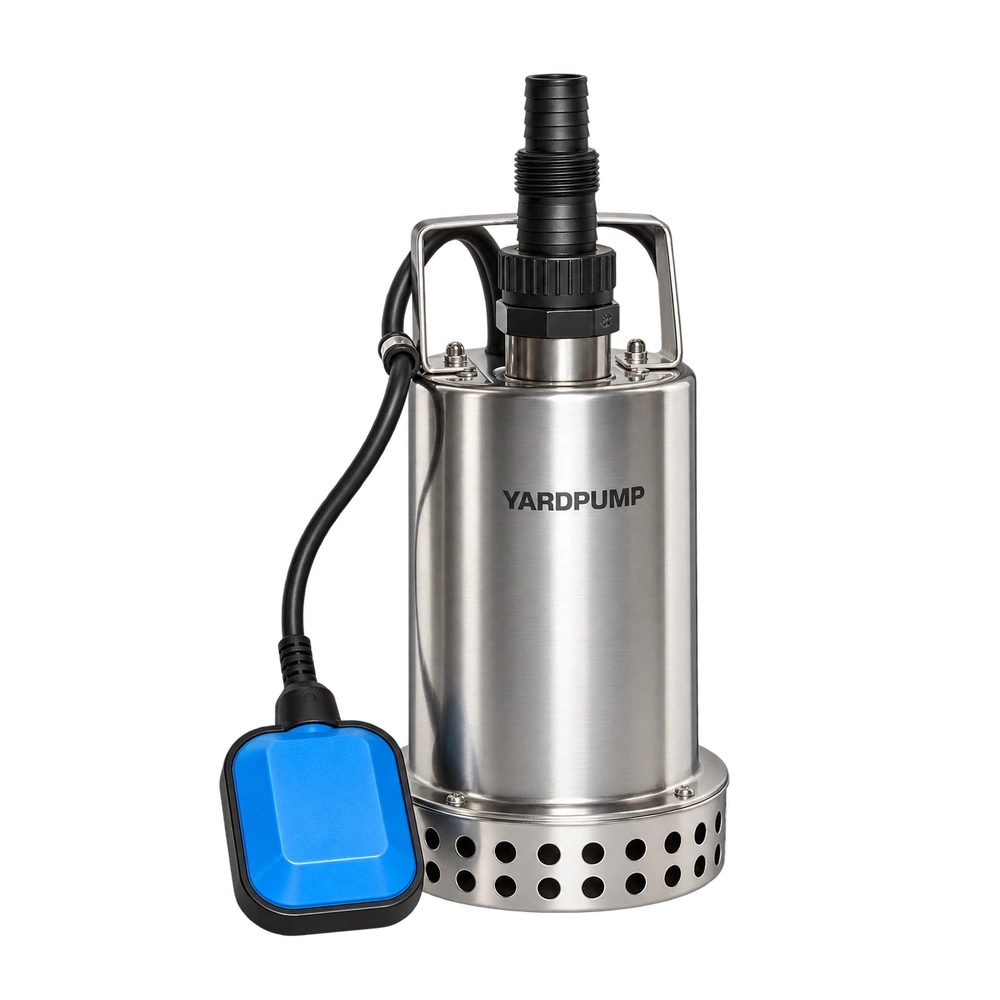
A sprinkler can deliver visible water yet have poor throw, leading buyers to replace a 550-watt pump with a 900-watt unit. Throw is governed mainly by pressure at the nozzle, nozzle geometry and wind, not pump maximum flow alone. Measure operating pressure, the number of simultaneous sprinklers and system losses before deciding whether the restriction is the pump, the piping or the nozzle.
What drives the result
The nozzle converts pressure energy into jet velocity. A pump may deliver a large volume at low head but insufficient flow at the sprinkler's required pressure. Small hose bore, narrow quick couplings, a dirty filter, long distance and elevation consume head. A worn enlarged nozzle raises total flow demand and can reduce system pressure. Opening more sprinklers moves the operating point toward higher flow and usually lower available head.
An illustrative way to check
Assume each sprinkler needs eight litres per minute at its target pressure and four operate together. The zone requires 32 litres per minute. Total required pump head includes the nozzle pressure converted to water head, the elevation difference and piping losses; the nozzle-pressure term must not be omitted. The curve must provide at least 32 litres per minute at that total head. Quoting zero-head maximum flow does not answer the question. These figures illustrate the method.
An RFQ should not ask only for a garden sprinkler pump pressure. It should state the liquid, highest and lowest water levels, vertical lift, hose bore and length, target emptying time, solids or fibres, electrical supply, and whether operation is supervised or automatic. The supplier can then identify a duty point instead of combining maximum flow, maximum head and rated power as though they occur together. Validate the first sample through a complete start-run-stop cycle in the intended piping. A brief no-load sound check does not represent the service.
Actions for the site or purchasing team
- Use the sprinkler maker's pressure-flow-throw data and identify the installed nozzle and its condition.
- Run one sprinkler, then add units one at a time. A sharp loss of throw points toward supply capacity or distribution resistance.
- Find the smallest passage through the inlet filter, valves, quick couplings, main line and branches.
- Measure pressure at the pump discharge and near the hydraulically worst sprinkler, while recording voltage and actual flow.
- Correct zoning, main-line bore or nozzle selection, then redraw the duty point before changing the pump.
Limits and application boundary
Required pressure and permitted pump duty vary by model. Do not force an ordinary drainage pump to build pressure by leaving most valves closed, and do not exceed the ratings of hose, fittings or sprinklers.
Frequently asked questions
Does higher maximum flow guarantee longer sprinkler throw? No. The relevant value is pump flow at the required pressure and total head.
Why can an enlarged worn nozzle reduce throw? Higher demand can pull the system pressure down.
Can throttling a valve improve throw? Throttling a valve between the pump and the same sprinkler adds loss and generally does not help it. Closing other zones can reduce total demand, provided the remaining duty stays within the pump's permitted range.
Related reading
One Garden Pump, Two Irrigation Branches: How Much Flow and Pressure Are Needed?