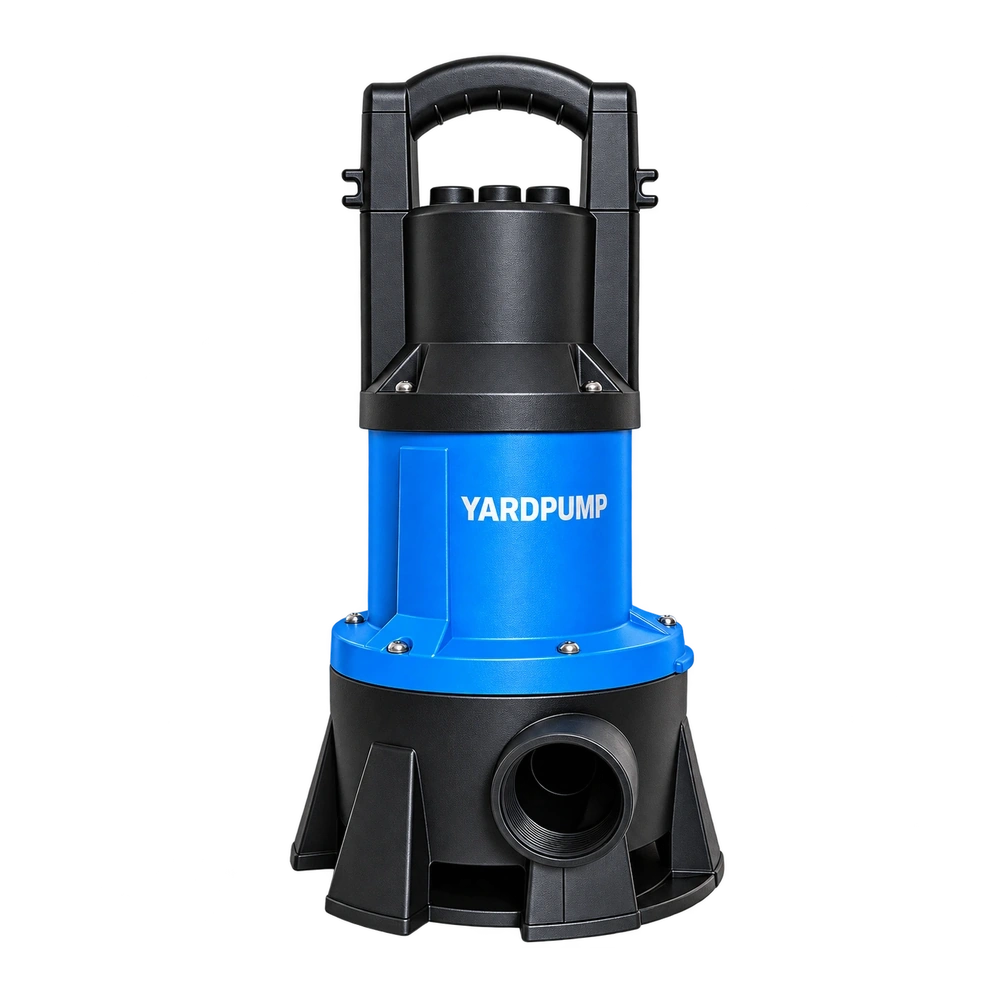
One sprinkler works well, but opening a second branch makes both sprays fall short. Adding the two listed flow rates is only part of pump selection. The pump must also maintain the required pressure at the least favourable outlet while supplying the combined flow.
Depending on the installation, the solution may be separate watering zones or a different pressure-supply arrangement.
Decide which branches run together
If branches operate sequentially, the pump must suit each individual operating condition. It does not automatically need the sum of both flows. If simultaneous operation is required, add the branch flows at their required pressure and calculate losses at those flows.
Identify each outlet. An open hose, sprinkler, spray gun and drip line have different requirements. Drip equipment is not universally suitable for any low pressure, and a pressure regulator requires adequate inlet conditions.
Use the outlet manufacturer’s flow-pressure information. A flow stated without its pressure condition can lead to a misleading total demand.
Add flow without adding outlet pressure indiscriminately
Parallel branches take water from a shared distribution point. The flow through each depends on available pressure and branch resistance.
Required pump head includes the common mainline loss and the elevation, losses and terminal pressure needed by the most demanding branch. Two identical sprinklers each requiring 1.5 bar do not automatically require three bar at the supply simply because there are two of them.
A short, wide branch may receive more flow than a long, narrow one at the same distribution pressure. Uneven supply is therefore not sufficient evidence of a pump defect. Check the branch design and measurements before assuming that a higher motor wattage will solve it.
Work through a defined example
Suppose two sprinklers each require twelve litres per minute at 1.5 bar. Simultaneous demand is twenty-four litres per minute. The required terminal pressure represents approximately 15.3 metres of water head.
Assume the least favourable outlet is two metres above the lowest source water level. If common-pipe and critical-branch losses total approximately three metres at the corresponding flow distribution, the target operating point is about twenty-four litres per minute at 20.3 metres of total head.
These are illustrative values. Actual losses depend on bore, length, fittings, filtration and branch flow. A dirty filter can add loss and should be considered in the operating requirements.
Find the target point on the pump curve. A pump with a maximum head of fifteen metres cannot perform this example duty, even if its maximum flow looks generous.
Sequential operation reduces total flow and changes common-pipe losses, so calculate the individual-zone points again. Do not assume that half the flow means half the required electrical power, or that doubling running time automatically preserves irrigation uniformity.
Consider what happens when valves close
An automatic pressure pump, a drainage pump and a pump controlled by a water-level float do not share the same control logic. A float responds to water level and may not recognise a closed spray gun or two closed branch valves.
Select within the manufacturer’s permitted flow range and discharge-closure conditions. Confirm compatible control equipment rather than adding an unverified pressure controller to an existing pump.
For a compact drainage pump used to move rainwater, establish whether it can provide the required pressure and tolerate the intended valve operations. A thermal protector does not provide permission for prolonged operation with closed outlets.
Deliver the operating rules with the pump
Record outlet models, pressure requirements, branch layout and permitted combinations of open valves. Explain filter maintenance and the symptoms that require shutdown or inspection.
Site acceptance should consider pressure and useful delivery at the outlets. Demonstrating a large flow through a short open pipe at the pump does not represent two distant watering branches.
The Hydraulic Institute’s system-curve framework explains why a pump and installation must be considered together. For garden use, clear information about simultaneous outlets and their pressure requirements is the practical starting point.
Questions buyers ask
Will adding a tee allow another sprinkler? It adds a connection, not more pump capacity at the required pressure.
Could a wider mainline help? It can reduce common-pipe losses, but the terminal pressure requirement remains. Recalculate the duty.
Can drip lines and sprinklers share one pump? Only with compatible pressure, filtration, regulation and operating arrangements. Connecting the fittings is not proof of suitability.