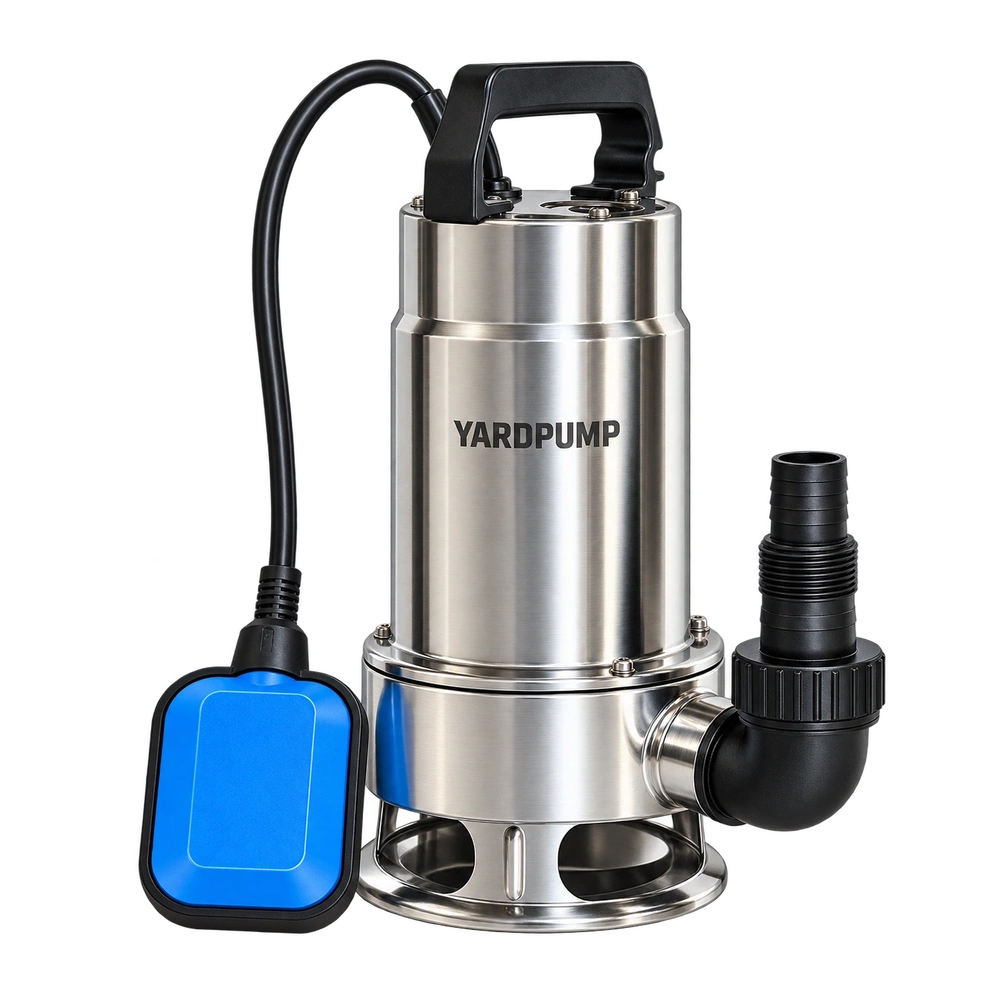
A garden pump delivers water normally until a fine filter is fitted. Flow then falls. Which side of the pump should the filter occupy? In this typical installation question, first separate large-particle protection for the pump from fine filtration for emitters, nozzles or another downstream device. They perform different tasks. Putting every filter on the suction side is not a universal solution, and neither is an unconditional instruction to move all filtration downstream.
Protect two different sets of components
The suction arrangement may require a suitable screen, foot valve or pre-pump strainer to prevent larger debris entering the pump. These components have their own flow, open-area and pressure-loss requirements. Select them within the pump's installation conditions. Material that the pump is not permitted to handle cannot simply be left for a discharge-side filter to catch later.
Drippers or a pressure washer may require finer filtration than the pump itself. A particle-passage figure does not establish downstream suitability. However, placing a fine element ahead of the pump solely to satisfy the outlet device can compromise suction conditions. Design inlet protection and downstream filtration as separate functions. Their final locations depend on equipment requirements, available pressure and the maintenance arrangement.
Suction loss consumes a different margin
Pressure at a surface pump's inlet depends on water level, elevation, pipe resistance and environmental conditions. Additional fine filtration, particularly when dirty, can reduce an already limited suction margin. Symptoms can include poor delivery, air-related problems or other abnormal operation. A filter's high pressure rating does not itself demonstrate suitability on the low-pressure suction side.
Discharge-side filtration is not loss-free either. As a hypothetical conversion, a filter differential of 0.2 bar at the working flow corresponds to roughly 2 metres of head for water near normal ambient temperature. That can matter when little pressure margin remains for irrigation outlets. This is an illustrative conversion, not an approved limit for a pump or filter. Include the actual filter loss in the system calculation.
| Position or function | Establish first | Commonly missed condition |
|---|---|---|
| Large-particle inlet protection | Permitted debris and effective flow area | Dirty-state suction loss |
| Downstream fine filtration | Outlet requirement and working flow | Differential pressure and remaining pressure |
| Automatic backwashing | Required flushing flow and pressure | A small pump may not meet the cleaning duty |
Assess the dirty condition as well
A filter specification needs relevant flow and pressure-loss information, not just port size and filtration grade. Two filters with the same nominal fineness can have different areas, internal arrangements and dirt-holding behaviour. Choosing a small housing because its connection fits can transfer excessive cleaning demands and performance losses to the customer. Mechanical compatibility is only the first check.
Also distinguish filter blockage from falling source level, suction leakage and changing downstream demand. Not every flow reduction is a pump failure. Monitor the prescribed differential pressure or other suitable indicators and maintain the filter as instructed. Before opening it, isolate electrical power and the relevant water supply and release pressure safely. Do not unscrew a pressurized housing or temporarily remove required filtration to regain flow.
Specify the complete water route
Give the supplier the source, minimum water level, suction elevation, pipe sizes and outlet cleanliness requirements. State the proposed filter position and its clean and service-condition losses. If automatic flushing is intended, identify it as a separate operating duty. A successful watering trial alone does not establish adequate backwash performance. Representative validation should remain within all approved equipment boundaries.
The final selection should provide sufficient inlet protection without unnecessary suction restriction, appropriate downstream filtration with a pressure budget and safe maintenance access. Some pump designs specifically require a particular inlet filtration arrangement. General guidance does not authorize moving that component. Obtain model-specific confirmation before changing the layout. The aim is a workable water system rather than a filter that merely screws onto the available fitting.
Questions about filter placement
Is fine filtration always prohibited before a pump?
No. Suitability depends on the approved equipment arrangement, suction conditions, losses and dirty-state boundary.
Does matching the hose diameter prevent restriction?
No. Filter area, internal construction, fineness, flow and contamination-related pressure loss still matter.
Does recovered flow after cleaning prove the pump is fault-free?
It shows that filter condition affected the system. Any remaining symptoms still require the appropriate hydraulic and electrical checks.