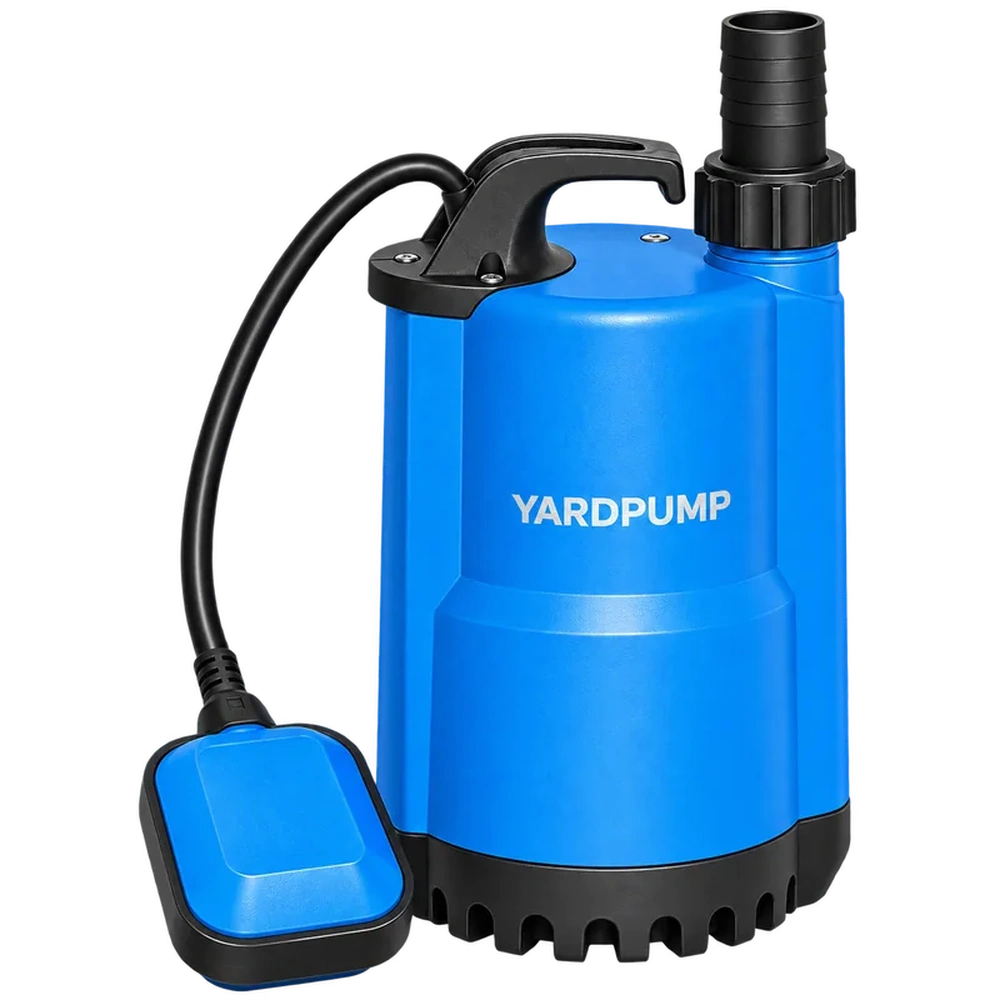
A rain barrel sits at one corner of a garden, while the watering area is more than twenty metres away. Keeping the pump inside a shed makes operation convenient, but requires a long suction hose. Moving it beside the barrel requires a longer discharge hose. Comparing total hose length alone misses an important difference: for a surface garden pump lifting from an open source, keeping the suction route short, direct and airtight is usually the better starting point.
That preference does not override electrical safety, weather protection or service access. An ordinary surface pump must not be placed where water can flood it simply to reduce suction lift.
A metre of loss has a different consequence before the pump
Friction, a foot valve and fittings all consume pressure on the suction side. Raising the pump or lowering the source water level reduces the absolute pressure available at its inlet. Air evacuation and reliable pumping can then become more difficult. Discharge losses also matter, but they do not directly consume inlet cavitation margin in the same way.
A long suction hose introduces other questions. Will it resist collapse under vacuum? Does its route contain a high point that traps air? A hose suitable for pressurised discharge is not automatically suitable for suction. Similarly, a connection that does not drip water can still admit air when operated below atmospheric pressure.
Draw the lowest operating water level first
Measure the vertical distance from the lowest expected water surface to the pump inlet centreline. Do not substitute the tank bottom, the highest water level or the horizontal distance. Add the suction hose internal diameter, length, elbows, strainer, foot valve and connections to the drawing. State the intended flow, because friction losses depend on flow.
For an illustrative comparison, assume the inlet is 2 metres above the lowest water level. At the proposed flow, a short suction layout loses 0.4 metres, while a route around the shed loses 1.6 metres. The longer arrangement consumes an additional 1.2 metres of inlet pressure margin. These are assumed values, not a product suction-lift claim. Both layouts still require an inlet-condition check and a separate calculation of total system head.
| Arrangement | Main benefit | Additional check |
|---|---|---|
| Pump close to the source | Shorter suction route and fewer possible air leaks | Safe power, weather protection and access |
| Pump close to the outlets | Convenient observation and operation | Suction loss, hose strength and air removal |
| Pump installed lower | Better inlet pressure conditions | A location protected against flooding |
Improve the arrangement in a testable order
Check the route and sealing first. Then consider a larger suction diameter and the benefit of relocating the pump. Follow the manufacturer’s routing instructions, avoiding unnecessary high points. The strainer must suit the water and remain accessible for cleaning. Removing necessary filtration to obtain a better demonstration flow is not a durable solution.
After extending the discharge line, recalculate the required duty. Better inlet conditions do not guarantee adequate pressure at a distant sprinkler. Include the outlet elevation, discharge friction and required terminal pressure. Compare alternative positions at the same source level, with the same outlet settings and measurement method.
An installer should also consider how the installation will be serviced. A pump hidden behind a barrel may be hydraulically well placed but difficult to prime, drain or isolate. Access to the filling point and connections matters over the whole season. Any protective enclosure must preserve the ventilation and clearances required for that particular pump.
Give the supplier a layout, rather than a distance question
Ask the supplier to assess both proposed arrangements against the intended duty. Request the recommended suction diameter, permitted starting procedure and priming instructions. Keep the agreed drawing with the purchase specification. This gives both parties something more useful than a statement about how far the pump can “suck”.
If the source temperature, installation height or water quality lies outside the verified operating range, change the arrangement or select an appropriate product. A larger nameplate wattage cannot correct an unsuitable suction system by itself.
Keep the real power and drainage routes on the location drawing. A hydraulically convenient position is unacceptable if it depends on unsuitable wiring or a connection where rainwater can collect. Compare protected installation, discharge-pipe sizing and other verified intake arrangements before buying. Photographs should show the source level relative to the inlet, rather than only a close-up of the pump.
Frequently asked questions
Does a larger suction hose allow an unlimited distance?
No. It can reduce friction, but vertical lift, air leaks, trapped air and priming limitations remain. Assess the complete route.
Is a lower installation always preferable?
It can improve inlet conditions, but the pump must remain safely installed, protected and accessible. A flood-prone hollow is unsuitable for an ordinary surface pump.
Does successful initial pumping prove that the suction side is satisfactory?
No. Falling water levels, a dirty strainer or warmer water may expose inadequate margin. Verify stable operation at the lowest intended source level.