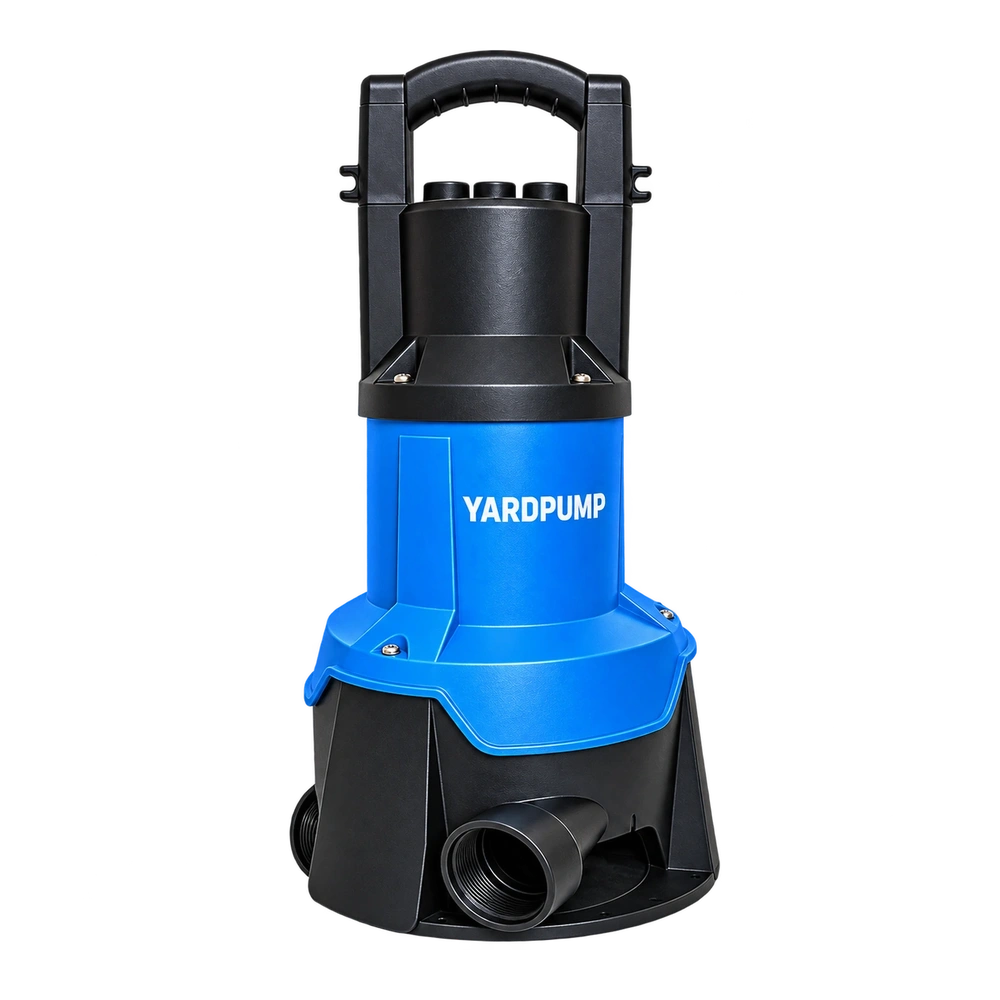
A raised tank beside the garden already sends water through a hose. Is a booster pump unnecessary? In this typical selection question, the answer depends on elevation at the lowest operating level and the pressure remaining after water passes through pipes, filters and outlets. Gravity can provide useful pressure, but visible flow is different from satisfactory irrigation. Establish what the watering equipment needs before adding machinery.
Measure from the water surface
For an open tank, static pressure depends on the vertical distance between its water surface and the point of use. The height of the supporting stand is only part of that distance. Pressure also changes as the tank empties. Use the lowest permitted withdrawal level when assessing a dependable supply, rather than the favourable condition immediately after filling.
For illustration, a surface six metres above an outlet provides approximately 0.59 bar of static water pressure. At a two-metre difference, this falls to about 0.20 bar. These approximate static values exclude flowing losses through the installation and are not pump performance figures.
Flowing water must share the available pressure
Hose diameter and length, connectors, valves and filters all consume pressure difference. Loss generally increases as flow increases. A reading with the outlet closed cannot simply be presented as the pressure available during watering. Check the pressure remaining at the required delivery rate.
Some drippers work at relatively low pressure, while certain regulating or compensating devices require a defined operating condition. Sprinklers also have their own flow and pressure requirements. Use the actual accessory documentation. Neither “drip always works by gravity” nor “a sprinkler works whenever water arrives” is a reliable specification.
Put demand and supply on the same sketch
Show the lowest tank water surface, the highest and farthest outlets, pipe diameters, lengths and all accessories. Identify which branches operate together. Compare one complete duty condition: simultaneous outlets, required flow at each and the minimum pressure necessary for satisfactory performance.
Where demand and losses are modest, gravity may already provide an adequate solution. Additional pump and control hardware may offer little benefit. If outlet pressure is insufficient, first identify the dominant restrictions. Correcting an unsuitable connector or pipe section can be more useful than immediately purchasing a higher-powered pump.
Check the least favourable usable level
Under safe conditions consistent with the tank installation, compare a relatively full tank with one near the minimum withdrawal level. Use the actual filter, hose and watering equipment. Record flow, outlet pressure and distribution performance. Removing the filter for a demonstration and replacing it for service produces an unrepresentative result.
If one branch works alone but deteriorates when others open, investigate combined demand and the common pipework before blaming an individual outlet. Zoning can sometimes provide the required result without supplying every branch simultaneously. It must, however, match the intended watering schedule and actual water needs.
If a pump is needed, specify the whole pressure balance
Do not compare maximum pump head with tank height alone. Determine required pressure at the target flow, existing static pressure, losses, minimum water level and the highest possible system pressure. Verify permitted inlet and outlet conditions for the pump, controller and accessories. An ordinary drainage pump is not automatically approved for a pressurized booster installation.
Do not improvise a connection between the gravity supply and public drinking-water pipework. Supply separation, backflow protection, structural changes and fixed electrical arrangements require appropriate professional assessment for the site. A simple calculation of water head does not replace those installation boundaries.
Include the responsibilities added by pumping
A pump introduces electrical supply, starting and stopping, dry-run protection, noise and maintenance considerations. Where storage is inadequate, boosting can only deliver the existing water faster; it cannot increase the daily volume collected. Define withdrawal limits and recovery behaviour so automatic equipment does not repeatedly start against insufficient storage.
A useful distributor proposal states verified water levels, simultaneous branches, outlet flow and pressure, maintenance condition and control method. Keep a simple gravity arrangement where it meets the requirement. Where boosting is justified, specify the missing pressure and the permitted operating conditions. Selection should begin with the result at the outlet, not the size of the proposed motor.
Frequently Asked Questions
Does a six-metre-high tank always deliver 0.6 bar?
No. The relevant measurement is water-surface elevation, which changes, and flowing losses reduce the pressure available at the outlet.
Can an oversized pump simply be throttled afterwards?
Throttling is not a universal solution. Select the duty point within the approved pump, controller and accessory operating ranges.
Does gravity-fed drip operation prove sprinkler compatibility?
No. Different outlets have different flow, pressure and activation requirements. Check the specific equipment rather than transferring one result to another.