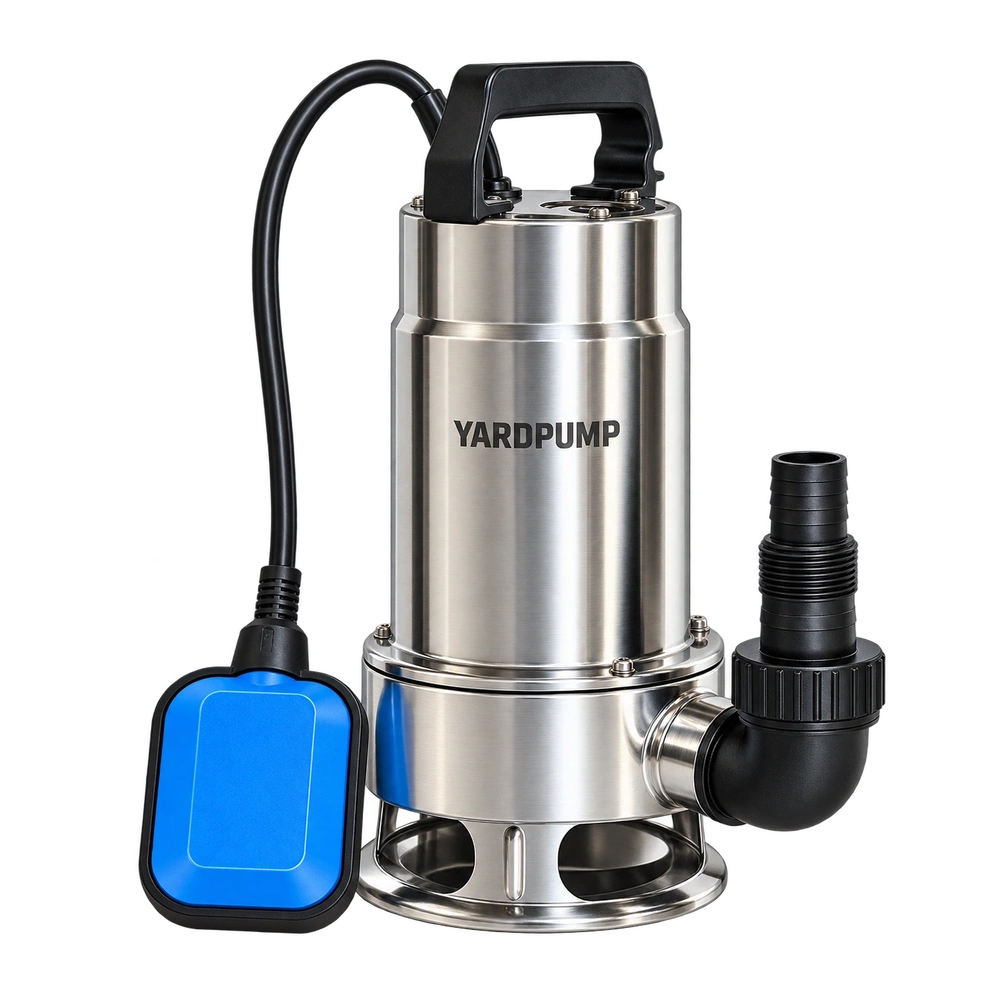
Suppose this occurs in an externally monitored sump. A sump's measured water level slowly rises on the controller during a weather change, but a fixed water-level mark shows little movement. Should the pump start setting be moved? First identify the probe's pressure reference. An externally fitted hydrostatic level sensor may use a small vent tube to follow atmospheric pressure. If that reference is blocked or wet, a pressure change can be displayed as a water-level change.
The probe measures pressure above its sensing face
In an open basin, pressure at a submerged sensing face is atmospheric pressure plus the pressure of the water above it. A vented gauge-pressure probe references the same atmosphere through its cable vent. The atmospheric contribution can then cancel. An absolute-pressure probe has a different reference and needs the specified compensation if its output is to represent water depth accurately.
For illustration, assume the water depth is unchanged while atmospheric pressure rises by 2 kilopascals. If a blocked reference effectively remains at the previous pressure, that difference could correspond to approximately 0.20 metres of water. The result depends on the sensor construction and fault condition; it is not a universal drift or a measured complaint. A sealed-reference design is also not identical to a properly vented gauge sensor.
Trace the reference end separately from the power cable
Obtain the exact probe and cable instructions. Locate the documented vent termination, filter, junction enclosure and any desiccant accessory. A pump power cable does not automatically contain such a tube; this guidance concerns a separate level-probe system where that construction is specified. Do not search for a vent by opening the pump's electrical cable.
Moisture, a flooded termination, a crushed cable section or an incorrectly sealed enclosure can interfere with the reference path. A water-resistant termination must still meet the design's ventilation requirement. Sealing every opening with compound may protect against splashes while destroying the intended reference. Follow the specified assembly instead of improvising a waterproofing treatment.
Compare a real depth with the indicated depth
Have qualified personnel make checks under a safe maintenance plan. Record the probe location, an independently observed water level, controller value, time, temperature and atmospheric conditions where relevant. Confirm the configured range, units, zero datum and signal scaling. A moved probe changes the depth above its face; a controller offset can disguise that movement without correcting the installation.
| Pattern | Check first | Do not conclude from the pattern alone |
|---|---|---|
| Slow change with stable observed level | Reference ventilation and compensation | Probe element is definitely defective |
| Step after cable or enclosure work | Vent route, probe elevation and scaling | The pump needs a new switching height |
| Erratic value after flooding | Termination moisture and electrical condition | Drying the outside restores safety |
Use the manufacturer's approved verification or replacement procedure. Do not blow compressed air, solvents or water into a vent tube. A small tube and sensing membrane can be damaged, and moisture may already have entered the device. A replacement filter does not automatically repair a flooded probe.
Restore control thresholds only after measurement is credible
Once the reading agrees with the defined reference, validate actual start, stop and high-water conditions in the permitted wet test. Allow for controller delays and check that the pump remains within its operating water levels. Keep any independent high-water protection available during diagnosis.
For a compact sump-pump installation, this is an external control-selection and maintenance issue. It does not establish that a standard float-operated pump contains a pressure probe. The buyer should specify which sensor is supplied, how the reference stays dry and breathable, and how a failed or implausible reading is handled. Moving thresholds repeatedly to follow drift can consume the very storage margin the control was intended to protect.
Frequently asked questions
Does every submerged pressure probe need an open vent tube?
No. Absolute, sealed-reference and vented designs differ. Identify the measurement principle and required compensation from the actual documentation.
Can the cable end be placed below the maximum water line?
Only if the complete approved termination arrangement permits it. An exposed reference end must not be treated like the submerged sensing body.
Will recalibrating the controller cure a blocked vent?
An offset can hide the error at one condition. It does not restore atmospheric tracking or remove water damage; resolve the reference fault first.