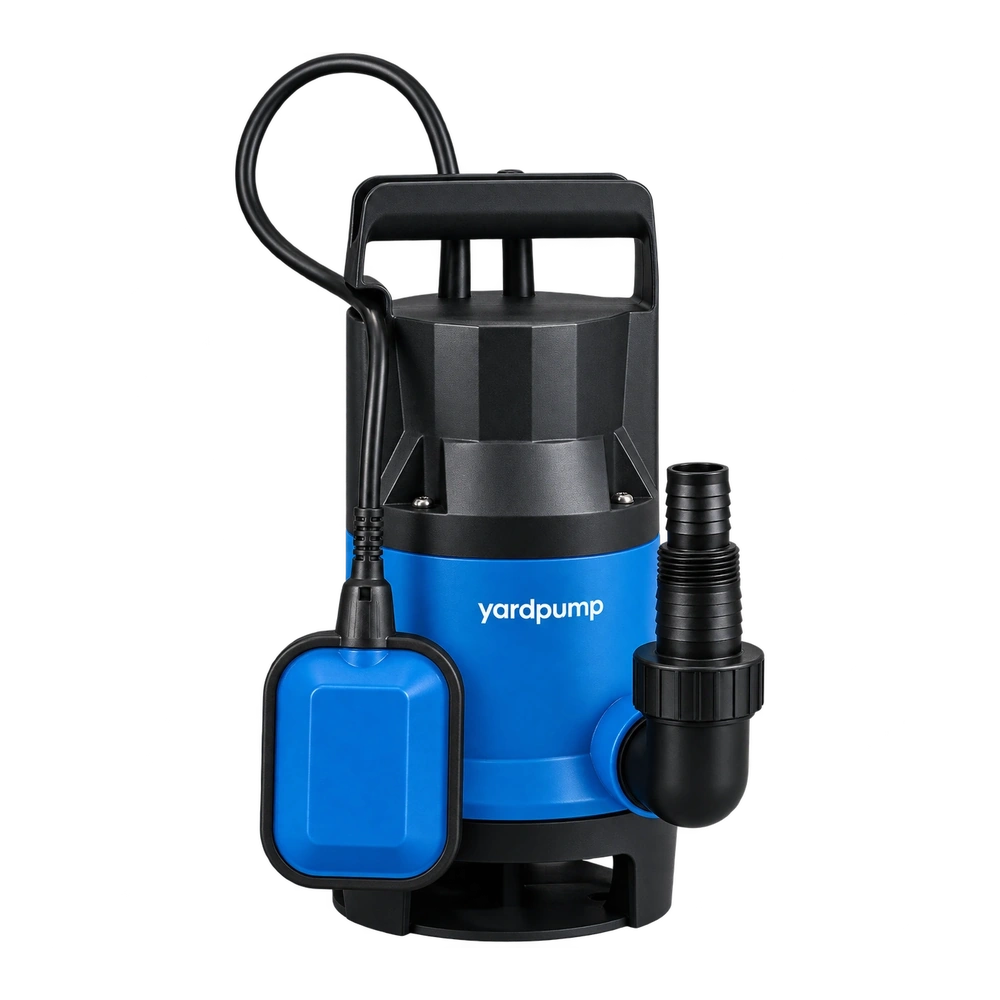
Consider a hypothetical fault: the tank contains water and the electrode is touching it, yet the level controller does not switch. It is tempting to call the probe defective. With a conductive level-detection arrangement, first check the liquid's conductivity, the electrode circuit and the controller's specified application range. Water being present does not guarantee a sufficiently conductive detection path.
This discussion concerns sensing through liquid conductivity. A device sold under an informal name such as “water-wave switch” may use another principle. Its plastic housing alone does not identify the sensing technology.
The controller responds to an electrical condition
A conductive arrangement generally detects a path through the liquid between electrodes, or between a sensing electrode and a specified common electrode. Ions in the liquid, electrode geometry and contact condition affect that path. Saying that water conducts electricity is not a complete selection method.
Rainwater, treated water, mains water and saline water can differ substantially. One supply can also change with season or treatment. A table of typical values is not a guarantee for a particular installation. It cannot establish that every rainwater application fails or every wastewater application works.
Conductivity and circuit resistance are different quantities
Conductivity describes the liquid's conducting behaviour. The electrode circuit additionally depends on area, spacing, immersion and surface deposits. A controller's stated resistivity range may assume a particular electrode arrangement and installation condition.
As an illustration only, reducing conductivity from 200 to 20 microsiemens per centimetre reduces the material's conductivity to one tenth under otherwise comparable conditions. Whether the actual arrangement crosses a switching threshold still depends on the complete circuit and model requirements. Neither value is a universal controller acceptance limit.
| Check | Information to obtain | Misleading assumption |
|---|---|---|
| Sensing principle | Exact model and operating technology | Similar housings use the same method |
| Liquid | Conductivity range, temperature and variation | “Clean water” is a sufficient specification |
| Electrodes | Common path, spacing, immersion and contact | Touching water guarantees switching |
| Controller | Liquid limits, sensitivity and reset behaviour | More sensitivity is always better |
Higher sensitivity can introduce other concerns
A higher-sensitivity version may extend an application range, but moisture films, contamination or leakage paths may become more influential. Output logic and reset behaviour can also differ between models. Substitution should not retain an unverified assumption about wiring or relay state.
Examine sensing-cable length, routing, insulation condition and proximity to power wiring. Qualified personnel should perform electrical inspection after isolation using the manufacturer's method. Any necessary energised measurement needs an appropriate controlled procedure.
Do not instruct an end user to bridge terminals to see whether the pump starts. A simulated input is a professional test condition, not permission to defeat protection in operation.
Make the field condition reproducible
Record the actual liquid source, temperature, water level, electrode immersion, controller identity and output state. If a supplier demonstrates operation in mains water while the site uses low-conductivity treated water, validate the actual intended liquid range.
Preserve photographs and switching records before and after cleaning deposits. Restored operation after cleaning identifies a condition change; it does not by itself establish long-term material suitability or reliable maintenance intervals.
Do not add salt to a tank merely to force a sensor to respond. That changes liquid use and corrosion conditions and may create a separate suitability problem.
Purchase a defined control combination
Confirm the controller, electrodes, installation arrangement, liquid range and output interface together. A detection output is not necessarily capable of switching a pump motor directly. The electrical design must establish any necessary intermediate switching and protection.
Acceptance should examine the intended low- and high-level actions, relevant liquid variation and fault or alarm behaviour. Where flooding or dry running has serious consequences, assess independent limits, alarms or backup arrangements separately.
Successful level detection is one function within the system. It does not automatically establish the reliability of a complete unattended drainage or replenishment installation, and these principles do not identify the construction of any unverified YARDPUMP accessory.
Frequently asked questions
Is conductive sensing always unsuitable for rainwater?
No. Assess the actual liquid range, electrodes and controller capability rather than relying on the water-source name.
Will a more sensitive controller solve the issue permanently?
Not necessarily. Deposits, leakage paths, output logic and reset conditions also require validation.
Can customers approve operation by shorting the sensing wires?
That is not an end-user troubleshooting method. Qualified personnel should conduct approved electrical testing and simulation.