The answer
1/4 HP, 250 W and 3.8 A do not describe the same physical quantity. Horsepower is a unit of power, watts can refer to electrical input or mechanical output depending on the label, and amperes measure current. Before deciding which pump is more efficient, ask what each rating means and under what voltage, frequency and operating point it was measured.
One mechanical horsepower is approximately 746 W. Therefore 1/4 HP is approximately 186.5 W as a unit conversion. That does not mean every pump advertised as 1/4 HP draws exactly 186.5 W from the wall. Motor losses and the way the product defines its rating matter.
Four numbers a buyer should keep separate
| Label | What it may describe | What it does not prove |
|---|---|---|
| HP or mechanical W | Rated motor output or another defined power rating | Actual wall-plug consumption without the rating definition |
| P1 / input W | Real electrical input power under stated test conditions | Water output without Q, H and efficiency |
| P2 / output W | Mechanical power delivered at the motor shaft, if so defined | Input power or pump hydraulic output |
| A (current) | Current at a specified supply and load | Real watts without voltage and power factor |
For a single-phase AC motor under an approximately sinusoidal supply, real input power ≈ voltage × current × power factor. Voltage multiplied by current alone gives volt-amperes (VA), not necessarily watts. For example, 120 V × 3.8 A = 456 VA. It would be incorrect to call that ‘456 W input’ without the power factor or a direct real-power measurement. This is an arithmetic example, not a measurement of a named pump.
Why the duty point still decides the purchase
Two pumps can display the same maximum head and maximum flow yet behave differently at the actual hose and lift. To compare energy performance fairly, use the same liquid, voltage/frequency, working head, required flow, hose arrangement and stable operating conditions. Record the measured real electrical input power and the delivered flow at head.
The hydraulic power delivered to water is related to density, gravity, flow and head: P_h = ρgQH (SI units). It is not the same as input electrical power. As a simple illustration, 1 m³/h at 5 m head corresponds to roughly 13.6 W of hydraulic power for water near standard density. This is a calculation, not a test result or a claim about a specific product.
Lower input watts at the same verified hydraulic duty can indicate a more efficient overall system, but first check repeatability, measurement method, electrical version, cooling and operating limits. A lower current alone does not prove a better pump.
A fair procurement comparison sheet
Ask suppliers for: the exact electrical version; meaning of HP/W rating; input-power test method; voltage, current and power factor where applicable; the Q–H curve; the selected duty point; liquid temperature; operating duty; and relevant inspection evidence. Do not treat marketing headlines as a substitute for the configured technical data.
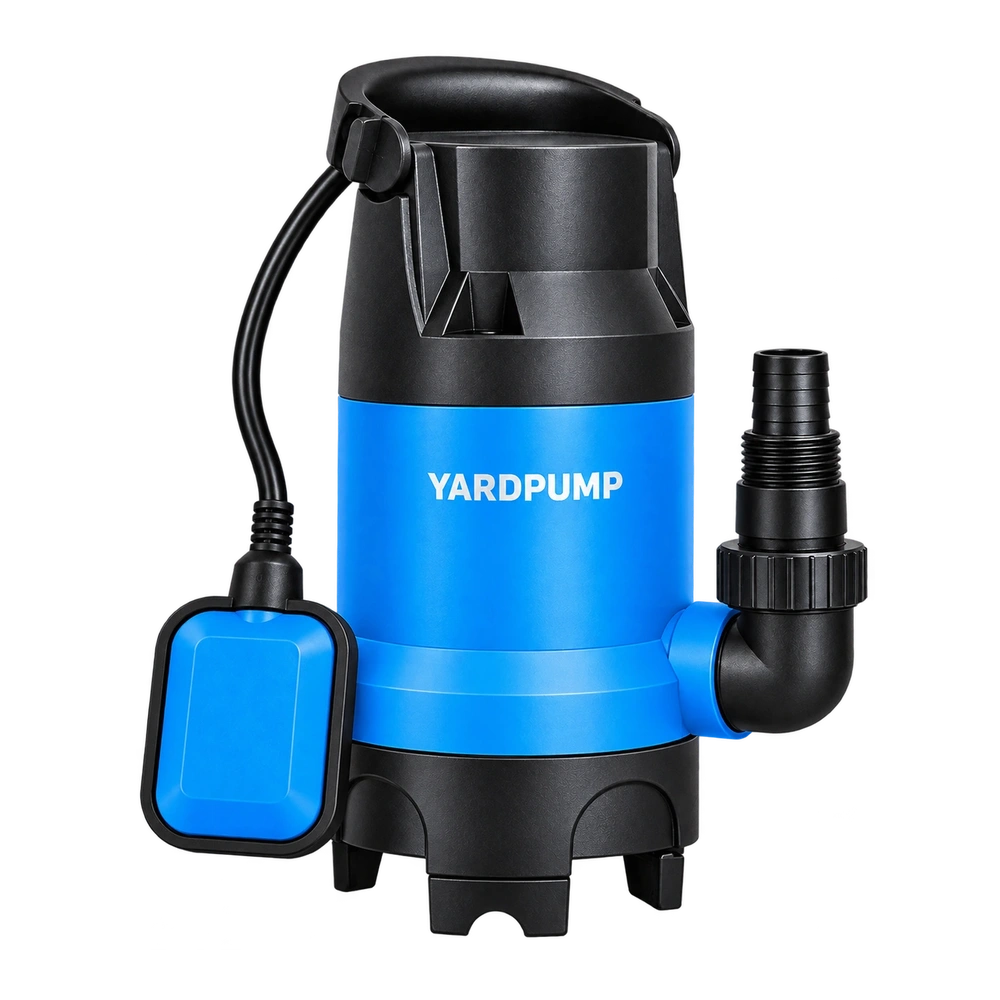
YARDPUMP buyers can start from the product range, review quality-control information and send their target duty point and electrical requirements through the RFQ form. Custom versions should be confirmed project by project.
FAQ
Is a 500 W pump always more powerful than a 1/4 HP pump? Not enough information. First determine whether each figure is electrical input, mechanical output or another rating, then compare verified performance at the same duty point.
Does lower current mean lower energy consumption? Not necessarily. Current must be interpreted with voltage, power factor and real input power.
Can two pumps with equal head and flow be compared using watts alone? Only when the head and flow refer to the same actual operating point and test conditions, not separate maximum endpoints.
Editorial boundary: All calculations are illustrative. No unverified competitor performance, test result or YARDPUMP model rating is asserted.