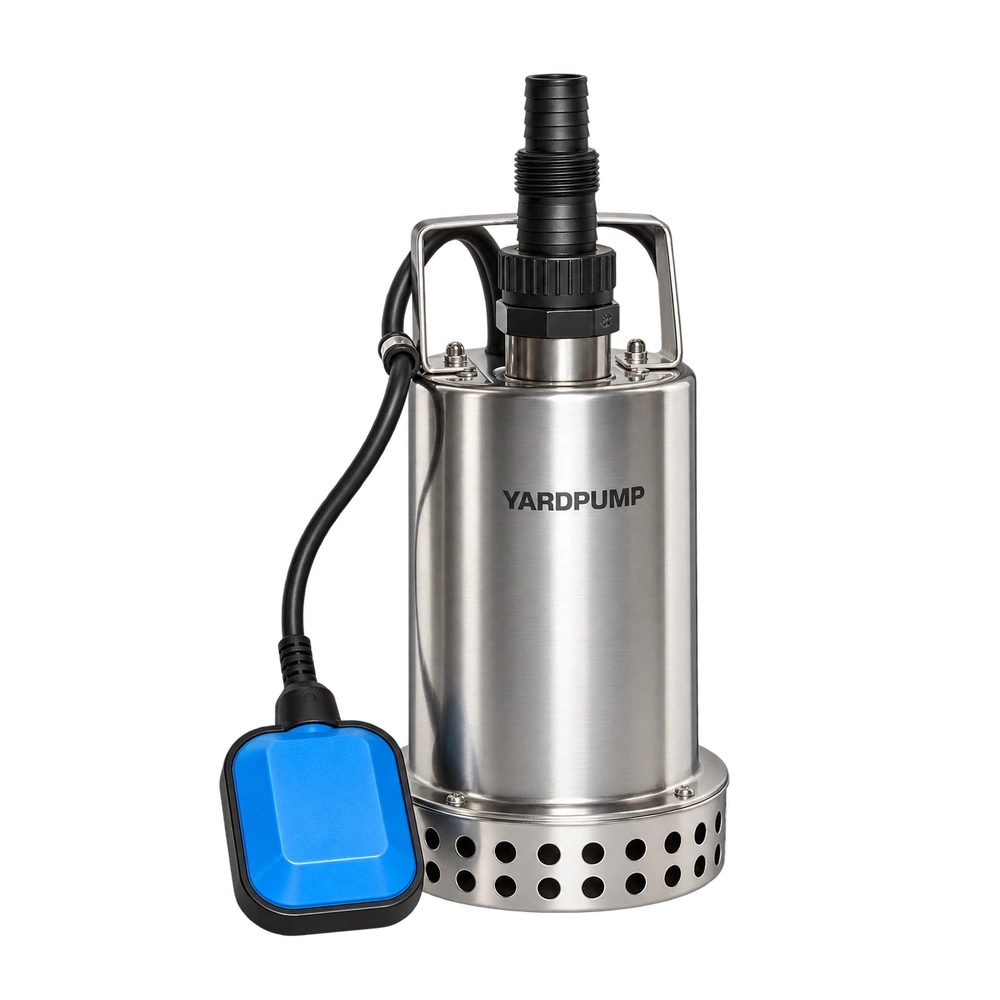
A factory tests its finished pump in water with the impeller fitted, while a laboratory requests the motor separately. These approaches can be compatible. A separate motor can still be loaded by a dynamometer. The meaningful questions are the applied torque, operating speed, cooling arrangement and scope of the conclusion.
A bare motor running freely does not establish its rated shaft output. The electrical watts displayed during that test describe its no-load input under the test conditions.
Load establishes the mechanical work
Rated shaft power is a declared rating under specified conditions. A motor does not deliver that mechanical output whenever it is connected to power. Actual shaft output depends on the driven load and operating speed.
Even without a useful external load, the motor consumes electrical energy to maintain its own losses, including magnetic and mechanical losses. Electrical input measured at the plug therefore differs from the useful shaft output.
A dynamometer establishes controlled resisting torque and measures speed. As an illustrative calculation, 0.67 newton-metres at 2,830 revolutions per minute corresponds to approximately 199 watts of shaft output. This is a calculation example, not sample test data. Input wattage alone cannot establish that output without an appropriate determination of motor losses or efficiency.
Match the test method to its purpose
The current Chinese small-power motor certification rule includes test requirements describing direct loading by a dynamometer or load motor for motors with a defined rated operating point. Motors requiring an actual load must be assessed using the applicable actual-load requirements. The laboratory should identify the method in its test plan.
An assembled pump test can reproduce the interaction between motor, impeller, casing and water circuit. Merely rotating an impeller in a container is not necessarily equivalent to running the complete hydraulic assembly at an agreed flow and head. Identify the actual parts and operating conditions.
A dynamometer offers controlled mechanical loading and can characterise the motor at a specified shaft duty. It does not independently prove the complete pump’s flow, head or solids-handling capability. Buyers can use both forms of evidence, provided each report states what it establishes.
Reproduce the declared cooling conditions
A submersible motor may rely on surrounding water or a particular cooling passage. Loading it in air without the declared cooling arrangement may not represent its normal application. Equally, unusually cold test water or additional circulation can give it more cooling than the real installation provides.
Record liquid temperature, immersion position, cooling method, duty designation, supply conditions and temperature-measurement method. Continuous-duty temperature tests need to meet the applicable thermal-stability requirements.
Some capacitor-run single-phase motors also require consideration of no-load or intermediate conditions. Maximum mechanical output should not automatically be assumed to create the highest thermal stress. The applicable standard and motor construction determine the required assessment.
Distinguish reserve capacity from an inconsistent rating
A stronger construction can provide engineering reserve, but the nameplate still needs to match the applicable actual-load test.
The GB/T 12350—2022 requirements reproduced in the certification rule call for a nameplate consistency check for motors with an actual load. Shaft output is compared with the declared rated output, with a deviation no greater than plus or minus ten percent. The check can use a dynamometer at the speed corresponding to the actual load.
Under that prescribed condition, a motor labelled 100 watts but delivering 200 watts has a positive deviation of one hundred percent. That does not become acceptable because the declared number is lower. A motor capable of greater output but actually matched to approximately 100 watts is a different engineering situation and still needs all applicable assessments.
Give the laboratory a complete application description
Provide rated shaft output and speed, winding and capacitor versions, protective arrangement, cooling requirements, duty designation and the associated pump configuration. Ask the report to identify how load was established and which configurations are covered.
This explanation concerns test methods and rating consistency. It does not decide whether a particular product falls within the CCC catalogue, and a motor report does not establish every complete-pump performance claim. Confirm the applicable official rule and standard editions for the application.
Questions buyers ask
Does a low no-load input prove an undersized motor? No. No-load electrical input and rated shaft output describe different conditions and quantities.
Can testing proceed without the impeller? A suitable dynamometer can establish mechanical load, but the method and cooling conditions must suit the assessment.
Does passing temperature rise permit a higher nameplate rating? No. Rating consistency, protection and the other applicable requirements must also be evaluated.