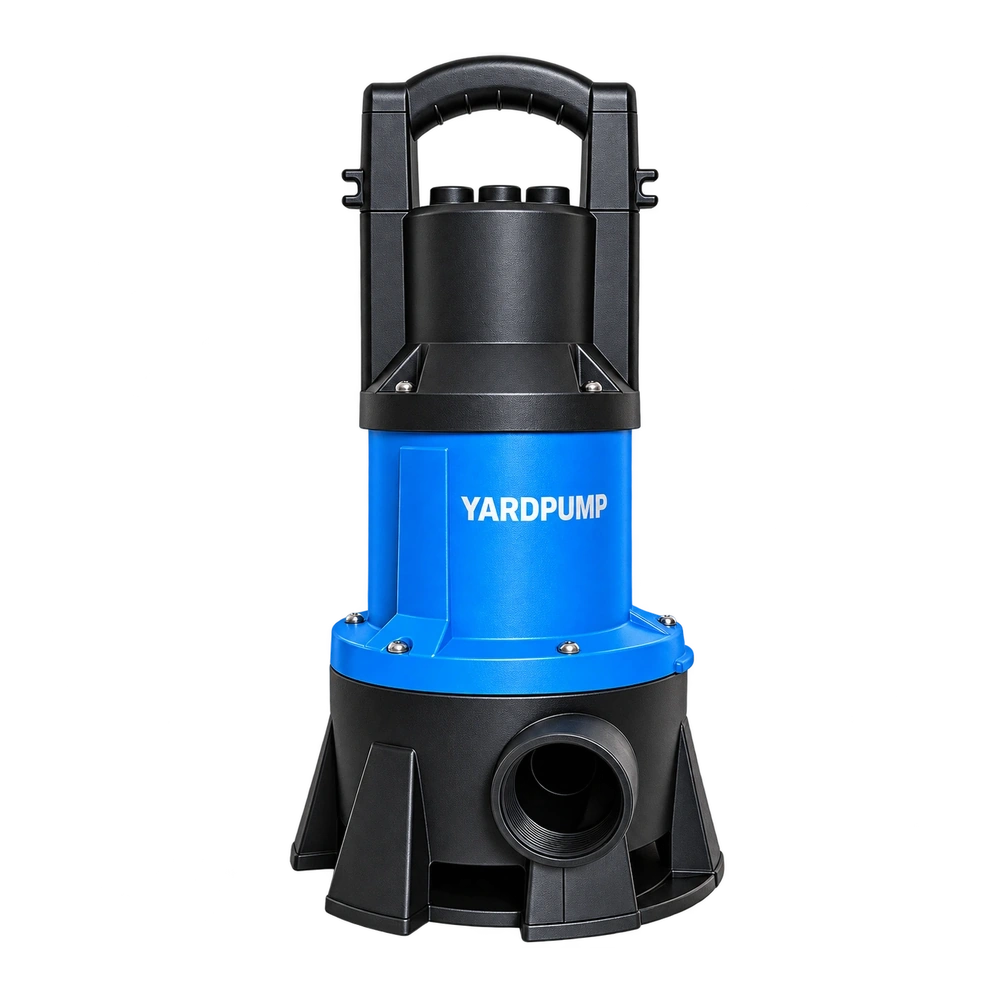
A submersible pump that starts normally on a suitable supply but struggles when connected through a long or undersized lead needs an electrical installation check—not an immediate assumption that the motor is defective. Cable resistance, connector condition, supply voltage, frequency and the motor's starting demand can all matter. The first step is to stop unsafe operation and verify the installation against the exact pump's electrical specification.
What voltage drop means for a pump
Every cable has electrical resistance. Current flowing through that resistance creates a voltage drop between the supply and the load. Longer cable runs and smaller conductor cross-sections generally increase the drop. Motor starting can draw substantially different current from steady running, so a pump that seems normal after starting may still have trouble at startup.
Low voltage at the motor can reduce starting torque and contribute to slow acceleration, repeated protection trips or heating. But these symptoms are not diagnostic by themselves: a blocked impeller, unsuitable control switch, damaged connector or incorrect voltage/frequency version may create similar complaints.
| Observed symptom | Possible installation-related factor | Evidence to request safely |
|---|---|---|
| Motor hums or fails to start | Supply issue, unsuitable lead, stalled hydraulic section | Model plate, supply type, installation sketch, fault history |
| Works near supply, fails at distant outlet | Cable length, conductor size or connection quality | Authorized electrician's inspection findings |
| Protective device trips | Electrical fault, moisture ingress, overload or supply issue | Exact device type, when it trips, qualified inspection |
| Pump becomes unusually hot | Low voltage, blocked intake, inadequate cooling or wrong duty | Water level, water temperature, runtime and fault chronology |
A repeated trip must not be bypassed. Disconnect power safely and arrange competent inspection; never test by removing the ground connection or defeating protective devices.
Do not mix market electrical variants
An OEM pump family may be available in different voltage, frequency, plug and cable configurations. Those are distinct approved SKUs, not interchangeable labels. A pump built and validated for one electrical version should not be assumed to operate correctly on another simply because the plug can be adapted.
For import buyers, the technical pack should identify rated voltage and frequency, permitted voltage range if documented, rated input and current where available, insulation and protection requirements, plug/cable type, cable length, and applicable destination-market conformity documents. Where data are not confirmed, mark them pending rather than filling a catalogue with generic values.
Why an extension cord is not a universal solution
Outdoor and wet-area installations create additional shock and damage risks. The pump instructions may prohibit extension cords entirely or impose conditions. Follow the exact manual and local electrical code. In professional settings, damaged or modified cords must be removed from service; connections need suitable strain relief and environmental protection. Never leave an ordinary plug joint submerged or exposed to standing water.
A distributor should avoid publishing a universal “maximum cable length” based only on pump wattage. The allowable installation depends on conductor properties, current, route, supply conditions, local rules and the manufacturer's instructions. A qualified electrician should verify the design.
A safe evidence checklist for after-sales teams
Request a photograph of the rating label, the destination market and supply specification, the installation diagram, the cable and connector model, whether the original factory cable was modified, the water level, the liquid condition and the sequence of events. Ask whether the problem appeared from first use or after months of operation. This information helps distinguish an electrical mismatch from a mechanical or hydraulic issue without asking a customer to open energized equipment.
For a product-family overview, use the technical article library. OEM buyers planning market-specific versions can consult the buying guide and share the exact target voltage, frequency, plug and cable requirements through the YARDPUMP inquiry page.
Technical conclusion: A cable is part of the electrical installation, not a harmless accessory. Confirm the correct pump variant and safe supply conditions before interpreting poor starting as a product-performance defect.
FAQ
Can I calculate a safe cable length from the pump's wattage alone? No. Current, conductor size, supply conditions, installation method and local requirements also matter.
Will a plug adapter convert a 50 Hz motor into a 60 Hz version? No. A plug adapter does not change the supply frequency or establish motor compatibility.
Should I reset a tripping protective device repeatedly to finish draining? No. Stop operation and have the fault investigated by a qualified person.