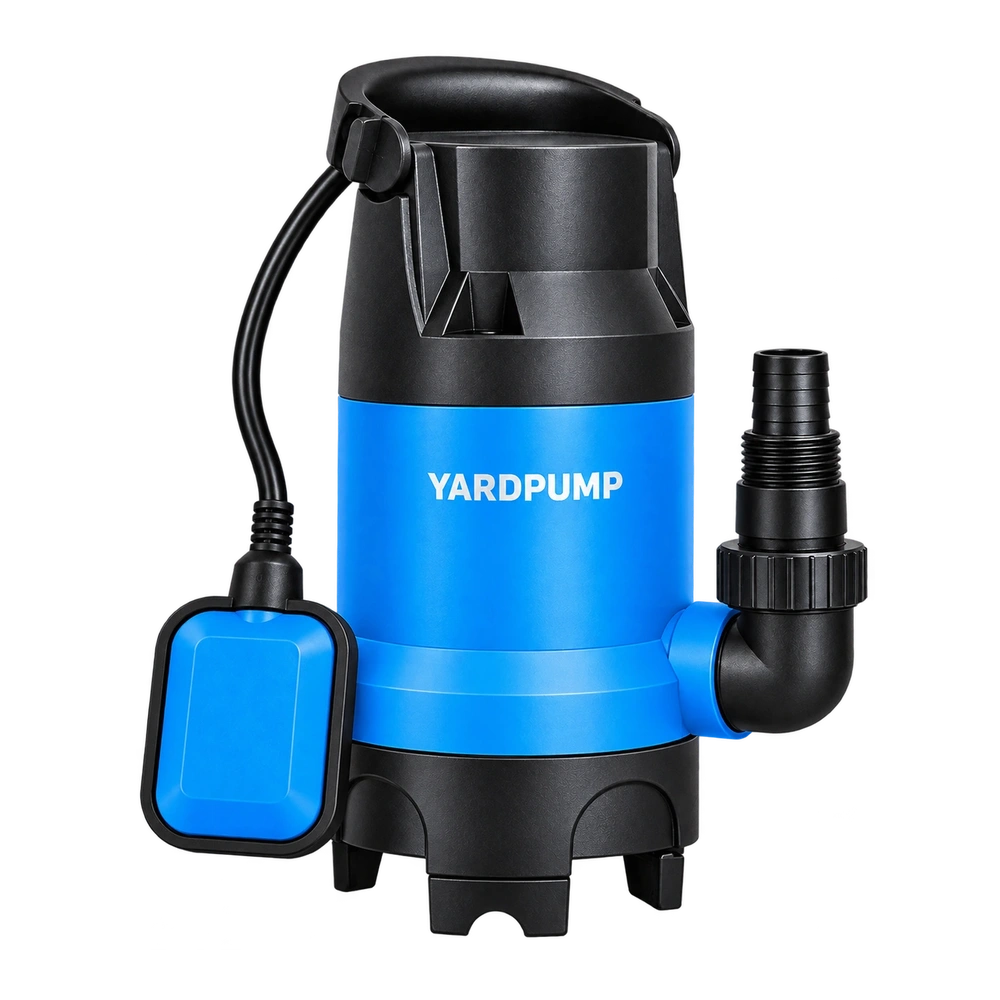
The pump and controller are returned together. The pump appears satisfactory on its own, but will not start with the original controller. Is the pump faulty, the controller faulty or the combination incompatible? In this typical service situation, a controlled cross-check can help, provided compatibility and safety have been established first. It is a method for isolating variables, not permission to connect suspect electrical equipment to a healthy unit and see what happens.
Identify the complete returned system
Record models, revisions and wiring configurations for the pump, controller, cable, sensors, protection and accessories. A controller may contain starting, speed-control or protective functions. Matching plugs do not establish interchangeability. Supply, phase arrangement, load capability and control logic must correspond to the approved configuration.
Retain the site water level, pipework, fault codes and event sequence. If the bench omits the original level or pressure signal, restored pump operation does not establish that the reported complaint was false. The test may simply have omitted the control state necessary to reproduce it.
Apply a safety screen before any substitution
A controller with ingress, burning, an insulation concern or a potentially unsafe output should remain isolated for qualified assessment under the manufacturer's procedure. Do not use a healthy pump as its first test load. Apply the same principle to a damaged pump, cable or sensor.
Only manufacturer-permitted, compatible combinations that pass the necessary screening should enter an appropriate controlled test arrangement. Mark unsupported combinations as untested or prohibited. Filling every cell of a comparison table never justifies bridging protection or improvising capacitor and motor connections.
Use a matrix instead of changing everything at once
| Pump and control combination | Purpose |
|---|---|
| Verified healthy pump and healthy controller | Establish that the rig and demand signals provide a valid baseline |
| Returned pump with an approved healthy controller | Investigate whether the behaviour follows the returned pump assembly |
| Approved healthy pump with the safely screened returned controller | Investigate whether behaviour follows the control assembly |
| Original returned pump and controller | Compare the original combination under permitted conditions |
Every cell remains subject to the safety conditions above. A baseline component needs an identified revision and approved suitability; a motor of another electrical construction is not an arbitrary substitute. Without a valid baseline, subsequent comparisons lack a dependable starting point.
Keep the hydraulic and demand conditions comparable
Control water level, temperature, pipework, valves, priming and demand signals between comparisons wherever appropriate. Record the test order. If replacing the controller also involves filling the tank, changing the hose and adjusting pressure, the result cannot be attributed solely to the controller.
As a hypothetical result, the returned pump may operate with two approved control arrangements, while the returned control assembly fails to perform its required action under the same demand. This narrows the investigation towards that assembly and its interfaces. It does not, by itself, identify a particular failed internal component.
Following an assembly is not the final root cause
A fault following the pump can originate in its cable, connections, mechanical resistance or loading conditions. Behaviour following a controller can involve settings, sensors or input signals. The matrix establishes an association boundary. Targeted assessment is still required to establish the mechanism.
If both components work separately in other approved combinations but fail together, revisit interface conditions, revisions and dynamic behaviour. That outcome is not a reason to declare the entire complaint resolved. Some starting and protection interactions occur only in a particular combination.
Make the service conclusion reproducible
Record authorization for each combination, component identities, conditions, action timing, measurements and observations. State untested items and reasons. Distinguish no reproduction, a narrowed investigation and a confirmed cause. One successful run does not establish permanent repair or approve a baseline component as a universal replacement part.
Repair or return disposition should follow the complete evidence and agreed responsibilities, not just which table cell reproduced the symptom. The value of a controlled cross-check is a shared set of reviewable conditions between distributor and manufacturer. That can reduce repeated shipping and uncontrolled replacement without inventing certainty about the cause.
Frequently Asked Questions
Do identical plugs permit a direct cross-connection?
No. Electrical construction, load, controls and protection must be compatible, with the required safety assessment completed first.
Does a fault following the pump prove a burnt motor?
No. The assembly includes cable, connections and mechanical elements. Association is not a component-level diagnosis.
How should an unsafe controller combination be recorded?
Mark it untested and state the safety reason. Follow the approved separate inspection process rather than forcing an unsafe comparison.