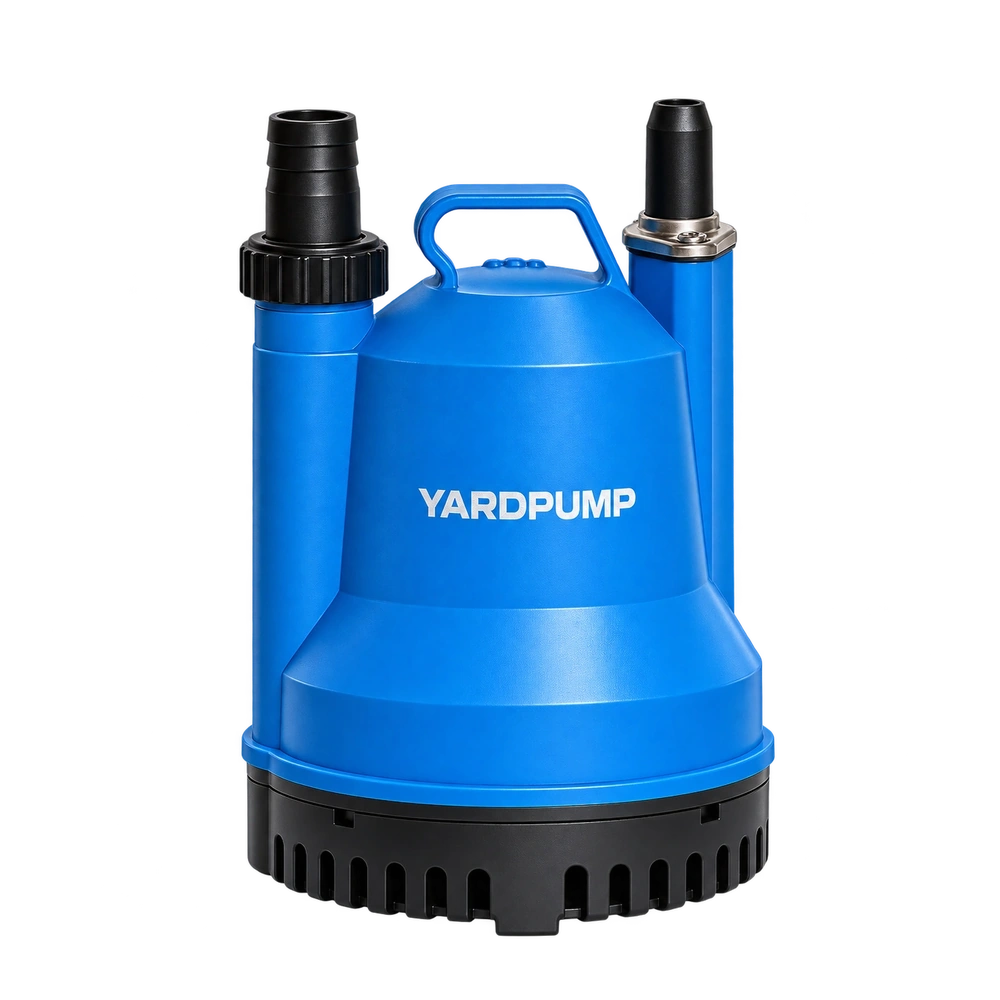
A customer reports that a pump occasionally stops delivering water. At the distributor’s bench it runs normally for ten minutes. The defensible finding is “not reproduced under the recorded conditions”, rather than “no fault exists” or “the user operated it incorrectly”. The next step is a bounded reproduction plan that tests plausible triggers.
Longer running is useful only when it addresses the reported failure mechanism. Otherwise it consumes time and sample life without resolving the complaint.
Define the symptom branch before selecting a test
“No water” can mean that the motor never starts, hums without accelerating, rotates without delivery or stops after protective operation. Ask for the states the customer could observe safely, together with water level and the sequence before and after the event. Do not ask the customer to open electrical parts or touch equipment in water.
Preserve the original hose, accessories, supply arrangement and control position as contextual information. Photograph the return, confirm its identity and record changes before cleaning or dismantling. A damaged cable, suspected water ingress or possible electrical leakage requires qualified safety assessment before any wet test. Such a return must not simply enter the normal test tank.
Keep the reproduction matrix small
Choose two or three variables strongly connected to the symptom, such as source level, shutdown duration or accessory resistance. Change one factor per comparison. Record the initial condition, duration, observations and any stopping rule triggered. An hour of continuous operation may tell very little about a complaint that happens only after overnight shutdown.
| Hypothesis | Controlled comparison | Record |
|---|---|---|
| Failure follows a long stop | Short and long stops at the same level | Start behaviour and retained water |
| Pipework triggers the event | Approved and returned accessories separately | Duty and accessory identity |
| The event needs a warm state | Permitted cold and warm conditions | Temperature state and protection sequence |
| Unit-specific or rig-related behaviour | Same-configuration comparison pump | Differences under the same procedure |
A comparison pump with a different motor or float revision is not a clean control. The rig also needs a documented supply, water temperature, pipe arrangement and measurement method. Otherwise an apparent unit difference may arise from the test itself.
Separate association from a demonstrated cause
Consider an illustrative finding: the returned pump delivers steadily through the standard short hose but intermittently loses delivery through the customer’s long hose. This connects the symptom with a pipe condition; it does not yet establish that the hose is the only cause.
Inspect bends, trapped air, connections and whether the resulting duty remains permitted. Run the comparison unit through the same arrangement. If replacing an accessory removes the symptom, repeat the original triggering condition with the repaired arrangement. That sequence gives stronger evidence than replacing several items and observing a single successful run.
Never exceed the allowed temperature, repeatedly stall the motor, remove protection or dismantle energised equipment to make a fault appear. Write stopping rules before testing. They may address electrical leakage, mechanical interference, failure to accelerate or failure to deliver within the approved priming period. Limits come from the model and authorised procedure, not a universal number of seconds.
Close the case with a precise status
Useful states include not reproduced, reproduced but not located, located awaiting correction, corrected and reverified, and insufficient information. For a non-reproduced event, state which conditions were covered and which site conditions could not be recreated. That protects the next service decision from an overconfident “normal” label.
Verification after correction must return to the original trigger, rather than merely applying power once. Preserve the before-and-after part or control revision, and check that unrelated conditions did not change simultaneously. Communicate observed behaviour and the verified application boundary without inventing a lifetime assurance.
Give the reproduction plan an endpoint. If the agreed matrix produces no event, record its coverage and the additional information needed instead of testing indefinitely. A safety finding ends the ordinary reproduction exercise. The closure should tell the distributor which installation conditions were verified and which still need site confirmation.
Frequently asked questions
Is a longer bench run always the strongest investigation?
No. It must cover the relevant trigger. Unrelated endurance can wear the sample without improving diagnosis.
What if the site condition cannot be recreated?
Document the gap and use a safe approved substitute condition or an appropriate site investigation. Do not claim that every cause has been excluded.
Must a successful repair establish one exclusive root cause?
Investigate as far as the evidence permits. Distinguish a confirmed cause from a hypothesis and from an improvement that has been verified under stated conditions.