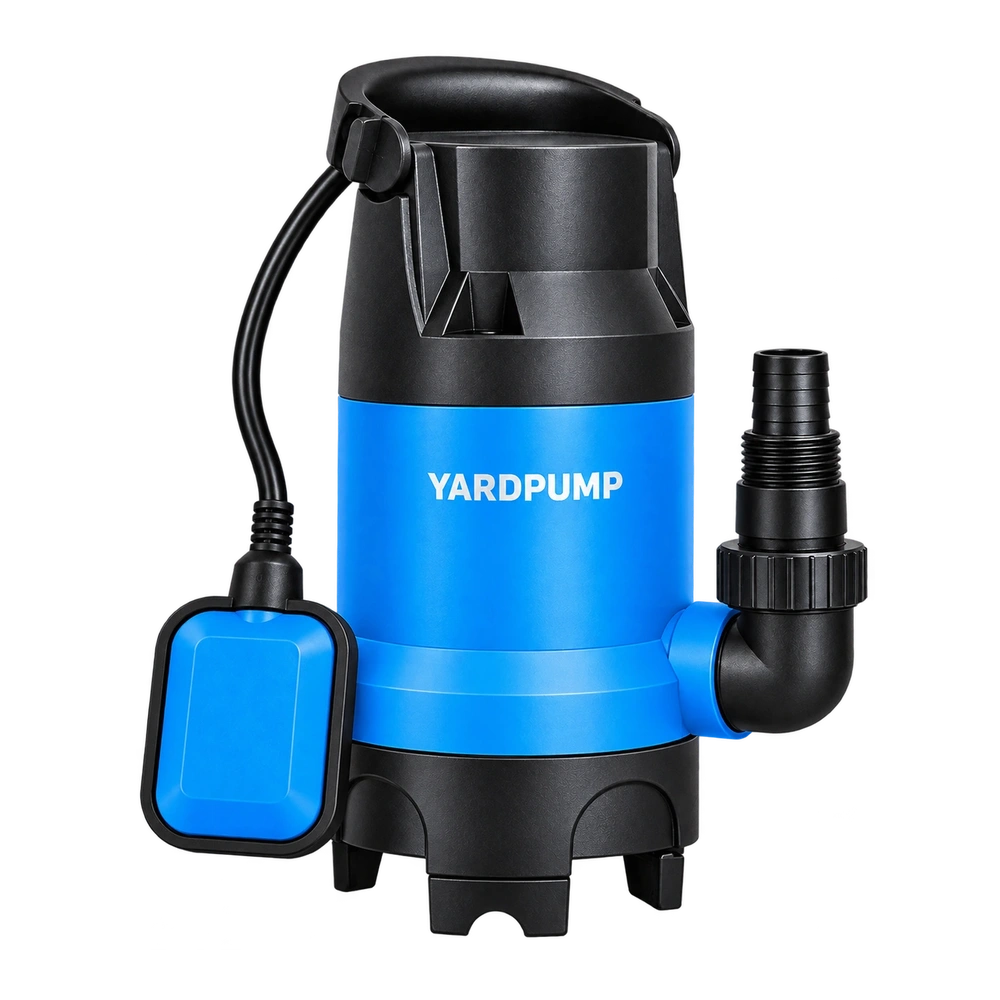
A customer sends a photograph of a coloured film on the water and asks the distributor to confirm an oil leak. The first response should control use and preserve evidence. Establish whether the material came from the pump and which interface is involved before calling it harmless or assigning responsibility.
This guidance concerns pumps that actually contain an oil chamber or another lubricating medium. Not every submersible pump does. Confirm the model and version before applying an oil-chamber diagnosis. The following process is a proposed service approach, not a report of a particular customer incident.
Stop further exposure and preserve the installation
Where release of oil or another unknown material is suspected, stop using the equipment and isolate its supply from a safe, dry location. For aquaculture, pools or other sensitive water uses, prevent the affected water from continuing into service until an appropriate assessment is made.
A small visible quantity does not establish that the material is harmless to fish or people. Nor does the pump’s previous operating history establish suitability for a particular water use.
Request photographs of the pump, label, surrounding water and installation. Record when the film first appeared, whether it predated pump operation, the liquid handled, running time and recent servicing. Where safe professional sampling is available, background water and water near the equipment can be retained separately. Customers should not enter the water, dismantle an energised unit or identify fluids by smelling them.
Separate source identification from motor condition
There are three distinct questions. Is the film an oil-like contaminant, and was it already present? If it came from the pump, did it originate from assembly residue, a stationary joint or a running seal? Has liquid also entered the motor cavity?
Those questions need different evidence. A photograph cannot answer all three.
In a design with a separate oil chamber, record the outer seal, chamber and motor-side barrier separately. Water in the oil can indicate a leakage path requiring investigation, but it does not independently prove that the motor winding is wet. A motor that still runs also does not prove the sealing system is sound.
Inspect a return before altering its condition
Document packaging, retained liquid, external damage and closures on arrival. An authorised service team should then follow the model-specific procedure. Preserve useful evidence before cleaning, draining, refilling or dismantling the assembly.
Discarding the original oil immediately can remove information about quantity, contamination and emulsification. Use the manufacturer’s specified fluid, filling requirements and inspection method when evaluating the evidence.
Do not borrow an acceptable water-content limit from another pump or apply a large industrial pump’s service practice to a compact unit. Mechanical face seals restrict leakage rather than representing a theoretical zero-leakage barrier. That engineering fact does not establish that any visible surface film is acceptable.
The investigation may examine chamber and motor-cavity condition separately, seal faces, elastomers, shaft interfaces, fastenings and signs of previous service. Appropriate water-exclusion, electrical and running checks should follow the applicable plan. Electrical insulation and energised tests belong with qualified personnel and suitable equipment.
Close the claim with a configuration-specific finding
Useful findings distinguish a confirmed source, evidence still required and a condition not reproduced. Failure to reproduce the symptom does not prove the customer’s observation was false. Cleaning, shutdown or earlier repair may have changed the original condition.
Keep the commercial service decision separate from the technical root-cause conclusion. Replacing a customer’s pump does not automatically prove that a particular component caused the problem.
If similar evidence appears within one batch, review seal and shaft lots, buffer-fluid records, assembly operations and final inspection results. Confirmed corrective action should be tied to an identified revision and verified, rather than ending with a general request for service centres to fit another seal.
Customer communication can remain concise: stop use, explain the inspection or return arrangement, list the information needed and state the next review step. A clear evidence sequence helps the distributor act promptly without making an unsupported diagnosis.
Questions buyers ask
Does milky chamber oil mean the motor must be replaced? Not by itself. Evaluate the model’s construction, fluid requirements and independent motor-cavity evidence.
Does food-grade oil make a surface film acceptable? No. It does not establish complete-pump suitability for drinking water, fish or swimming pools.
Can a claim still be investigated after an oil change? Yes, but record that the original condition changed and obtain earlier photographs, fluid records and service details.