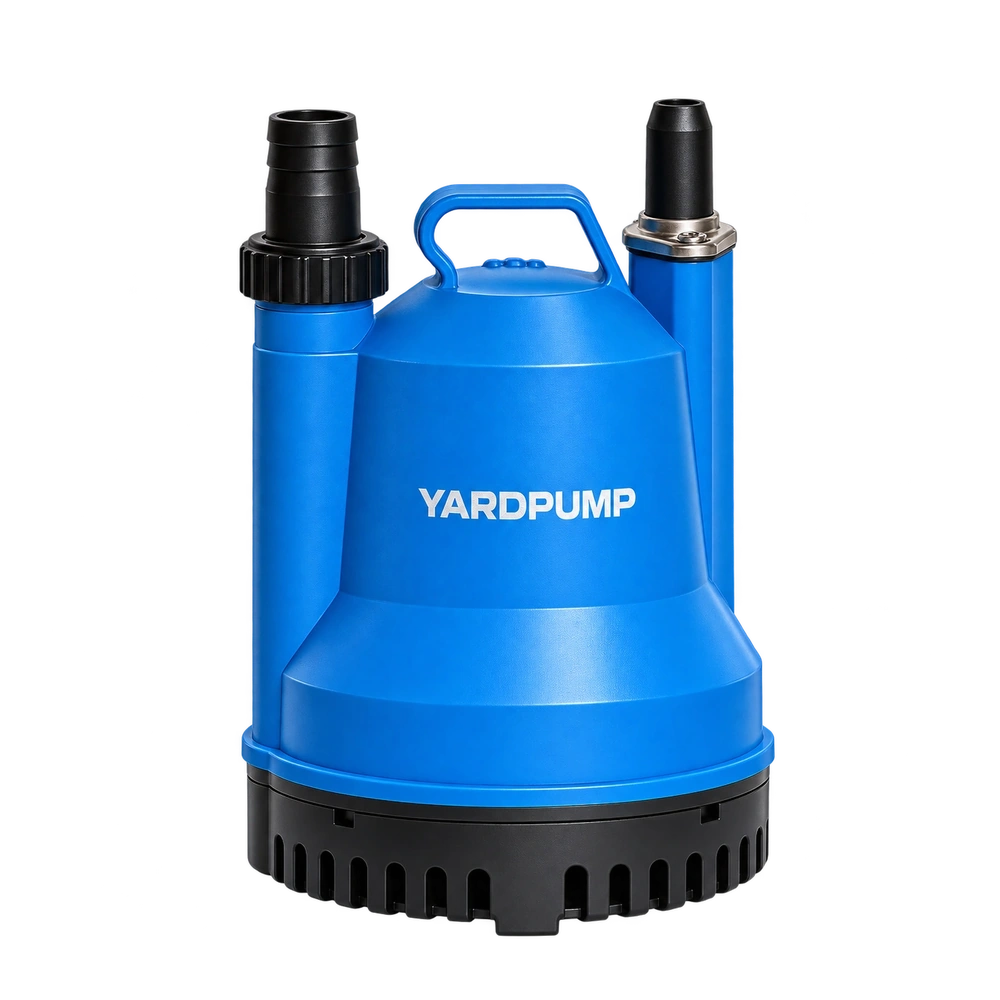
Short answer: Stock parts that resolve common, safely verifiable compatibility and handling issues, but do not turn every returned submersible pump into an unauthorized field-repair job. Separate external accessories from safety-critical electrical or sealed motor components, then tie each replacement to a specific model and revision.
The problem behind the parts shelf
A distributor sells several compact pump families. A customer says “the pump does not fit my hose”; another reports a damaged connector; a third reports water entering the motor housing. Treating all three as “send a spare part” is poor service. The first may be a connection mismatch, the second may need a verified external replacement, and the third requires safe isolation and qualified assessment.
The correct question is not how many parts can fit on a shelf. It is which cases can be resolved without compromising safety, warranty or product identity.
Build three service lanes
| Service lane | Typical items or cases | Distributor response |
|---|---|---|
| A. External, model-matched | Approved hose adapters, connector kits, external mounting pieces, printed instructions | Confirm thread, dimensions, included contents and revision before dispatch |
| B. Controlled service | Approved float assemblies, accessible external components where the manufacturer authorizes replacement | Use the exact service instruction and trained personnel; confirm warranty consequences |
| C. Escalate / isolate | Suspected water ingress into sealed motor, damaged power cable, electrical protection trips, insulation concerns, seal failure | Stop use; do not energize or open a sealed unit casually; refer to the approved service process |
The lane is determined by the specific pump design and manufacturer's service policy. A component that is user-replaceable on one product may not be replaceable on another. A float switch is not automatically a universal plug-and-play part.
A stocking decision without invented failure rates
Use actual service records, not generic industry percentages. For each part, record: supported SKU/revision; historical requests; lead time; minimum purchase quantity; shelf life or material aging considerations; unit cost; and whether installation is permitted in the destination market. If no reliable history exists, start with a small, clearly labelled compatibility kit rather than assuming a failure frequency.
Keep one line of traceability between the customer complaint, the original SKU, the dispatched part and the result. This prevents a “helpful” replacement from creating a new leak, wrong-thread connection or warranty dispute.
A useful example: the outlet kit
A pump outlet may have a nominal size, a specific thread standard and one or more reducers. A customer may own a garden hose whose internal diameter is much smaller than the pump outlet. A replacement adapter can solve a connection problem, but it will not magically restore maximum rated flow through a long, narrow hose. Sales and after-sales should share the same connection diagram and product limits.
A service kit can contain a clear model label, approved adapter reference, a simple connection drawing, an accessory-content checklist and a QR code pointing to the correct product documentation. This is a proposed distributor process, not a claim that every YARDPUMP model already has a standardized spare-parts kit.
What to ask the factory
Request a model/revision parts compatibility table; which components may be replaced without opening the sealed motor; approved instructions; parts identification photos; warranty handling rules; and a return route for unsafe cases. If a design revision changes a connector or float assembly, quarantine old compatibility assumptions before shipping replacements.
For model and project details, consult Product Families, Quality Control and Contact.
FAQ
Should distributors stock mechanical seals? Only as part of an authorized repair program with qualified technicians and approved procedures. A seal is not equivalent to a garden-hose adapter.
Can a damaged power cable be patched? Do not recommend field splices or improvised repairs to a submerged electrical product. Follow the manufacturer's instructions and applicable local electrical requirements.
What is the first part to stock? There is no universal answer. Start with model-matched external accessories and actual service demand, then refine with documented cases.