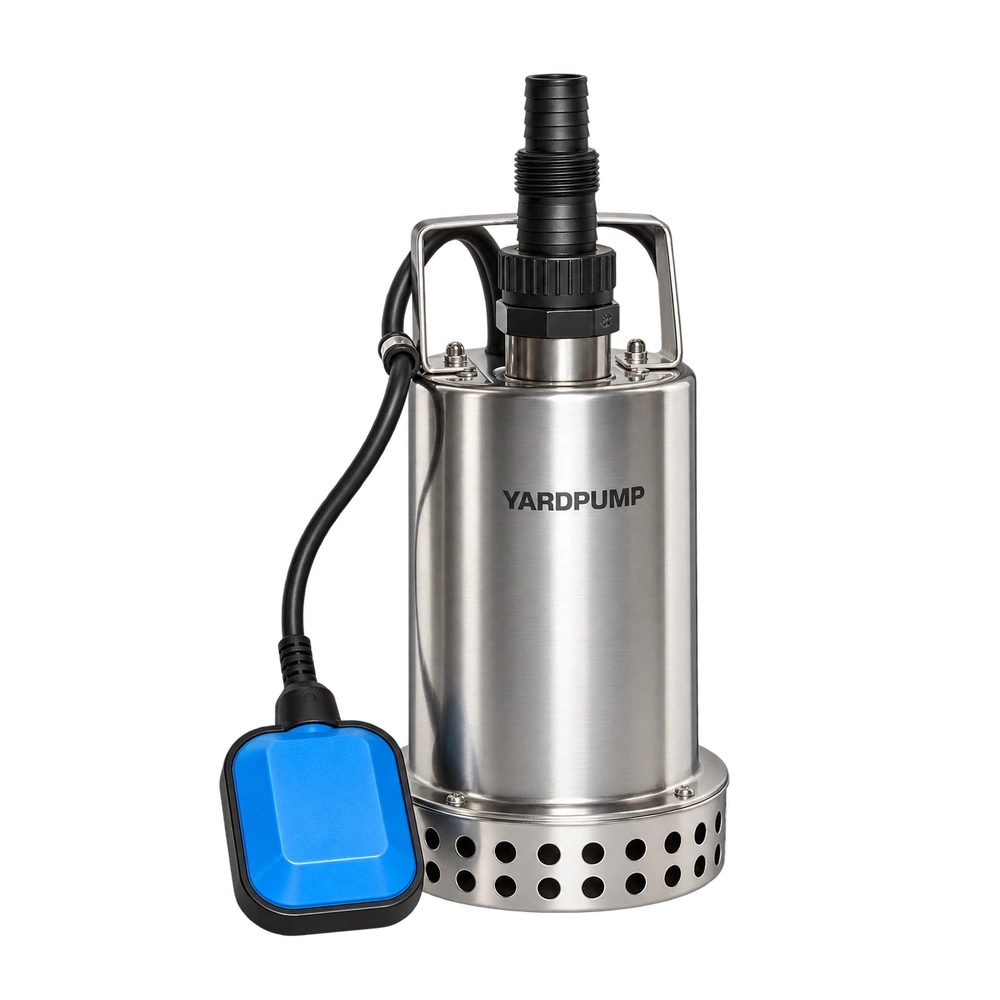
If a landscaping truck is parked on a slope, why might the pump draw air while the tank gauge still shows a reserve? Start with local water depth in the compartment that feeds the pump. At rest, the free surface is approximately level while the tank floor follows the vehicle. Water can remain in the low end while the pickup in the high end approaches the surface. A larger pump can empty the pickup compartment faster and may make the interruption worse.
Measure the compartment that feeds the intake
Record the permitted parked orientation, the direction of the floor slope and the pickup height above the floor. Find the openings in the baffles. The drawing may show two compartments with connecting openings, yet at low level some openings may be above water or too restricted to replenish the pickup at the required rate. Total indicated volume and local water level can then disagree. A level probe or float mounted in the other compartment will not see the same water as the inlet.
Compare what happens before and after starting. If the pickup already has too little water before the pump runs, check the parking direction and local depth. A strong initial flow followed by air, with recovery after a pause, warrants a check on transfer between compartments. Also check for a blocked inlet or a problem with the tank's normal venting. The investigation does not require hard braking or entry into the tank. Use permitted static positions and qualified staff to record initial volume, local levels and stable delivery. Keep people away from unsafe vehicle and water access during a test.
Estimate the difference from a measured slope
Take a rectangular tank with an effective length of 1.2 metres and a floor that rises approximately 0.10 metres per horizontal metre. The ends differ by about 120 millimetres. If the bottom is fully covered, the compartments communicate freely and mean depth is 100 millimetres, the high end has about 40 millimetres of water and the low end about 160. An inlet 30 millimetres above the floor at the high end has only about 10 millimetres above it. That calculation says nothing about reliable starting or minimum submergence. Verify both for the installed intake. The estimate changes when the bottom begins to uncover, the cross section is irregular, or levels do not equalize.
Where parking direction cannot be controlled, specify usable water across the allowed orientations rather than just nominal tank size. Have the vehicle or tank designer approve any collection pocket or low pickup. Do not cut baffles or move structural restraints as a field remedy. Place the low-level decision at the compartment actually serving the pump, and confirm that enough water remains at stop. An arrangement intended to supply water while moving needs a separate vehicle design review. A static parking check does not establish safe road behaviour or control of surge.
The recovery after a stop provides a useful additional observation. If neighbouring compartments fall while the pickup compartment slowly rises, water is redistributing through the baffles. If all levels stay similar and the intake still takes air, investigate local submergence, venting and flow at the pickup instead. Record the settling period before comparing layouts. A freshly filled tank with unequal compartment levels is a poor baseline. Use observation and measuring positions approved by the tank designer; do not drill a viewing hole or remove a baffle. If the parked position is outside the permitted orientation, return to an allowed position before supplying water. Adding water is not a way to waive that limit.
Frequently asked questions
Will turning the tank around solve it?
It may help for a repeatable slope direction. Check side slope, the reverse direction and low-level communication between compartments before committing to that layout.
Can larger baffle openings keep the pickup supplied?
They may, but they also change surge control and possibly structure. Have the designer evaluate opening position, pump flow and the complete tank.
Why stop with 30 litres still on the gauge?
Water below the inlet, in another compartment or stranded at the low end may not be usable. Set the control by reliable supply at the pickup.