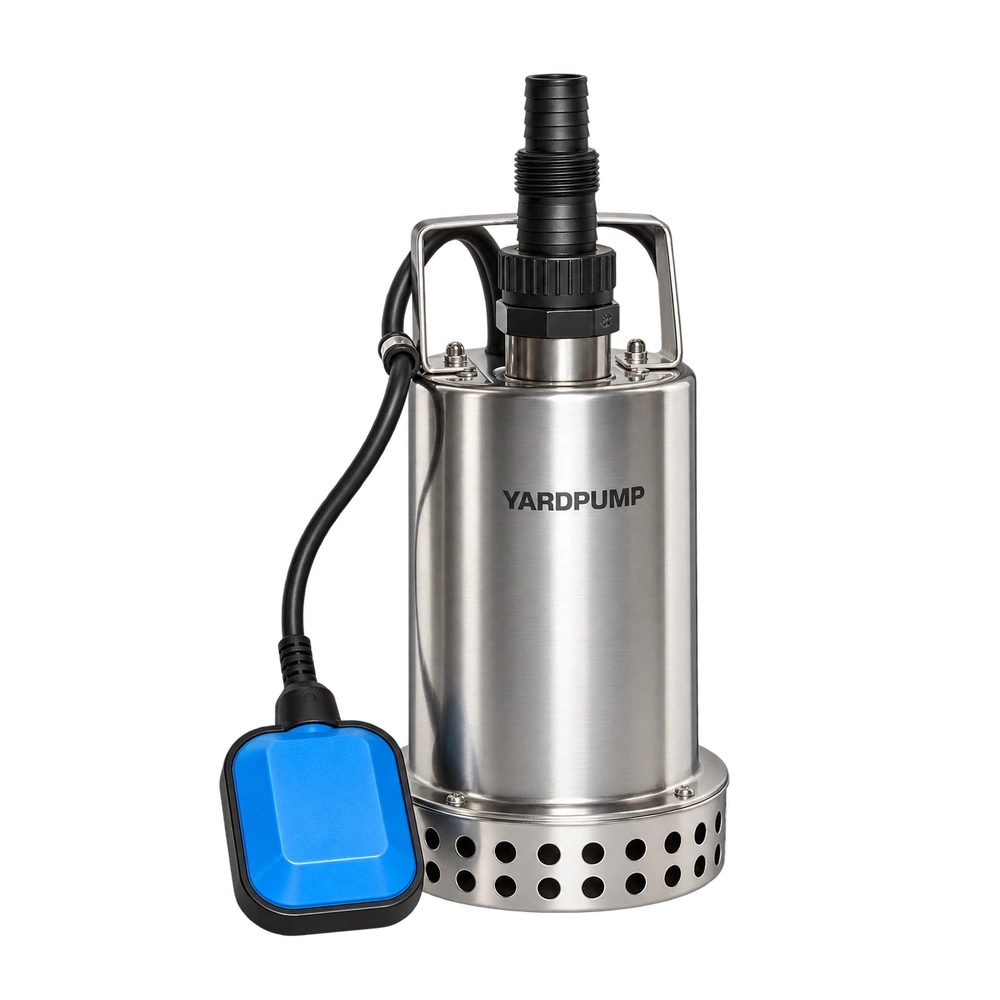
Water in a garage or loading area may contain petrol. Can an ordinary submersible drainage pump keep removing it? In this typical emergency-selection situation, the first step is to stop treating the job as ordinary clean-water drainage. Water ingress protection does not establish suitability for combustible liquids or potentially flammable vapours. A mixture that looks mostly like water, or a pump that continues running, provides no reliable safety approval.
Separate three different forms of suitability
An ingress-protection rating concerns specified protection conditions. It is not approval for a combustible medium or a hazardous location. Likewise, a seal material's resistance to a particular oil does not establish that the motor, switches, cable entries, connections and complete control arrangement are suitable. Extending a component compatibility chart into permission to pump fuel skips essential parts of the assessment.
Even equipment carrying a hazardous-location designation must match the actual substance, location classification, temperature and complete installation conditions. A general claim of explosion protection is not permission to handle every fuel mixture. For ordinary drainage equipment, establish the explicitly permitted liquids and conditions. The absence of a particular substance from a short prohibition list is not evidence of approval.
Appearance and small quantities are not release criteria
Substances such as petrol can produce flammable vapours. The apparent water proportion and surface appearance do not establish a safe concentration. Smell is not a reliable verification method either. Do not use ignition, heating, trial pumping or dilution as a way to demonstrate safety. A previous incident-free use also does not constitute a risk assessment for the present conditions.
The word oil is itself ambiguous. Lubricating oil, cooking fat, fuel and unknown chemical contamination present different questions. Beyond flammability, material compatibility, viscosity, temperature, solids and disposal can matter. If the source has not been identified, retain that uncertainty in the enquiry. Do not relabel an unknown mixture as clean water merely to make equipment selection easier.
| Observation | What it establishes | What it does not establish |
|---|---|---|
| An ingress-protection marking | Specified protection against ingress | Approval for combustible liquids |
| An oil-resistant seal compound | Some component compatibility information | Suitability of the complete electrical pump |
| No visible surface oil | A visual observation at that moment | Absence of vapour or contamination |
| Earlier use in similar water | One previous operating experience | Clearance of the present site risk |
Change the response when fuel is suspected
Do not plug or unplug equipment, operate possible ignition sources in the suspect area or enter standing water to inspect a pump. Keep people away and involve the site's emergency responsible person and competent specialists. Where a leak, vapour or another immediate danger is suspected, contact the appropriate local emergency service. Searching for a more powerful ordinary pump is not the next technical step.
Qualified personnel must determine whether removal should proceed, which equipment is appropriate and how the environment and contaminated liquid will be managed. This article does not provide hazardous-liquid pumping instructions or treat a single test or ventilation action as universal clearance. An unresolved safety boundary is sufficient reason not to select an ordinary drainage pump for the task.
Make the purchasing boundary explicit
An enquiry should identify the liquid source, known contaminants, temperature and site conditions. Ask the supplier to state the limits for the exact model. A sewage-pump category label does not automatically include chemical waste, fuel-contaminated water or every industrial liquid. Distributors need to pass these limitations to the actual operator, rather than communicate only flow and particle-passage figures.
If the description is merely a little oil or very diluted, help obtain the missing information and refer the assessment appropriately. Do not invent a safe concentration on the customer's behalf. Clear boundaries are useful service: they prevent ordinary drainage capability from being mistaken for complete hazardous-medium capability. The final objective is equipment suitable for a confirmed task, not an apparently reassuring label on one component.
Questions about contaminated drainage
Does IP68 mean that a pump is explosion-protected?
No. Ingress protection and hazardous-environment suitability require separate evidence for their respective conditions.
Can a small amount of petrol be checked by brief pumping?
No. Trial operation does not resolve unknown liquid or vapour risks. Obtain an appropriate competent assessment instead.
Would fitting an FKM seal make the pump suitable for fuel?
Not by itself. Compound compatibility does not establish complete pump, electrical-system or installation suitability.