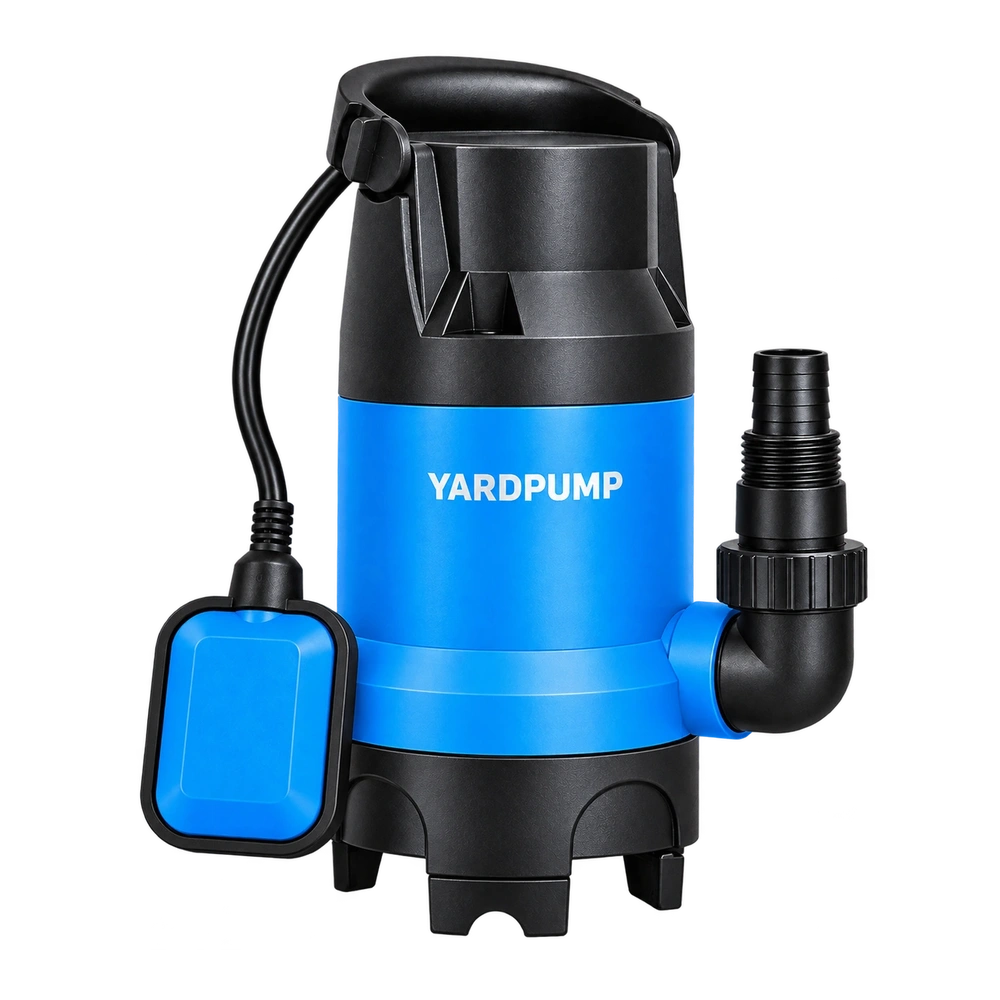
Not every submersible drainage pump is designed for continuous water circulation. A pump that empties a flooded basement for a limited period may face a very different thermal, hydraulic and maintenance duty when it runs a fountain or pond feature day after day. Before reusing a utility pump for circulation, verify the exact model's permitted operating duty, cooling conditions, liquid suitability and performance at the required flow and head.
Similar-looking pumps can have different jobs
Both a drainage pump and a circulation pump move water. The difference lies in how they are expected to operate. A drainage job may start with a large volume of water and finish when the level drops. A decorative water feature often needs a stable flow for extended periods, with the pump repeatedly exposed to fine debris, biofilm and changes in water level.
| Buyer question | Occasional drainage | Fountain or pond circulation |
|---|---|---|
| Operating pattern | Finite transfer or automatic intermittent starts | Long operating periods, sometimes repeated daily |
| Flow requirement | Water removal within an acceptable time | Stable visible flow at the nozzle or waterfall |
| Head calculation | Static lift plus pipe losses | Lift, fittings, filters, nozzle losses and desired display effect |
| Water condition | Varies by drainage source | May include algae, organic debris or treatment chemicals |
| Service expectation | Accessible after a job | Must be maintainable in an installed feature |
A product's appearance, motor wattage or IP rating does not establish its permitted duty cycle. Nor does a thermal protector mean the pump may run dry or outside its intended operating envelope.
Calculate the actual circulation duty point
A waterfall needs a target flow at the top of the feature, not merely a pump with a high printed maximum flow. Calculate the elevation change from the operating water surface to the outlet, then account for hose length, inside diameter, bends, filters and nozzles. Compare that system requirement with the model's Q–H curve. The curve's maximum flow and maximum head are different operating points; they cannot be achieved simultaneously.
For a fountain, also ask whether the water level can fall below the manufacturer's minimum cooling or submergence requirement. If a timer or automatic refill system is proposed, verify the compatibility of the electrical control and the pump. Do not assume that a float switch intended for drainage will provide the stable water-level control a fountain requires.
Four checks before a distributor says “yes”
1. Duty rating. Request the actual model instructions: continuous, intermittent or another specified operating mode, including any temperature or submergence restrictions. If no duty rating is documented, do not sell the pump as suitable for continuous service.
2. Liquid compatibility. Check whether the water contains salt, pool treatment chemicals, fertilizer, abrasive particles or organic debris. A plastic outer housing alone does not establish compatibility of the shaft, seals, fasteners and other wetted components.
3. Hydraulic fit. Confirm the flow required at the feature outlet and the real installed head. A long narrow hose can shift the operating point substantially.
4. Maintenance and safety. Confirm access to the intake screen, safe isolation of the electrical supply, cable routing and any applicable ground-fault protection. Maintenance instructions should not require handling an energized submerged pump.
What should go on the product page?
For a drainage-focused SKU, describe its verified drainage applications clearly. If circulation is supported by model-specific documentation, state the operating limits rather than a blanket “24/7” promise. Separate three claims: can be submerged, can move the required water, and is rated to operate for the intended duration. They answer different questions.
A brand planning a garden-pump range can compare application categories in the pump selection guide and review the QDX-PA product family as one possible clean-water product reference—not as proof of continuous-duty suitability. Share the planned operating hours, water conditions and hydraulic duty through the inquiry form for model-specific confirmation.
Selection conclusion: Choose the duty cycle before choosing the wattage. A pump that performs well in a short drainage task may still be the wrong product for an all-day water feature.
FAQ
Does IP68 mean a pump can run continuously? No. An ingress-protection designation is not a duty-cycle rating.
Can thermal protection substitute for dry-run protection? No. Thermal protection is not permission to operate without the cooling and water conditions required by the manufacturer.
Does a larger maximum flow make a better fountain pump? Not by itself. The relevant value is flow at the actual installed head and the required display conditions.