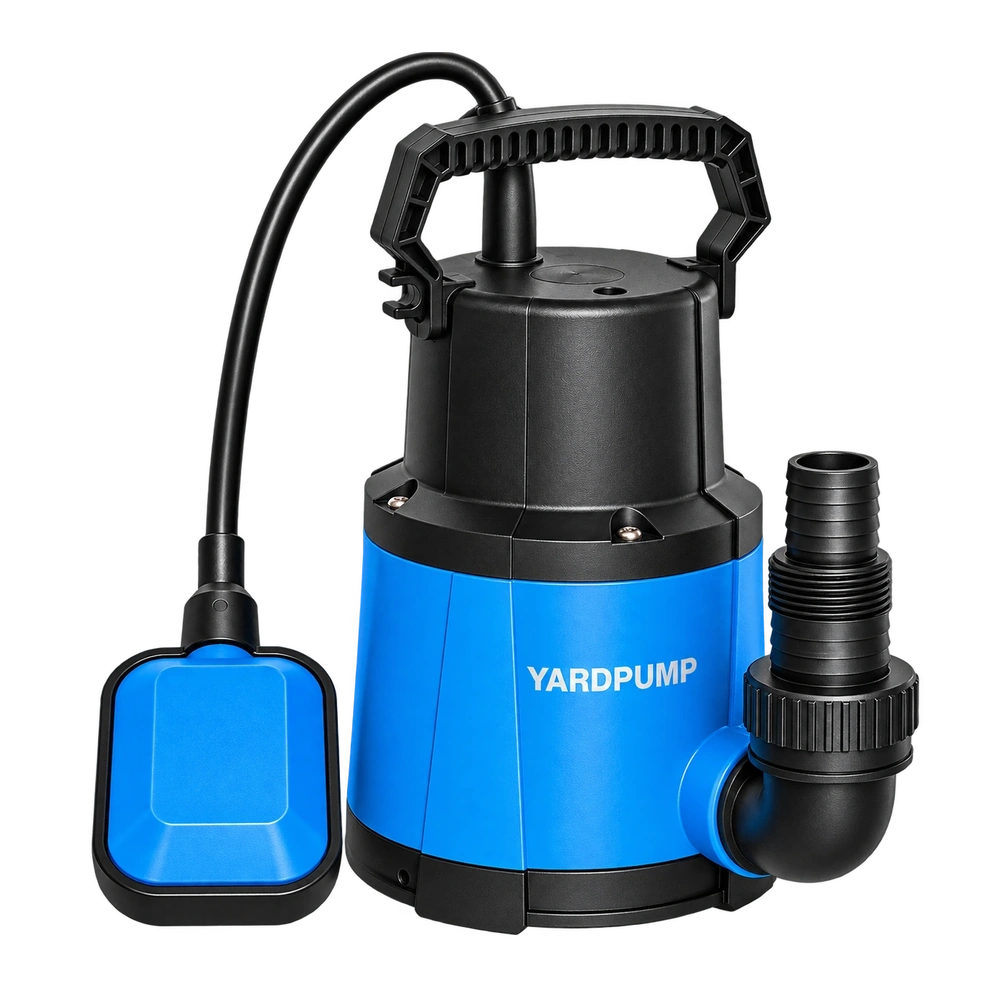
One of the most common distributor requests is a single pump for pools, basements, rain barrels, ponds and dirty water. One product can cover neighbouring duties, but clear-water efficiency, solids passage, low residual level, automatic control and continuous operation involve real tradeoffs. The correct response is a verifiable application boundary rather than a broad multipurpose label.
What drives the result
A low-level inlet sits close to the floor and improves final drainage, but it is also closer to sand and flexible sheet material. A larger free passage can handle some soft debris, yet may not provide the best hydraulic efficiency or residual depth. A tethered float suits a larger level change but can jam in a small space; manual control is direct but inappropriate for unattended protection. Garden supply adds a pressure requirement that drainage-pump maximum flow does not describe.
An illustrative way to check
Build a duty matrix. Pool drainage emphasises clean water, hose and residual level. Basement service emphasises automatic reliability and alarms. Rain-barrel use adds sediment and irrigation pressure. Pond use adds livestock and string algae. Construction water adds abrasive soil. If documentation supports only three of those five duties, label the remaining two as requiring another product rather than hiding the gap.
An RFQ should not ask only for a multipurpose portable submersible pump. It should state the liquid, highest and lowest water levels, vertical lift, hose bore and length, target emptying time, solids or fibres, electrical supply, and whether operation is supervised or automatic. The supplier can then identify a duty point instead of combining maximum flow, maximum head and rated power as though they occur together. Validate the first sample through a complete start-run-stop cycle in the intended piping. A brief no-load sound check does not represent the service.
Actions for the site or purchasing team
- Identify the three most frequent real jobs rather than every imaginable application.
- For each job, record water condition, minimum depth, duty head, required flow, run duration and control method.
- Compare each row with the curve, solids limit, minimum level, temperature and operating regime of the exact model.
- Specify matching hose, adapters, coarse screening and safe-use instructions instead of improvising accessories.
- State both suitable and unsuitable duties on the carton and sales page so misuse is not mistaken for product failure.
Limits and application boundary
Multipurpose never means unrestricted. Corrosive liquid, sewage, slurry, hot water, continuous fish-pond circulation and unattended flood protection each need separate approval.
Frequently asked questions
Is a clean-and-dirty-water pump universally suitable? No. Particle form, residual depth, pressure and run duration still have limits.
Does an automatic float work in every container? No. Small containers may not provide enough switch travel.
Can one pump maximise both low-level drainage and large solids passage? Some designs compromise between them, but both extremes should not be assumed without model evidence.
Related reading
How to Build a Submersible Pump SKU Range Without Stocking Five Lookalikes
Rated to Pass Particles but Still Blocking? Sand, Fibres and Sludge Behave Differently