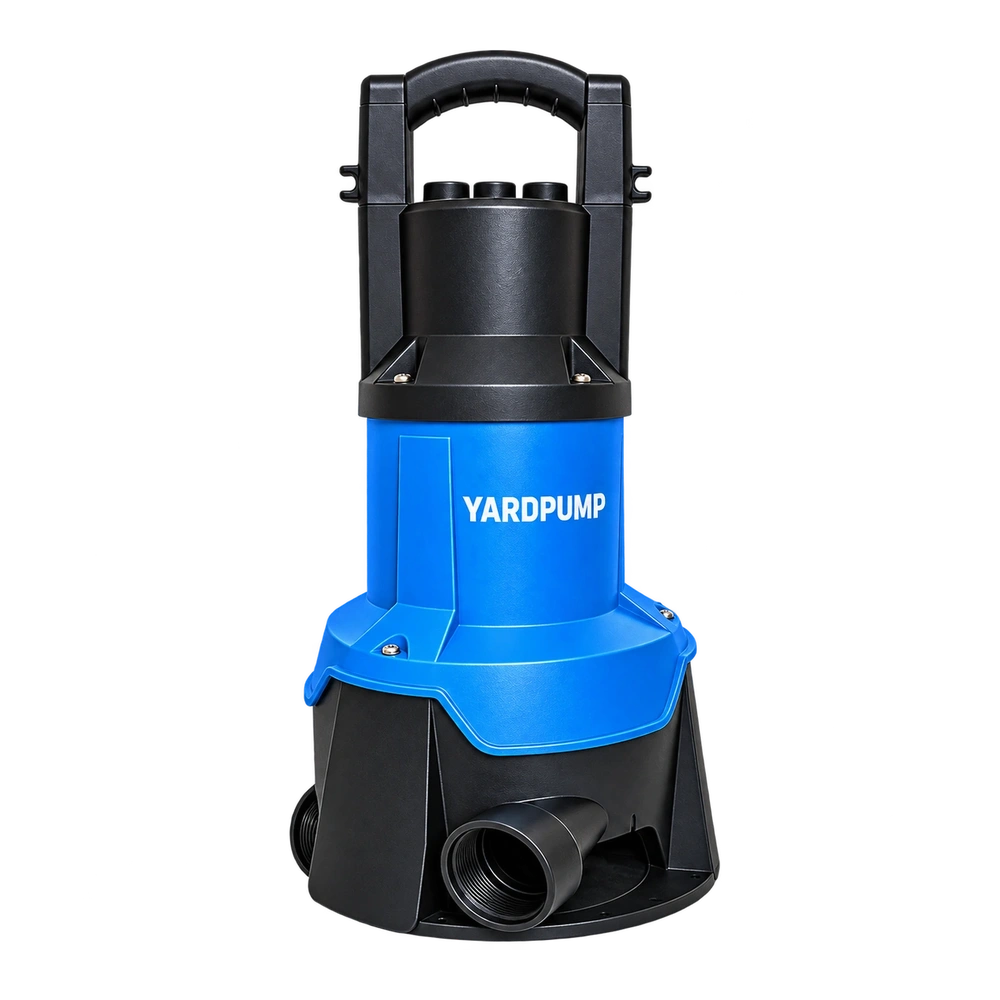
A customer may describe washing-machine discharge as clean water, yet a few weeks later the float is sticky and the inlet is covered with lint. Household greywater can contain warm water, detergent, foam, hair and fibres even when it appears clear. Suitability of a standard submersible pump depends on temperature, wetted-material compatibility, debris form and operating pattern.
What drives the result
Foam entrains air and can make inlet conditions unstable. Fibres cross screen openings and gradually form a felt-like mat. Detergent and softener deposits can restrict a float hinge or coat an electronic probe. Warm water lowers liquid viscosity but raises the ambient temperature around the motor and seals, reducing thermal margin. Intermittent appliance discharge can also cause frequent starting when the collection chamber is too small.
An illustrative way to check
For a method example, a washer releases sixty litres over only a few minutes into a small chamber. Selection cannot use an average hourly volume. It must compare peak inflow with pump delivery at the actual head. The chamber also needs enough volume between switch-on and switch-off levels to prevent one discharge from producing many short cycles.
An RFQ should not ask only for a greywater submersible pump selection. It should state the liquid, highest and lowest water levels, vertical lift, hose bore and length, target emptying time, solids or fibres, electrical supply, and whether operation is supervised or automatic. The supplier can then identify a duty point instead of combining maximum flow, maximum head and rated power as though they occur together. Validate the first sample through a complete start-run-stop cycle in the intended piping. A brief no-load sound check does not represent the service.
Actions for the site or purchasing team
- Ask for maximum temperature, detergent type, lint and hair content, and the use of bleach or softener.
- Size from peak discharge and lift, not the daily volume divided by hours.
- Provide a removable lint interception stage and a cleanable chamber with unrestricted switch movement.
- Verify every wetted material and temperature limit. Monitor foam, odour, switch action and drainage time.
- Where media classification or local disposal rules are unclear, use a purpose-designed greywater system and qualified advice.
Limits and application boundary
Definitions and discharge rules for household greywater vary by jurisdiction. Water containing sewage, strong oxidisers, solvents or excessive temperature is not an ordinary clean-water drainage duty.
Frequently asked questions
Is clear-looking laundry water clean water? Appearance is insufficient; detergent, temperature, foam and fibres must be considered.
Will a large solids passage prevent lint blockage? Not necessarily. Long fibres bridge openings and form a mat.
Why can an electronic level switch misbehave? Detergent film and foam on the probe can alter sensing.
Related reading
Rated to Pass Particles but Still Blocking? Sand, Fibres and Sludge Behave Differently
Submersible Pump Stops and Restarts? Thermal Protection Is Not Dry-Run Permission