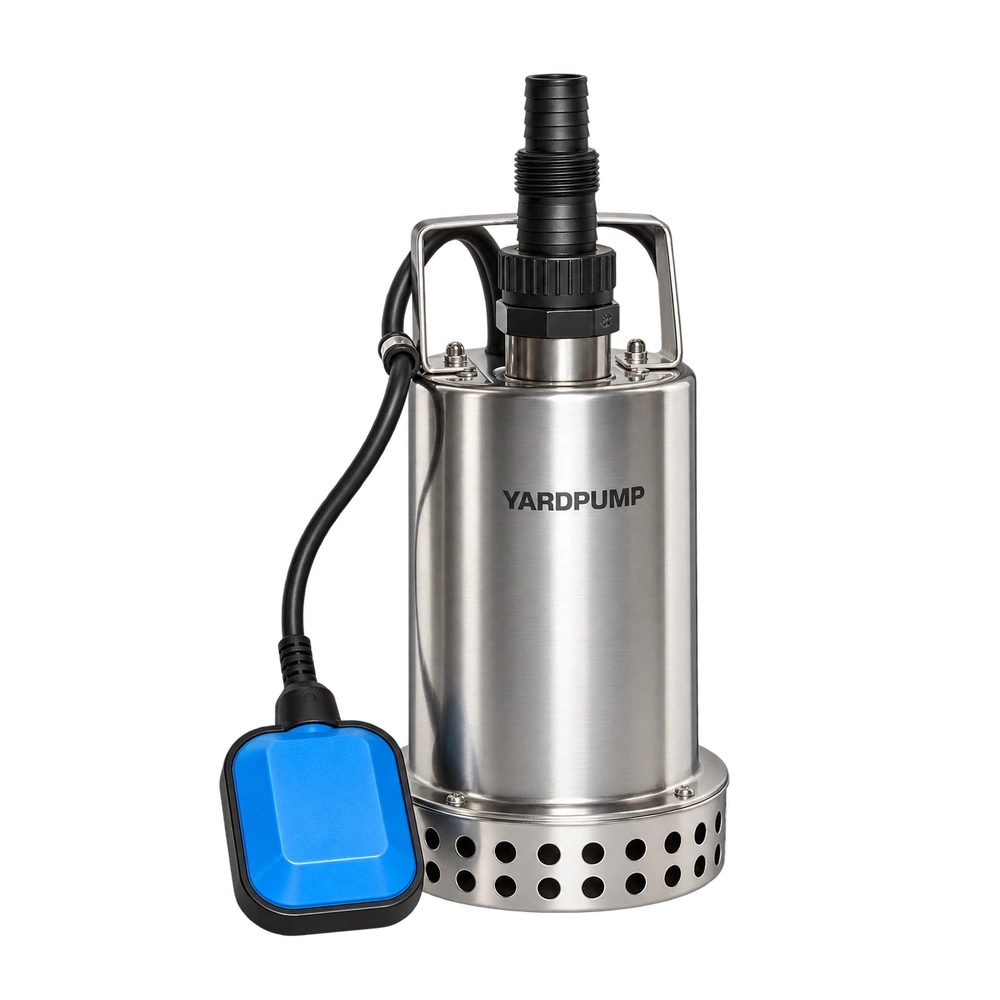
A portable submersible pump moves water from one wet area towards a floor drain. At first the drain seems to take it. A short time later, water spreads across the floor around the grille. The first question is how much water the drain can continue to accept, not whether the pump reaches its catalogue maximum. A depression beside a drain can hold the early discharge and hide a mismatch until that small storage volume is full.
Measure the two ends separately
Start with the pump's actual delivery. Flow at the hose end depends on its length, vertical rise, fittings and bends. A timed container check can help where the water is clean and the arrangement allows safe collection. Keep the outlet elevation and hose route representative. Where a container cannot be handled safely, use an appropriate measuring method instead of rebuilding the outlet just to take a reading. Report the measured quantity as flow for that arrangement, rather than treating it as something the pump delivers everywhere.
At the receiving end, find the sustained acceptance rate. Confirm that the outlet is suitable for that water and that electrical and floor conditions are safe. Have the drain checked under permitted site conditions by qualified personnel. Debris on the grate, a partly flooded branch and other discharges on the same line can all change what it takes. A drain that swallows the first few litres may still be unable to carry the continuous flow. Bubbling, backflow or unusual odours call for the drainage system to be checked, not for more pump flow in the hope of clearing it.
A little surface storage may hide the mismatch
Suppose the actual hose arrangement delivers 36 litres per minute and the receiving drain can sustain 24 litres per minute. The difference is 12 litres per minute. If the low area can hold 8 litres before water crosses a threshold, that storage lasts about 40 seconds under the assumed rates. The first few seconds of apparently normal operation tell you little about what happens after the low area fills. In practice, drain capacity can change with water depth, concurrent use and blockage. Do not use the calculation as an unattended operating period.
Record the sequence: pump starts, water appears at the grille, then the wet edge spreads. Include any concurrent drainage. If delivery seems to be below the measured acceptance rate but the floor still floods, check whether conditions matched when the two rates were measured. Look for a hose jet that lands outside the grate and for portions of the opening that are obstructed. Then investigate the downstream branch. A tightly stuffed hose can hide where water is backing up and create a different connection problem. Do not turn a temporary open discharge into an unapproved sealed connection.
Choose the outlet before sizing up the pump
When the receiver is unsuitable, find a permitted outlet with enough continuous capacity, then reassess pump flow for the new head and route. If the transfer rate must be limited, use a method within the pump and controller's approved operating range. A kinked hose or a fully closed outlet is not a flow control plan. An intermediate vessel can provide a buffer, but its high water level, onward transfer capacity and safe overflow path need to be part of the arrangement. Include where the water remaining in the hose will go after shutdown.
For a pump purchase or hire, sketch four items together: likely inflow to the source, the actual hose route, sustained acceptance at the destination, and the highest acceptable water level. The pump connects the two ends. If the receiver is the bottleneck, more flow can make flooding occur sooner at the other end. Unknown contamination, sewer backflow and potentially energised areas need professional assessment before anyone tries this clean-water comparison.
Frequently asked questions
Will a wider grate always accept more water?
No. The grate may be the restriction, or the trap, branch or downstream loading may set the sustained limit.
Why did the arrangement work earlier in the day?
The downstream load, debris or hose position may have changed. Check the receiving conditions and compare actual delivery before assigning a pump fault.
Can I push the hose tightly into the drain to stop splashing?
Do not improvise a sealed connection. Use an approved receiving arrangement with a controlled outlet and check where overflow or backflow could go.