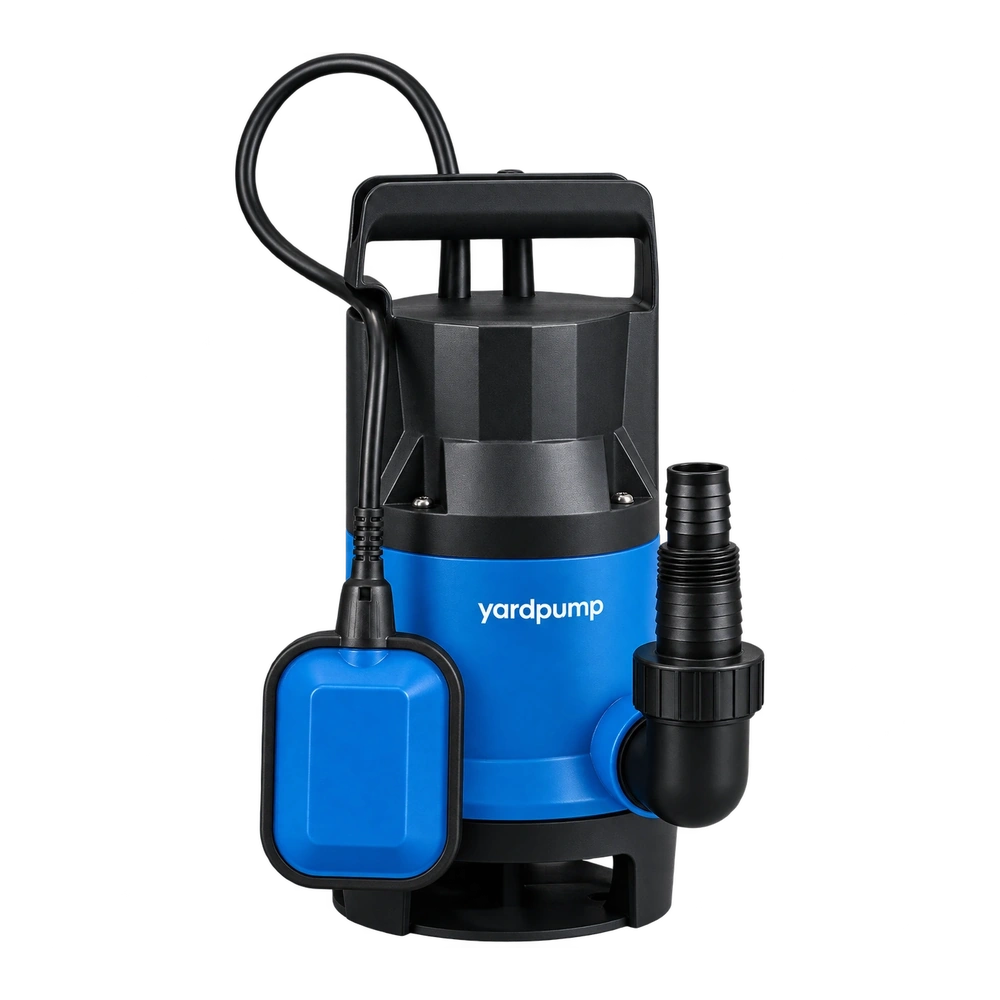
Picture a portable drainage pump clearing rainwater from a yard. The fitting at the pump is tight and the hose reaches the agreed discharge point. As water arrives, the last part of the hose suddenly swings to one side. Stop from a safe position and isolate the pump. Do not try to catch a moving discharge line. The condition to correct may be the support and restraint of the last section or a bend. Tightening the pump connection does not control the shape of a hose once it fills.
A filled hose behaves differently from an empty one
Water first inflates any soft sections that were flattened, works its way through bends and reaches the end. A loose curve may change shape, a twist can unwind, and the reaction from the discharge can move an unrestrained end. A hose full of water is also heavier and may slide on a slope. Movement on startup does not by itself prove water hammer. Even after the stream becomes steady, a change of direction can send water across the wrong area.
Find out whether only the last section moved or whether the hose pulled the pump. The last section points toward restraint near the outlet or at a bend. A moving pump also calls for a check of hose length, support, route and pump position. A hose crossing a path or step can make that place unsafe even if the pump connection never moves. A smaller outlet will add resistance in some arrangements and does not correct missing support.
Walk the route before starting the pump
With power isolated and the hose safely unpressurised, check whether the hose and connections suit the job and are correctly fitted. Follow the entire length. Look for tight bends, unsupported spans, slopes, places where the hose could be stepped on and sections that could roll or slide as they fill. Use appropriate supports and restraints following the equipment and hose instructions. Do not hang the weight of the line from the pump outlet. Point the end at an approved receiving area with room to take the discharge. A foot, a hand or an improvised weight that can pinch the hose is not a substitute for suitable restraint.
Keep people clear of the outlet and likely travel path during initial operation. Observe from a dry, safe position with a safe way to stop. If the hose moves appreciably, a connection leaks or water goes to the wrong place, stop and isolate before making an adjustment. Have qualified personnel deal with a fixed system that cannot be observed safely. Do not touch powered equipment in water or open a pressurised fitting.
Use the comparison to decide what to change
As an illustration, a pump uses the same hose and source depth on two trials. On the first fill, a bend straightens and the end shifts. After the bend is properly supported and the outlet is restrained as instructed, the second startup directs water to the intended place. The comparison supports a change to the layout. It does not establish a load rating for a fitting, stake or tie. Check sustained delivery and the position after shutdown as well. If there is still hammering or uneven discharge, investigate trapped air, an abruptly restricted outlet or internal hose damage. Adding more clamp pressure is not the next diagnostic step.
For a rental or equipment handover, record hose type, route, restraint points, outlet location and who controls starting and stopping. A close photograph of the pump does not show where water will land or whether people have a clear path. Repeat the layout check after changing the hose or where it discharges.
Frequently asked questions
Is a weight on the end always sufficient?
No. Check for sliding, damage to the hose and the direction of the load when the hose fills. Use an approved restraint for the arrangement.
Does it matter if the hose only moves during the first few seconds?
Yes. Initial movement is enough to send water to the wrong place or move the hose into a path. Control the first fill as well as the steady flow.
Can a supported outlet carry the entire weight of the line at the pump?
No. Restraining the far end and independently supporting the connection answer different problems.