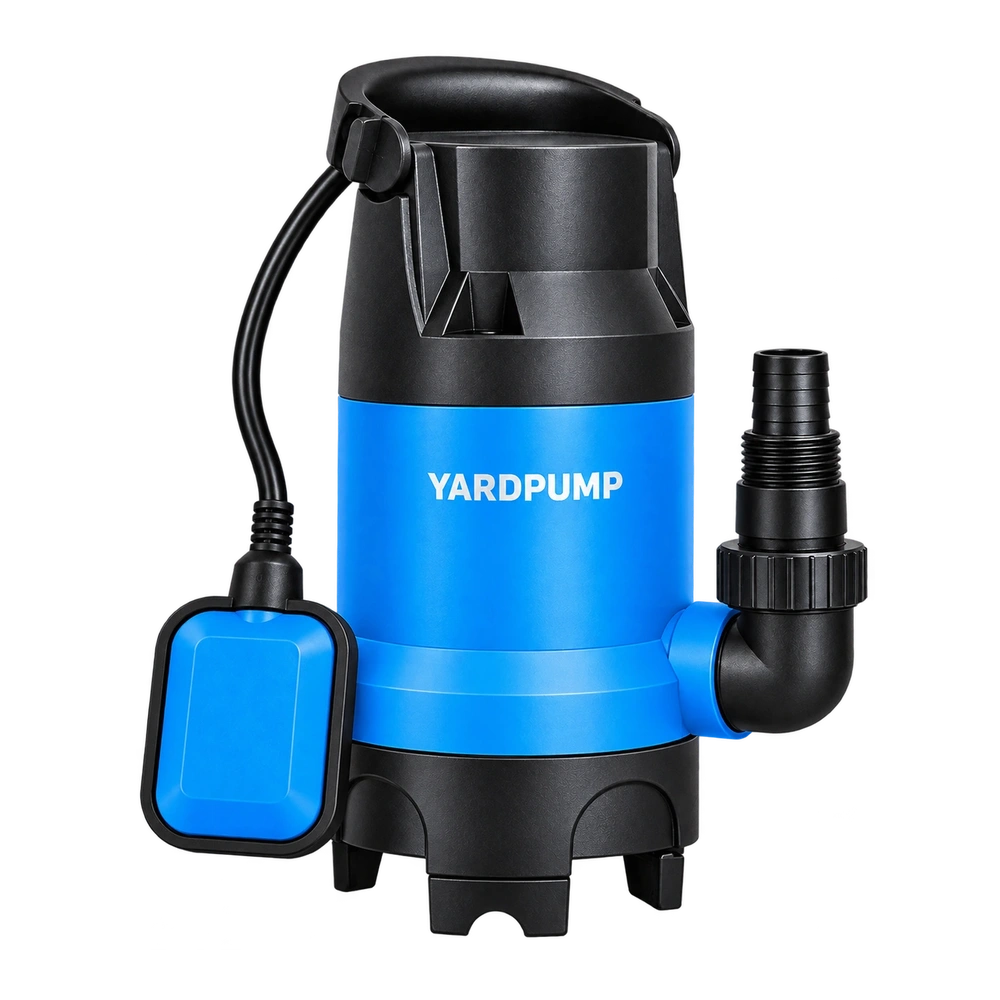
A rainwater pump produces a visible stream at the garden hose, but its source tank empties much more slowly than expected. In this illustrative situation, inspect the submerged discharge hose before replacing the pump. A split or loose underwater joint can return part of the pumped water to the tank. The impeller moves that water repeatedly, while only the water reaching the destination completes the transfer.
Distinguish pump circulation from useful delivery
A leak after the pump outlet creates another discharge route. The flow divides between the intended hose and the opening back into the source. Its distribution depends on the resistance and pressure conditions of both routes. A substantial stream at the garden does not prove that the underwater section is sound, and the pump may still sound entirely normal.
This differs from water simply draining back after shutdown. A running leak continuously wastes delivery inside the source tank. Shutdown drainback is a separate event that should be recorded separately. Likewise, an inlet vortex or falling source level can reduce flow without any hose damage. The diagnosis needs a water balance, not a conclusion drawn from motor noise.
Compare external delivery with source-volume change
Use a period without tank refill, rainfall contribution or another outlet, where that can be arranged safely. Measure the volume delivered outside and the change in source volume over the same interval. In a tank with constant horizontal area, volume change equals area multiplied by the fall in level. Curved or horizontal tanks need their actual level-to-volume relationship.
There is an important limit: source depletion and external delivery may still agree even with internal recirculation, because the recirculated water never leaves the source. That comparison identifies the useful transfer rate; it does not measure total pump flow or prove the absence of a leak. To establish recirculation, compare the installed hose with an intact approved discharge route under matched conditions, or observe the suspect section safely after isolation.
Use a controlled substitution
Suppose, only as an example, the original arrangement delivers 12 litres per minute externally. With a sound hose of the same effective bore, length, lift and fittings, delivery becomes 20 litres per minute. That difference warrants inspection of the original route. It is not automatically eight litres per minute of leakage, because changing a discharge branch also changes the pump's operating point.
Before lifting or disconnecting anything, isolate power. Retrieve the unit by its approved lifting method, never by the electrical cord. Inspect the submerged hose, barb, clamp, gasket and any puncture that could open under pressure. Do not squeeze or handle a pressurized damaged hose. Qualified personnel should investigate damage near electrical parts or water that has reached an unsuitable connection.
Prevent the replacement from failing in the same place
Look for a sharp tank edge, tight bend, unsupported fitting or abrasion against the pump. Merely fitting another hose without changing its route can reproduce the defect. Confirm the pressure, temperature and immersion suitability of the accessory and retain the required clamp engagement. Avoid tightening a clamp until it cuts the hose or distorts a plastic connection.
After repair, verify external delivery and source drawdown under documented conditions. Keep the tank refill closed only where safe and restore normal controls afterward. This is directly relevant to compact utility pumps transferring stored rainwater, but neither the illustrative flow values nor a replacement hose apply automatically to every YARDPUMP variant. The useful result is a proven external transfer rate with a sound discharge route, rather than a larger motor circulating water inside the same tank.
Check the final destination as well. Water delivered to a nearby point may run back to the tank through an open channel, producing slow drawdown without an underwater hose split. Observe the complete route before selecting the substitution test. This separates leakage inside the tank from external return flow, while keeping both distinct from normal ongoing refill. A complete water-path sketch is often more informative than another electrical reading.
Frequently asked questions
If source depletion equals delivered volume, is the hose leak-free?
No. Internal recirculation can satisfy that balance. It measures net transfer, not all flow through the pump.
Can I calculate the leak from the gain after changing hoses?
Not directly. The pump's operating point and losses also change, so the difference is diagnostic evidence rather than an exact leak meter.
Will a check valve cure an underwater split?
No. A check valve controls reverse flow in its intended direction; it does not repair a leaking hose wall or running joint.