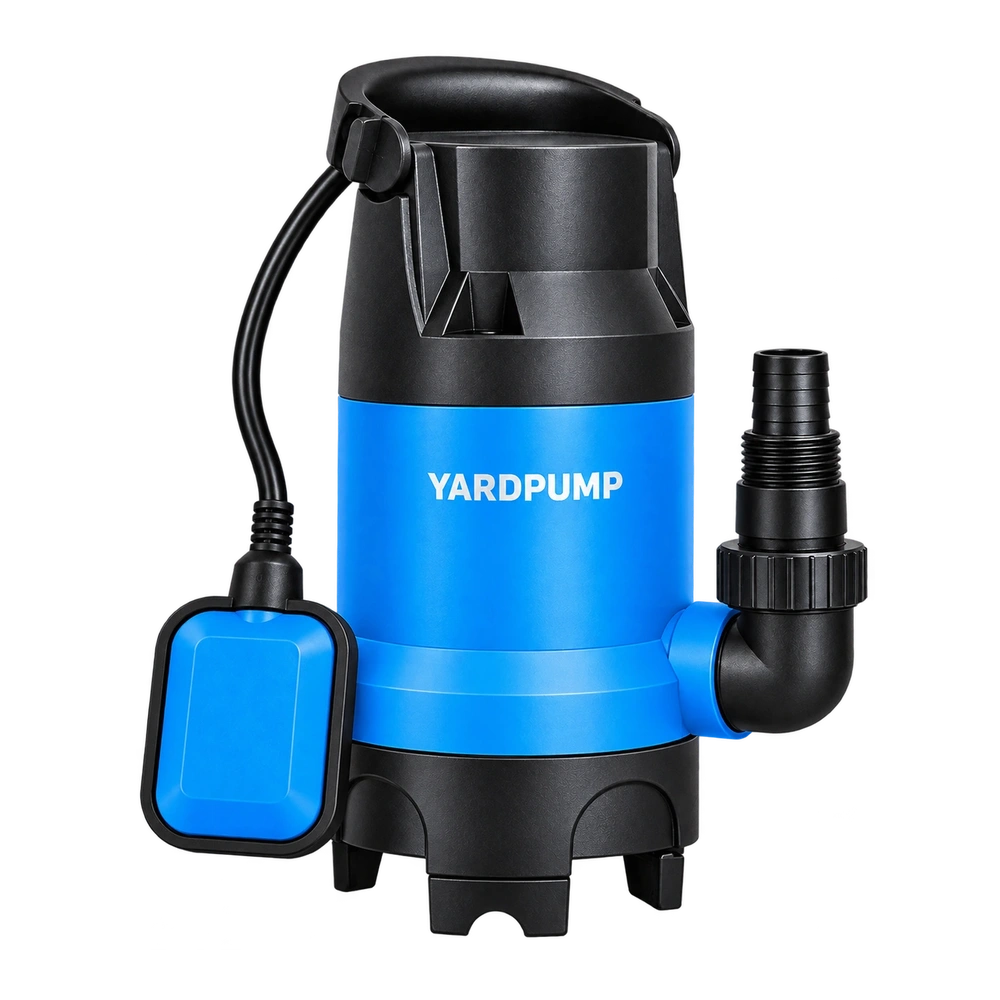
Imagine a portable submersible pump fitted with a longer, wider discharge hose. The pump sounds as if it starts, yet the end of the hose stays dry for a while. First delivery may be delayed because water has to travel through the empty line. Estimate the volume that must fill and compare the result with a safe record from the same layout. If the delay is beyond what the system can explain, or the water level no longer meets starting and cooling requirements, stop the pump as instructed and investigate.
First delivery is different from steady flow
The volume of a straight round hose can be estimated from its inside area multiplied by its length. Fittings, water retained from an earlier run, deformation and air at high points affect the actual result. A dry outlet does not immediately prove that the pump is moving no water; the water may be advancing through the hose. But low starting depth, inlet obstruction, a wrongly installed check valve or excessive head can prevent delivery altogether. Verify these conditions before treating a volume estimate as an explanation.
For illustration, a 20 metre hose with an actual bore of 32 millimetres holds about 16 litres if it remains round. Suppose average delivery during filling is 24 litres per minute and an initially empty hose needs to fill before water reaches its end. The estimated delay is around 40 seconds. A downhill section, an open vent, or retained water can make first arrival earlier. Trapped air or reduced pumping flow can make it later. This is not an allowable waiting time or a product rating.
Establish a meaningful comparison on site
From a safe, dry position, note starting water depth, hose bore and length, the highest point, outlet elevation, valve state and whether the hose begins empty. Check the manufacturer’s starting depth and any required venting arrangement. Under permitted test conditions, time first arrival and the start of stable flow, then measure delivery over a defined interval. A brief spurt does not establish normal operation. If the same layout can be started safely with a hose known to contain water, compare the two records. A change concentrated at first arrival supports a filling explanation.
Have suitable personnel handle electrical work, pressurised hoses or pipe changes. Stop and isolate the pump, verify the safe state and handle residual pressure according to the instructions. Do not move a live pump, loosen a hose to see whether water is present or close the outlet to try to speed filling. Check that the receiving point can accept the discharge when it arrives, and keep the hose directed away from people.
Use the pattern to decide when to stop
If a short hose worked and a long hose takes longer to deliver but then produces repeatable stable flow, compare hose volume and head first. If there is no sustained flow, the source approaches its operating limit, or a small discharge stops again, do not keep waiting. Start with the water level and inlet, hose kinks, check valve and permitted lift. If those conditions are sound, use qualified service to investigate the wet end or controls. A calculation alone cannot authorise a longer hose or operation outside the pump’s approved conditions.
An acceptance sheet can specify first-water time for a dry hose and steady discharge as separate observations. The first records a change from the initial condition; the second records what the system delivers once established. Both are useful when comparing different hoses on the same pump.
Frequently asked questions
Why can a wider hose take longer to deliver even when it has less friction?
A wider bore holds more water. First arrival depends on the fill volume and the flow during filling; friction at steady flow is a different consideration.
Can I use the catalogue maximum flow to calculate the delay?
Use an estimate for the actual lift and piping instead. The maximum flow does not describe the installed condition or the entire filling transient.
Will a hose that already contains water always deliver sooner?
It may, but check-valve behaviour, trapped air and outlet geometry can change the result. Compare the same layout and starting conditions.