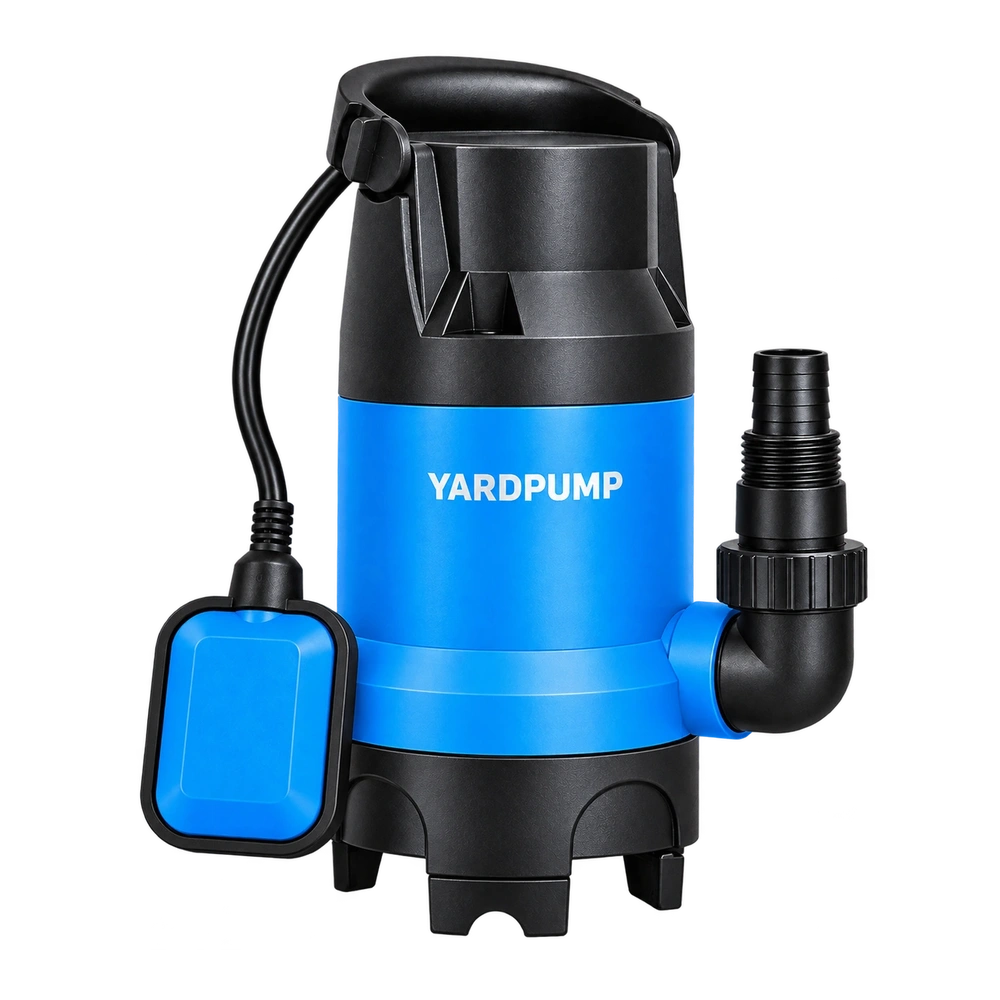
Consider an illustrative monitoring problem. The monitoring screen says the sump pump is running, but water continues to rise. Is the screen wrong? It may be reporting exactly what its sensor sees. A closed relay, detected electrical current and verified water leaving the property are different observations. Define which condition a monitor actually proves, then combine it with the water-level outcome that the installation needs.
Read the signal's literal meaning
A controller's run output may represent a command rather than feedback from the motor. A current relay can show that a load is drawing electricity, but a stalled motor or a pump rotating in trapped air can also consume power. Current alone is not a flow measurement. Even an expected current profile is evidence to interpret against the actual pump and duty, not a universal proof of delivery.
A discharge sensor is closer to the hydraulic outcome, but its location matters. Water circulating back into the sump, a leaking branch or flow measured before a diversion can produce an apparently healthy signal without the required net removal. A simple flow switch may detect only that its threshold was crossed. It does not necessarily report enough litres per minute to keep up with the incoming water.
Use the water balance to interpret a rising level
For an approximately constant basin area, the rate of level change depends on incoming flow minus net outgoing flow. A pump can be delivering normally and the level still rise because inflow is greater. Conversely, a falling level does not establish the full rated flow if incoming water is negligible.
Consider an example with an effective basin area of 0.20 square metres. While the pump is commanded on, the level rises 30 millimetres in one minute: stored water increased by about 6 litres. If independent observations establish inflow near 26 litres per minute, net removal was about 20 litres per minute over that interval. Without the inflow information, the six-litre increase cannot tell you the pump's discharge. These assumed values illustrate the balance, not a field test or a design capacity.
Specify warnings for distinct failures
Ask the installer to define separate conditions rather than one green operating icon. A start command with no motor feedback, running feedback with no expected hydraulic response, excessive running duration and high water are different events. Each needs an appropriate delay and response. Allow for the approved start-up and pipe-filling period so that every normal start does not become a false alarm.
| Indication | Useful question | Remaining limitation |
|---|---|---|
| Start command | Did the controller request operation? | Motor may not have started |
| Current detected | Is the monitored circuit drawing power? | Delivery may be absent or insufficient |
| Discharge detected | Is water crossing the monitored point? | Flow may not be sufficient or reach the destination |
| Water falling | Is storage decreasing during that interval? | Inflow and other drainage remain relevant |
Do not simply disable a troublesome alarm. Review its threshold, delay, sensor fouling and installation against actual recorded cycles. On compact drainage systems, an added sensor or fitting can introduce pressure loss or catch debris. Confirm that the proposed monitoring arrangement suits the liquid and does not undermine the pumping task.
Accept the complete arrangement under controlled conditions
Use a qualified installer and an approved safe test plan. Record start demand, motor response, level trend, discharge observation and the final destination. Confirm normal operation and the monitor's specified fault simulations without deliberately dry-running, blocking a live outlet or bypassing protection. Keep emergency drainage available when testing an occupied property's protection.
For purchase or service handover, write the claimed function precisely: “motor current indication” is a defensible description if that is what the device provides. “Successful drainage confirmed” needs a defined hydraulic criterion and evidence covering the monitored route. Neither an app nor a more powerful replacement pump resolves an undefined success condition. Appropriate high-water warning remains necessary even where separate run and flow indications are available.
Frequently asked questions
Can motor current ever help diagnose a hydraulic fault?
Yes, when compared with a validated baseline for that pump, supply and duty. It is a diagnostic clue rather than an independent flow measurement.
Does one visible discharge stream prove enough capacity?
It proves delivery at that moment. Capacity still needs the actual quantity, working conditions and incoming-water demand.
Should the pump stop if a flow sensor reports nothing?
That response requires system design. A faulty sensor must not unintentionally remove essential drainage; define safe fault handling with the responsible engineer.