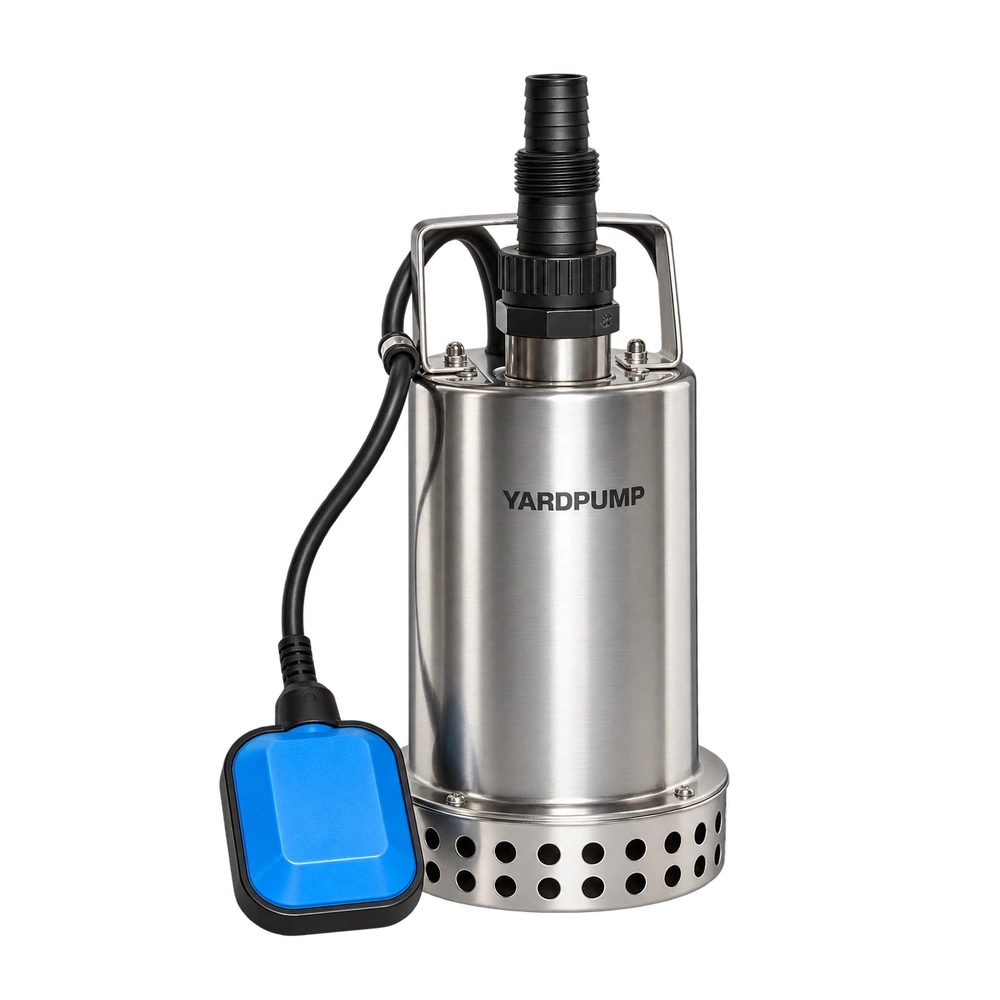
A portable drainage pump delivers water every time it starts, yet the collection drum seems to lose a different amount on each run. To find the actual net volume removed, measure what arrives at the outlet, what enters the drum during the run and what comes back after the stop. Multiplying nameplate flow by motor run time does not give the installed delivery, much less the net change in stored water.
Define the cycle before measuring it
For repeated automatic operation, log the level from just before one start until just before the next. To compare the pumping phase alone, use the same start and stop marks and record the rebound separately. A straight-sided container with known area permits a rough volume estimate from level difference. A tapered container, or one occupied by a pump and supports, is better calibrated by adding known volumes and marking the actual installed arrangement. Use a fixed datum and avoid treating a reading on a moving surface as precise.
An outlet collection gives gross delivery. A fall in the drum during the run gives change in stored volume after simultaneous inflow and any other paths. Rebound after shutdown can reflect hose drain-back or continuing inflow. Each number is useful for a different decision. Use outlet volume to size the receiving arrangement. Use the volume between start and stop levels to understand cycling. Use the rebound timeline to diagnose an apparent failure to stay stopped.
A worked comparison with continuing inflow
Suppose one run delivers 40 litres to a measuring container while a separately measured eight litres enters the drum. With no other paths, the drum has lost about 32 litres at motor stop. If five litres then drains back from the hose, and no further water enters during the observation, net removal from the initial state is about 27 litres. Calling the delivered 40 litres the net amount would overstate storage released. If the receiving container overflowed, mark the delivery measurement incomplete rather than using it to compute an apparent discrepancy.
Make the second run comparable
Keep hose routing, valve position, discharge elevation and the control settings the same. Start with a test without continuing inflow where practicable, then observe the normal incoming stream separately. Secure the outlet and make sure the collection vessel can accept the test volume. Keep clear of moving equipment and isolate it before adjusting the installation. If the same settings yield different results, check whether the float is moving freely, the hose position changes or the inlet accumulates debris. A brief video of the level and outlet with a common clock can be more diagnostic than one long recording of motor sound.
Preserve the raw levels, times, measured inflow and delivery. A change in cycle length without a change in delivered volume can mean that inflow has changed. A change in delivery without a change in the initial level can point to an outlet or pump condition. When selecting a replacement pump, compare the volume and time that actually matter to the job instead of specifying a catalogue flow that the existing line has never delivered.
On a tapered or stepped container, do not convert depth to volume using one fixed area. Calibrate the relevant level marks by known volume, and read them after the surface settles. If collection is unsafe or the incoming flow cannot be controlled, use a suitable approved meter and report the unresolved balance rather than calling the tank’s level difference total pump output.
Frequently asked questions
Can I start with a stopwatch and the box flow number?
Only for rough scale. Measure actual discharge once with the real hose and elevation before using the result for capacity or control decisions.
Does a rapid rebound prove the check valve is faulty?
No. Hose contents may return in an installation without a valve, and new inflow can look similar. Watch the outlet and source level on the same timeline.
Can I calculate volume from the diameter of a tapered drum?
A segmented approximation is possible, but actual calibration is more useful when shape or pump displacement changes with level.