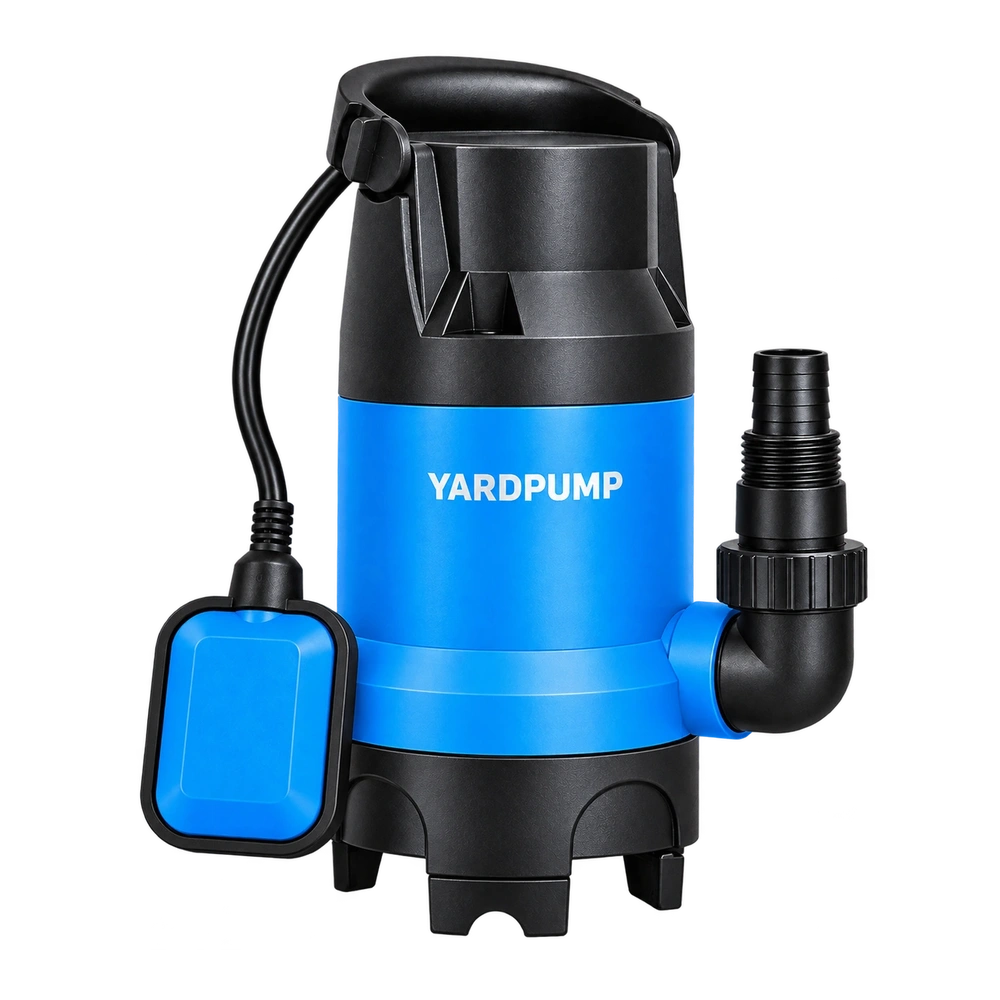
Two rain barrels stand side by side, with a pump in barrel A. Barrel B still contains plenty of water when the pump stops on low level. The float may be doing exactly what it should: the connection between the barrels may not replenish A quickly enough. Before adding the nominal capacities together, decide whether the installation will balance water by gravity or transfer it under active control.
A balance pipe needs a difference in water level
For vented barrels containing the same liquid, a connecting pipe transfers water because their water surfaces have different elevations. After sufficient time without demand, the surfaces may approach the same absolute height. That does not mean identical depth readings or equal remaining volumes when the barrel bases are at different elevations.
While the pump runs, a level difference must develop to drive replenishment. A small pipe, a long route, a partly closed valve or a dirty screen can make the pumped barrel fall much faster. Equal levels at rest do not establish equal levels during watering. The connection height also affects sediment transfer and unusable storage.
Compare transfer capacity with extraction
For illustration, suppose the pump removes 20 litres per minute from A, while B supplies only 8 litres per minute through the connection at the current level difference. A loses water at a net 12 litres per minute and may reach its stop level despite the remaining water in B. The 8-litre figure is an assumption, not a fixed pipe rating: transfer changes with the available level difference.
| Situation | Gravity connection | Active transfer |
|---|---|---|
| Similar elevations and a sufficiently open connection | Relatively simple arrangement | Needs a clear additional purpose |
| Significant difference in barrel elevation | Check overflow and unusable water | Can manage transfer to a target level |
| Widely separated barrels | More resistance and maintenance issues | Check transfer head and controls |
| One barrel needs isolation for cleaning | Provide isolation and drainage access | Provide independent shutdown arrangements |
Active transfer creates additional control duties
Pumping from B to A can overcome some elevation or routing limitations. However, confirm the actual hydraulic task. Using one pump for collection, transfer and final delivery is not automatically reliable just because a set of tees can connect all three routes. Valve positions, priming, switching and post-stop siphoning need a defined design.
A transfer arrangement should consider low level in the source barrel, high-level shutoff in the receiving barrel and a safe overflow route if control fails. One float generally cannot describe both barrels’ conditions. Moving a sensor to a different barrel without reviewing its function can create a new failure mode. Electrical controls and protection require qualified installation.
Check the barrel interfaces before making holes
Confirm the barrel manufacturer’s permitted modifications and support requirements. A thin wall can distort if a connection carries hose weight or external pulling forces. Support pipework so the tank fitting does not become its structural anchor. Connections need to remain inspectable, drainable and isolatable.
Maintain the required venting and insect exclusion. Screen incoming leaves and route overflow safely. After a long idle period, inspect sediment and water condition before returning the stored water to its intended use. This discussion concerns non-potable rainwater; it does not establish drinking-water suitability. Connections to another water supply need the applicable separation and backflow measures.
Accept the dynamic behaviour, not just the resting levels
Run the intended highest extraction rate and record both levels over time, the actual stop point and the replenishment sequence. Under a suitable safe test plan, verify the expected behaviour with one barrel isolated, a restricted connection and the normal receiving high-level stop. Do not bypass low-water protection to continue the demonstration.
Keep the barrel base elevations, connection heights, pipe specification and test conditions with the purchase record. Changing a barrel shape or replacing a connecting hose can change usable capacity even when the nominal storage remains the same. Recheck the arrangement after those changes.
A low connection also creates a shared-loss path: damage to one barrel fitting may drain the other barrel through the balance line. Review accessible isolation and low-water protection together. Record valve positions and final stopping levels during acceptance so future cleaning or maintenance does not silently change the supply conditions.
Frequently asked questions
Do two identical barrels always provide twice the usable water?
No. Stop levels, connection height, sediment exclusion and replenishment limits can reduce the usable portion.
Will a pipe between the barrel tops automatically balance them?
An ordinary top connection does not behave like a bottom balance pipe. A siphon arrangement has additional priming, air-entry and failure questions.
Will adding one more float solve everything?
Not by itself. Define what each signal controls, how failures are handled, and the independent overflow and low-water boundaries.