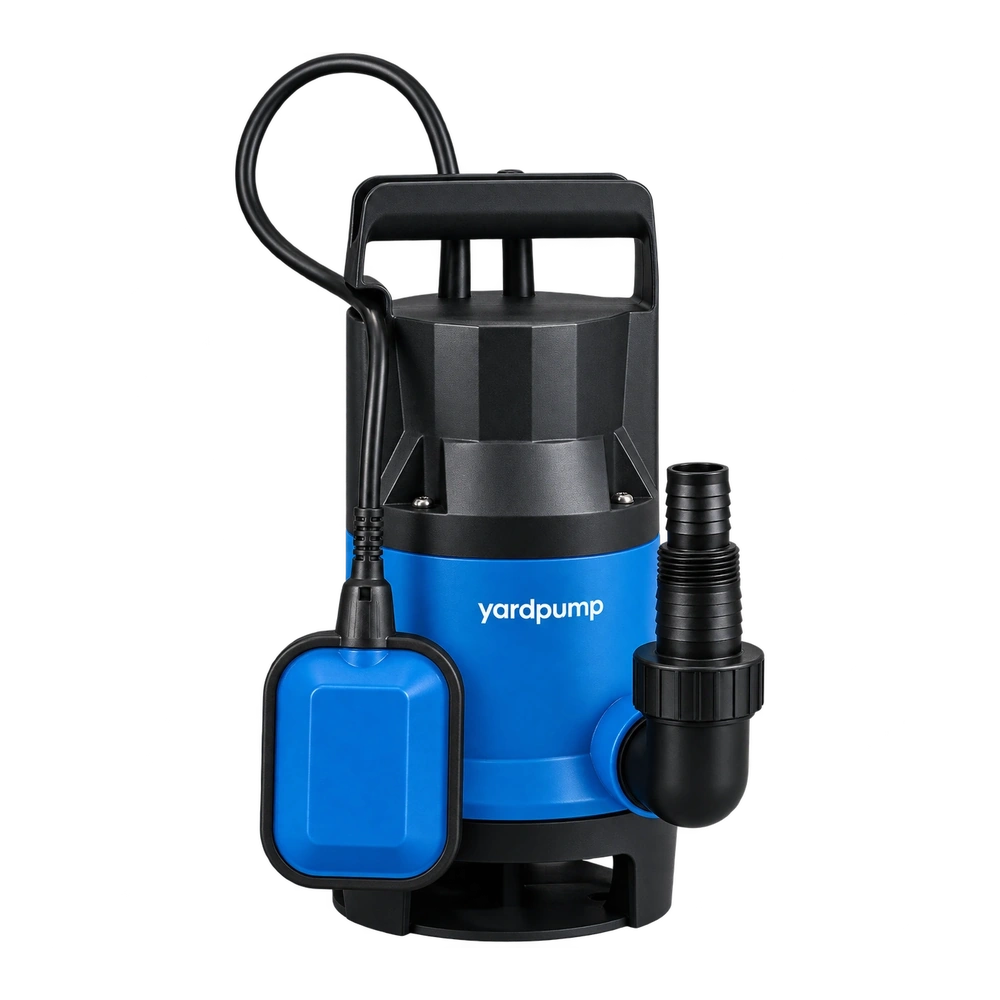
Picture a workshop after a clean-water spill. The main body of water is gone, but a few shallow patches remain between the drains and the door. The low-level pump makes a sucking sound, sends a little water down the hose and then loses delivery. A wet vacuum designed for liquids is usually the better finishing tool for scattered shallow puddles. Keep the pump for water that can collect around its inlet and leave through a safe discharge route. The point at which you switch tools depends on how the floor feeds the inlet, not on the smallest residual depth printed on a box.
Check whether there is one body of water
Lay a straightedge across an isolated puddle and look for ridges, joints and reverse slopes. Three patches that touch in a photograph may be separated by a few millimetres of raised concrete. As a pump clears its immediate footprint, water on the far side of a ridge cannot replenish the inlet. Air then reaches the pump even while water remains elsewhere on the floor. Lowering the pump’s inlet or buying a model with a larger maximum flow does not remove that separation.
A wet vacuum moves a stream of air and entrained water through a nozzle into a collection tank. A wide floor nozzle can pick up disconnected streaks as the operator moves it. Its penalty is that the collected liquid must be emptied, and the usable wet capacity may be below the tank’s advertised volume. Once a float or other shutoff acts, stop and empty it according to the manual. A dry-only vacuum is unsuitable. Check the approved wet setup, including the specified filter or bag arrangement; wet operation does not mean removing every filter.
Estimate the handoff in litres and minutes
As an illustration, a contiguous area of 20 square metres at an average depth of 5 millimetres contains about 100 litres. The word “average” matters: measuring a deep corner and multiplying by the entire area can overstate the remaining water. If a floor channel safely gathers most of those 100 litres at the pump, hose discharge can save trips to an emptying point. If there are 12 litres distributed among several shallow bays and the vacuum’s usable wet capacity is 8 litres, two collections are enough in the simplified example. Moving a pump between all the bays would still leave small patches wherever the inlet loses its local water supply.
Time the entire job. A vacuum that collects quickly may be slow if it must be carried along a narrow route before it can be emptied. A pump can move water continuously, but the first minutes may be spent laying a hose and finding a discharge point. If water is still entering, measure the trend safely before deciding that the floor is ready for finishing. At a steady 6 litres per minute, a vacuum with 8 litres of usable volume would fill in roughly 80 seconds, leaving little time to empty and return.
Use the change in delivery as a cue
Start at the lowest accessible point that actually receives water. Let the pump work only within its permitted start depth, operating depth and liquid limits. Watch whether a short sweep of a squeegee restores a continuous pool at that point. If the discharge becomes intermittent again as soon as the pool clears, the limiting factor is floor collection. Switch to the wet nozzle or absorbent cleanup when the remaining volume and emptying route are manageable. If a significant source is still feeding the floor, correct the source or use a suitable collection arrangement before relying on either tool.
Keep electrical connections dry and away from the work area. If water has reached outlets or equipment, stay out until the supply is isolated safely and a qualified person has checked it. Do not use ordinary equipment for flammable liquids, sewage or an unidentified spill. A low residual-depth claim describes a defined test. A finishing plan describes the actual floor, the water still arriving and the work required to remove it.
Frequently asked questions
Is a larger vacuum tank always faster?
Not if its full weight makes handling slow or unsafe. Compare the permitted liquid volume, emptying location and number of trips.
Can a wet vacuum replace a pump in an unattended sump?
No. The collector has finite capacity and is intended for supervised use. A sump needs equipment and controls suited to the ongoing inflow.
Why does the pump work again after a quick sweep?
The sweep moves separated water into one deeper pool at the inlet. It is evidence about water collection on the floor, not an increase in pump capability.