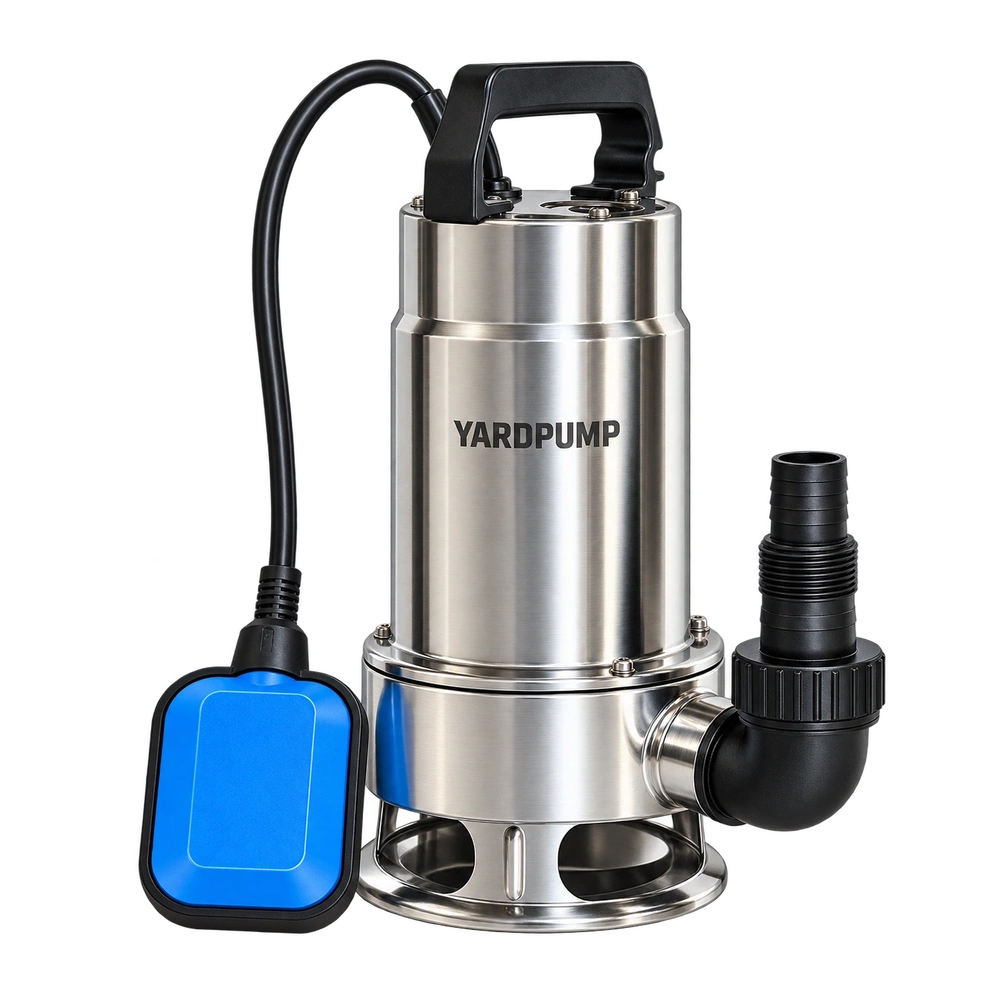
Imagine a raised planter that draws water from a reservoir below the growing medium. Someone connects a garden pump to the fill tube. The bed takes water quickly at first; a few minutes later the overflow runs, and parts of the mix stay unusually wet. Choose the refill by volume and maximum reservoir level. The pump only replenishes the reservoir. The bed’s wick or contact medium moves water upward; additional pump pressure does not improve that transfer and can overwhelm the fill path.
Find the reservoir’s upper limit before choosing flow
On a drawing of the bed, mark the reservoir, fill tube, overflow and lower part of the growing medium. Depending on the design, the reservoir may be open inside a platform or filled with a porous aggregate. Its outside dimensions are not necessarily its usable water volume. A raised overflow or blockage can push the waterline higher than intended, leaving the root zone saturated. An overflow should set the maximum level in normal gravity drainage, but it has a finite discharge capacity. It is not a licence to pump into the bed faster than it can drain.
Confirm that the overflow opens at the intended level and reaches a harmless outlet. With the system supervised, observe how much water raises the level between two repeatable marks. For a porous reservoir this is more reliable than using the entire rectangular volume, because solid aggregate and trapped air occupy space. Look at each bed separately if several share the same supply; minor differences in height and pipe resistance can change how much each accepts. Work from an actual observed fill mark, not a timer copied from a neighbour’s bed.
Allow for what enters after the stop signal
In an illustrative setup, a reservoir needs 24 litres to reach its target refill level. A pump delivers 12 litres per minute to that bed with its actual hose and fill tube, so the ideal fill takes two minutes. Suppose the valve or operator takes another 10 seconds to stop flow and the hose releases one more litre into the tube. In the simple example, 3 litres arrive after the intended stopping moment. If the margin to overflow is only 2 litres, some will spill. A slower pump or a more reliable shutoff may help more than enlarging the reservoir. With several beds, divide or measure the delivered volume for each instead of multiplying time by the nominal flow of the pump.
Measure at the fill tube, not with a pump flowing freely into a bucket beside the source. Confirm the tube can accept the flow without backing up, and verify that the waterway allows displaced air out where the design requires it. If the source or an elevated hose can keep feeding after power goes off, check for continued gravity flow; an electric stop signal alone does not stop a siphon.
Use the response of the bed to diagnose a wet root zone
Observe the reservoir and growing medium separately. Wet material near the fill tube with a low reservoir can mean spill or a cracked feed. A high water level lasting beyond refill suggests an obstructed or poorly placed overflow. A normal reservoir with uneven moisture farther across the bed points toward the distribution or capillary path. Those observations point to three different repairs. Increasing fill pressure addresses none of them directly.
Choose equipment and materials appropriate for the water and the planting use. Keep electrical connections dry, and do not directly connect an untreated reservoir to a drinking-water supply without a professionally designed separation. For unattended refilling, use a level limit suited to the reservoir and verify where excess water goes if it fails. The best fill rate is one the bed can accept and stop repeatably, leaving the wick to distribute the water at its own pace.
Frequently asked questions
Can I stop when I see water at the overflow?
It can indicate the upper level under supervised filling. For routine control, account for lag, overflow capacity and hose drainback before adopting that signal.
Is a stronger pump useful for dry soil at the far edge?
First check continuity of the wicking path, the medium and the reservoir level. Pump pressure in the fill tube does not create better capillary movement in the bed.
Does the height of the raised planter tell me its reservoir capacity?
No. Use the internal reservoir geometry and an actual fill measurement between the intended levels.