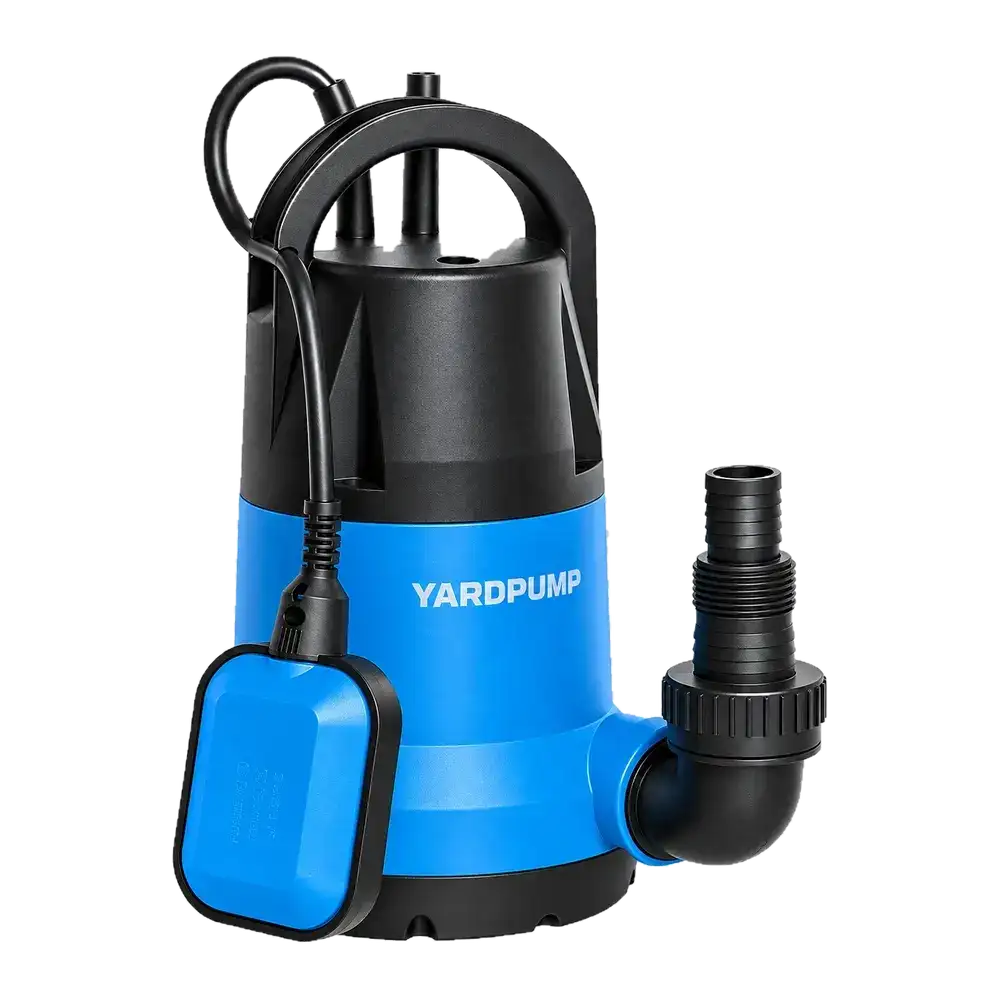
Imagine a repair decision with the following findings. A small submersible pump has a confirmed bent shaft after an impact or mechanical event. A repairer offers to straighten it until the indicator reading passes. Is that enough to put it back into service? No. Restored geometry is only one requirement. Reuse depends on the manufacturer's permitted repair, the shaft material and history, damage assessment and the complete assembly. Without an approved repair route, obtain the specified shaft or rotor assembly rather than treating straightening as a routine field fix.
Confirm that bending was actually measured
An indicator measures movement relative to a setup. Incorrect support, dirt on datums, eccentric mounting or damaged centres can contribute to the reading. Distinguish confirmed shaft bending from bearing-seat eccentricity or fixture error before deciding what to replace. That measurement work belongs with qualified service personnel using the released datums and procedure.
If bending is confirmed, document where it occurs and the initiating event. A dropped pump, seized impeller, overloaded connection or damaged bearing arrangement may have affected more than the shaft. Correcting its centreline while leaving a distorted end cover or damaged housing can reproduce rubbing and leakage with either the repaired shaft or a new one.
Geometry does not describe the whole material condition
Straightening changes the shaft's mechanical state. The acceptability depends on alloy, heat treatment, previous work, surface treatment and the extent and location of deformation. An indicator cannot reveal every crack, residual-stress condition or loss of fatigue margin. Nor does a visually smooth journal prove that its diameter, finish and hardness remain suitable.
Do not propose a universal maximum bend or a heating temperature for every small pump shaft. A method allowed for one industrial shaft can be prohibited for another design. Heating, pressing or hammering an assembled pump is not a suitable customer repair. Obtain a written disposition from the responsible manufacturer or qualified engineering authority for the exact part.
| Area to assess | Why a straight-looking shaft is insufficient |
|---|---|
| Bearing seats and shoulders | Fit, location and running geometry must remain correct |
| Seal running surface | Wear, scoring and surface condition can still cause leakage |
| Threads, keyways and transitions | Damage or cracks can remain at local stress features |
| Rotor and impeller mounting | Concentricity, retention and balance involve the assembly |
| Material and repair history | Governs whether a repair is permitted at all |
Release a repair against defined criteria
If a repair is explicitly permitted, its procedure should define personnel, method, examinations, dimensional checks and rejection conditions. Any crack inspection must suit the material, surface and likely damage; one generic test does not see every defect. Keep before-and-after readings and all treatment records with the part identity.
For an illustrative decision, suppose final runout meets the released drawing but the seal journal has an unacceptable wear groove. The part cannot be released on runout alone. Conversely, a shaft with acceptable surfaces but an unknown heat-treatment change lacks another essential part of the evidence. These are decision examples, not universal tolerances or a claim that a particular return can be repaired.
Compare a replacement assembly with the full service cost
A complete approved rotor assembly may reduce uncertainty when an integral rotor, coatings or controlled fits are involved. Compare the actual replacement scope, availability, required balancing, seal and bearing work, and final safety and performance checks. The cheapest press operation is not the complete repair cost.
Before return to service, qualified staff should verify the restored assembly through the manufacturer's mechanical, sealing and electrical procedures and the necessary operating checks. Confirm that the cause of the original event has been addressed. For compact utility and dirty-water pumps, a defensible service answer may be replacement rather than reuse. Keep that decision tied to the approved design and evidence, not to the assumption that any metal shaft is repairable once it looks straight.
Frequently asked questions
Does passing runout mean there are no cracks?
No. Runout is a geometric measurement. Damage examination has a different purpose and must use an appropriate approved method.
Can a new shaft fix a distorted bearing housing?
No. Check the entire support arrangement and the initiating event. An unresolved housing problem can damage the replacement.
Is straightening always forbidden?
There is no universal answer across all machinery. For the actual pump, follow its approved repair policy; absence of approval is not permission to improvise.