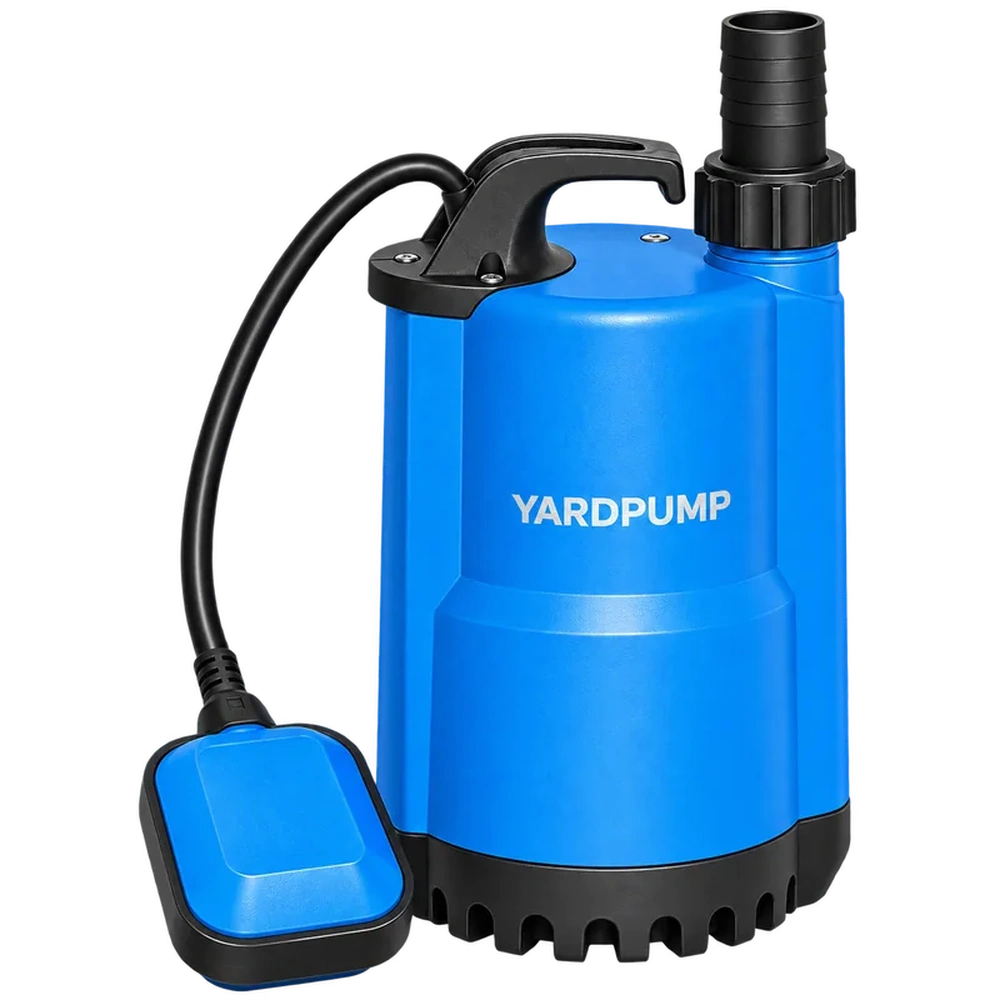
After rain, a clean-and-dirty-water submersible pump makes a gravel-like sound. It is quieter in water that looks clear. Treat sand, entrained air and cavitation as separate possibilities before diagnosing by sound. Solids striking or rubbing against parts can make noise. Air drawn into the intake can change delivery and sound. Cavitation involves local pressure falling low enough for vapour to form. More than one of these effects can occur. Look for evidence before choosing a remedy.
Solids passage is not an abrasion rating
A stated particle passage describes sizes under defined conditions. The concentration, shape and exposure of hard grit can affect wear even when particles are small. Wear can change clearance between impeller and casing. Leaves, stones or fibres may also produce a temporary obstruction. Close to settled material, starting flow or incoming water can temporarily increase the amount of grit at the pickup. A dirty-water label does not establish permission for sustained sandy service. Check the specific model and intended liquid.
Cavitation and solid impact can sound similar but have different causes. Cavitation depends on local pressure and liquid conditions. A surface vortex or falling stream can instead bring existing air to the inlet. Check water depth, screen condition, incoming water and actual discharge duty. If the sound follows falling water level, an obstructed inlet or a change in resistance, review hydraulic conditions even when the sample contains sand. Do not assign the noise to debris alone.
Compare what the noise follows
From a safe position, record when the sound starts, water level, discharge routing, visible bubbles, any delivery change and particles or sediment in a safely collected sample. If there is unusual rubbing, heat, cable damage or protective tripping, stop use and have qualified personnel isolate the equipment. Do not add sand or block an inlet to force a reproduction. Do not reach around an energized pump or reposition it in unsafe wet conditions. Record whether the water sample came from beside the pump, upstream or at the destination.
In one illustrative service comparison, the sound appears only with more grit, at comparable water level, hose arrangement and allowed duty. Inspection also finds directional wear on a wetted part. Investigate grit and the sediment layer first. Another unit still makes noise at low levels with permitted clear water, and delivery pulses with bubbles. First review intake cover, incoming water and hydraulic duty. These examples set no general noise, concentration or wear threshold. Material, previous wear and the test history can affect the evidence.
Correct the water condition or intake problem that is actually present
If the grit load falls outside the pump's scope, consider suitable settling, pretreatment or equipment approved for that liquid. A larger motor does not establish wear resistance. If the issue follows air intake or operating duty, review pickup depth, approved screen cleaning and discharge route. Do not remove required guards. If wear has changed fit, have service inspect the impeller, housing, seal and delivered performance before replacing a part and returning it to the same conditions. For a dealer report, include the water sample, sound timing, delivery change and component marks. Those details help distinguish an application, installation or repair decision.
Keep early and late water samples separate and record where they were taken. Sediment may be more concentrated near the end of a drawdown. A late noise can therefore reflect increased sand intake or the lower water level allowing air in. Compare the water level and discharge stability at the same stage instead of using a sample from the beginning to explain the entire run. If sampling is unsafe, a video of the surface and discharge from a safe position is more useful than a guess.
Frequently asked questions
Does a sound like gravel prove cavitation?
No. Sand, other debris, entrained air and internal contact can sound similar.
Does a specified particle size permit continuous sandy-water duty?
No. Size does not establish abrasion resistance. Check the grit, concentration, exposure and approved use.
If raising the pump quiets it, does that prove sand caused the noise?
No. A new position also changes depth and inlet flow. Check both sediment and air entry.