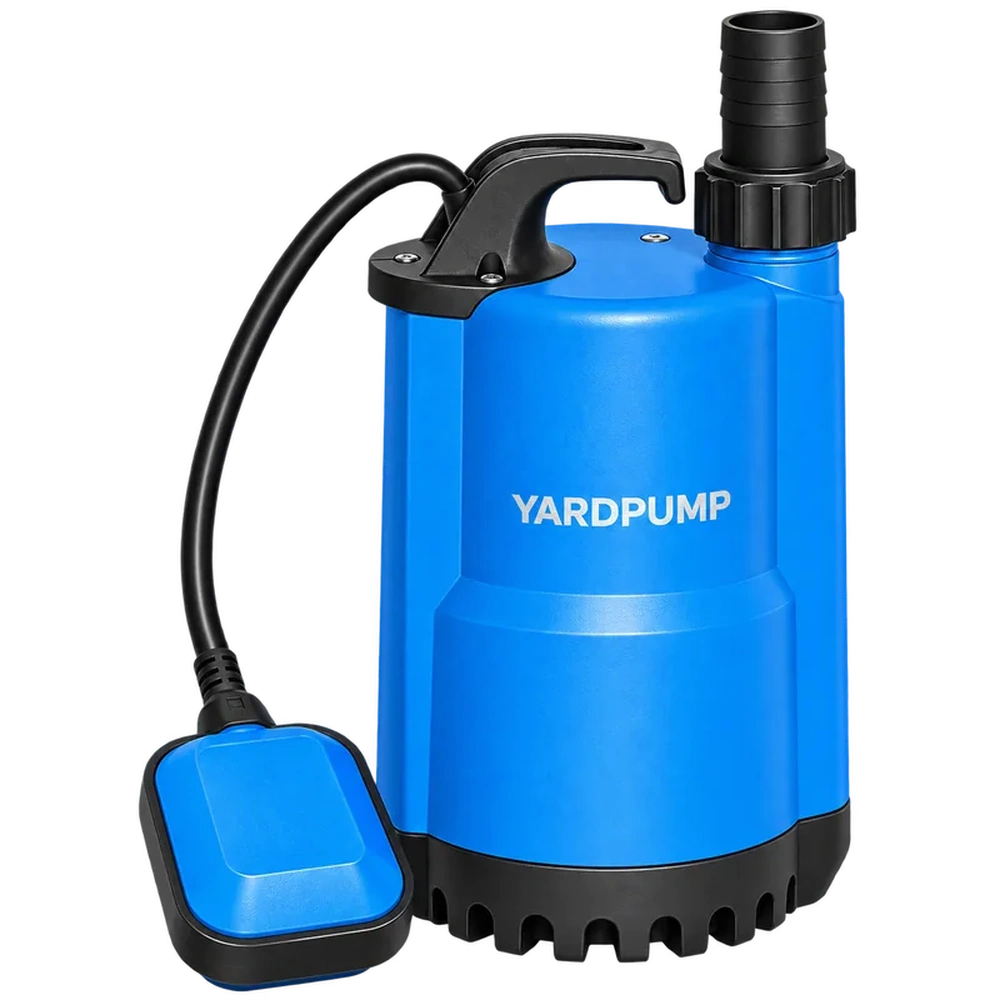
A submersible pump makes a gravel-like noise and bubbles appear in the discharge. Someone immediately calls it cavitation. That is a hypothesis, not a diagnosis. The gas may come from a surface vortex or an aerated inlet stream, or vapour may form where local pressure falls sufficiently. Trapped gas may also prevent effective delivery.
These mechanisms require different responses. Sound and visible bubbles alone cannot reliably distinguish them.
Identify the source of the gas
Air intake or entrainment introduces gas from outside the liquid, for example through a surface vortex, plunging inflow or upstream aeration. Cavitation involves local absolute pressure reaching the liquid’s vaporisation condition. Vapour cavities may then collapse in a higher-pressure region and cause damage.
Airlock describes accumulated gas interfering with effective pumping; its origin may be connected to installation or air removal. These conditions can interact rather than occurring exclusively.
Full immersion generally helps inlet pressure conditions but does not automatically exclude cavitation with warm water, inlet restrictions or adverse local flow. Conversely, discharge bubbles do not establish that vapour cavities formed inside the pump.
Record conditions rather than relying on a noise description
Capture the lowest operating water level, intake position, temperature, flow, head and event sequence. Look for a vortex reaching the inlet, aerated falling water or foam entering the intake. Observe from a safe location, without touching running equipment in water. If the electrical state is uncertain, isolate it and use qualified assistance.
| Clue | Possible direction | Additional evidence |
|---|---|---|
| Gas appears below a particular surface level | External air entry | Vortex, intake and inflow position |
| Trouble follows warmer water or inlet restriction | Reduced inlet pressure margin | Temperature, loss and duty assessment |
| Rotation without stable delivery | Trapped gas or another obstruction | Air-removal path and blockage checks |
| Erosion on wetted surfaces | Cavitation or another wear mechanism | Morphology and medium evidence |
A successful change may have more than one explanation
For illustration, raising the water level reduces the noise. That could reduce air intake and increase inlet pressure margin simultaneously. It does not independently distinguish the two mechanisms. Moving an aerated incoming stream while holding the water level constant may provide a more discriminating comparison.
This is diagnostic reasoning, not a reported customer case or a universal site procedure. Cleaning the inlet can also change several factors at once: resistance, debris and flow pattern. Preserve the observation rather than assigning an exclusive cause too early.
Do not deliberately block or throttle the suction opening to provoke cavitation. That can introduce dry running, overheating or mechanical problems. Any comparison must stay within the permitted duty and an approved safety boundary.
Match the remedy to the mechanism
Where evidence indicates external air, review inflow position, intake arrangement and appropriate submergence. Avoid directing plunging water at the suction opening. For an airlock, follow the specific model’s installation and air-removal instructions rather than drilling the casing.
For suspected cavitation, technical personnel should assess available and required NPSH, water temperature, inlet losses and target flow. A larger motor is not a direct remedy for inadequate inlet conditions.
Restricting discharge sometimes changes the operating point, but its suitability depends on pump type and permitted range. It is not a universal self-help instruction. Warm, aerated or special liquids outside a drainage pump’s declaration need an appropriately verified solution, not an assumption based on a generic article.
Keep the conclusion proportional to the evidence
Record observed bubbles, changed conditions and verification results separately. Distinguish “gas present”, “cavitation suspected” and a mechanism supported by physical evidence. Qualified examination may be needed to separate particle erosion, corrosion and cavitation damage. An uncertain sound label should not become a permanent fault code.
If the event occurs near the end of drainage, observe changing level and gas entry rather than testing only after refilling. Preserve the original sequence within the permitted operating boundary. A safely recorded wide view showing inflow, surface and outlet can be useful; do not request close contact with running equipment.
Frequently asked questions
Can a fully submerged pump still have insufficient inlet pressure margin?
Yes. Temperature, restriction, flow and internal local pressure still matter. Immersion does not guarantee every pressure condition.
Does improvement at higher water level prove a vortex?
No. The higher level also raises inlet pressure. Examine the air source and other controlled comparisons.
Do pits on the impeller prove cavitation?
No. Corrosion and particle erosion can also create pits. Combine appearance with operating and medium evidence.