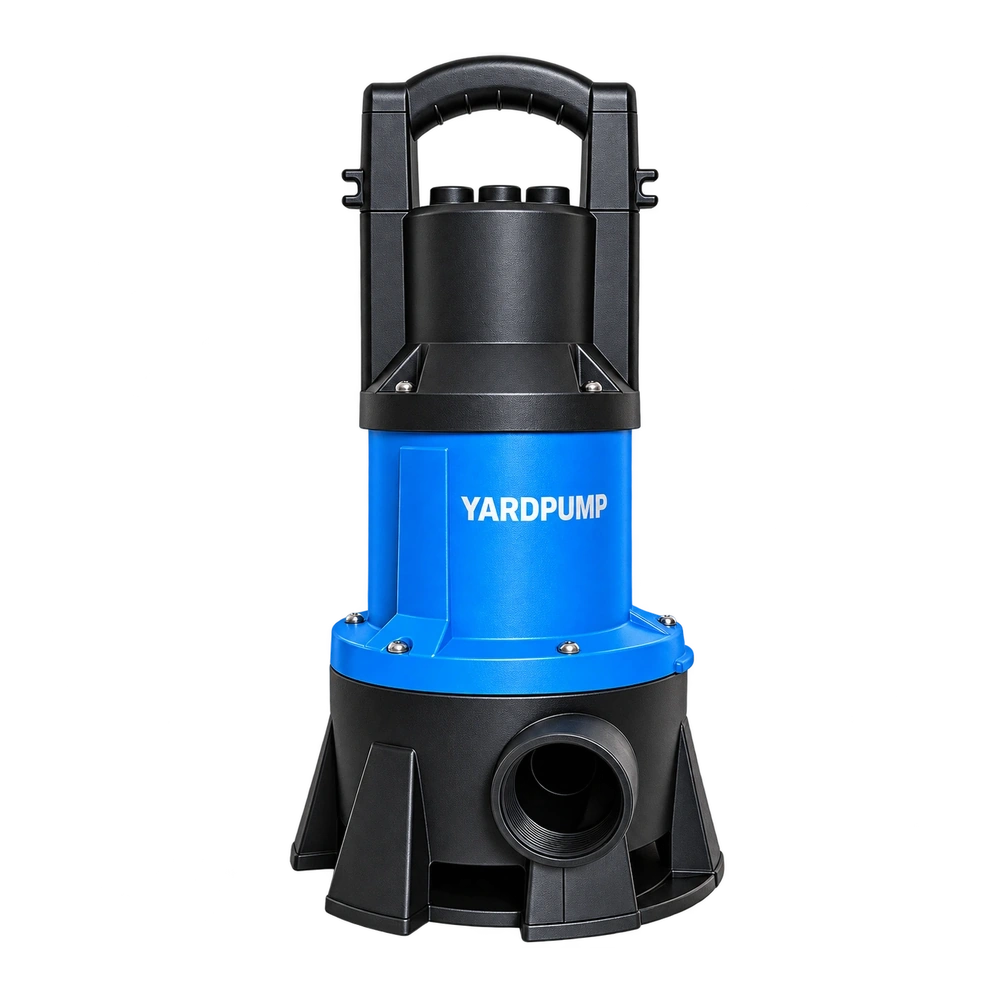
A pump may still appear surrounded by water yet begin to surge and inhale air. The inlet does not have to be visibly exposed. When the free surface approaches the intake, a vortex can extend downward and carry an air core into the impeller. Minimum submergence controls inlet hydraulics and cooling; maximum allowable immersion is a different limit.
What drives the result
Inlet flow creates a velocity field. With insufficient depth above the intake, surface disturbance, approach asymmetry and nearby walls can form a vortex. Entrained air causes unstable head and flow, noise and vibration, and may reduce cooling margin. Required submergence depends on intake geometry, flow, vessel shape, return flow and anti-vortex provisions. Pump height alone does not determine it.
An illustrative way to check
The same pump may run at a low level in a wide tank yet ingest air earlier in a narrow barrel because walls and return flow strengthen the vortex. Reducing flow, redirecting inflow or increasing water depth can remove the symptom. Validation must use the intended container and duty flow rather than a static photograph.
A sound investigation of submersible pump minimum submergence separates hydraulic, motor, structural and installation observations before connecting them. Replacing the first damaged part may restore operation temporarily while leaving the initiating cause untouched. Start with safe isolation and stated operating limits, preserve the original condition, examine the installation and liquid, and only then dismantle internal components. Comparison units must use the same voltage, frequency, piping, water level and running time; otherwise differences in current, temperature or sound have little diagnostic value.
Actions for the site or purchasing team
- Separate maximum immersion depth, minimum operating level and automatic stop level.
- At the worst container, highest intended flow and lowest level, observe surface vortex, bubbles, noise and flow stability.
- Keep return water from jetting toward the inlet and maintain the required clearance around the pump.
- Where justified, use a designed anti-vortex plate, lower the flow or enlarge the collection area.
- Put the minimum level into instructions and control logic instead of waiting for an operator to hear air ingestion.
Limits and application boundary
Minimum submergence is installation-specific. No universal value is asserted for YARDPUMP models; use validated data and model documentation.
Frequently asked questions
Can air enter while the pump remains covered? Yes. A free-surface vortex can carry air to the intake.
Does a five-metre maximum immersion define the minimum? No. Maximum depth and minimum operating level are different limits.
Will any anti-vortex plate solve the problem? It must be designed and validated for the inlet and vessel; poor geometry can add disturbance.
Related reading
Does a 10 m Cable Allow 10 m Submersion? Check the Pump Depth Rating Separately
If a Pump Drains Down to 7 mm, Will It Start Automatically at 7 mm?