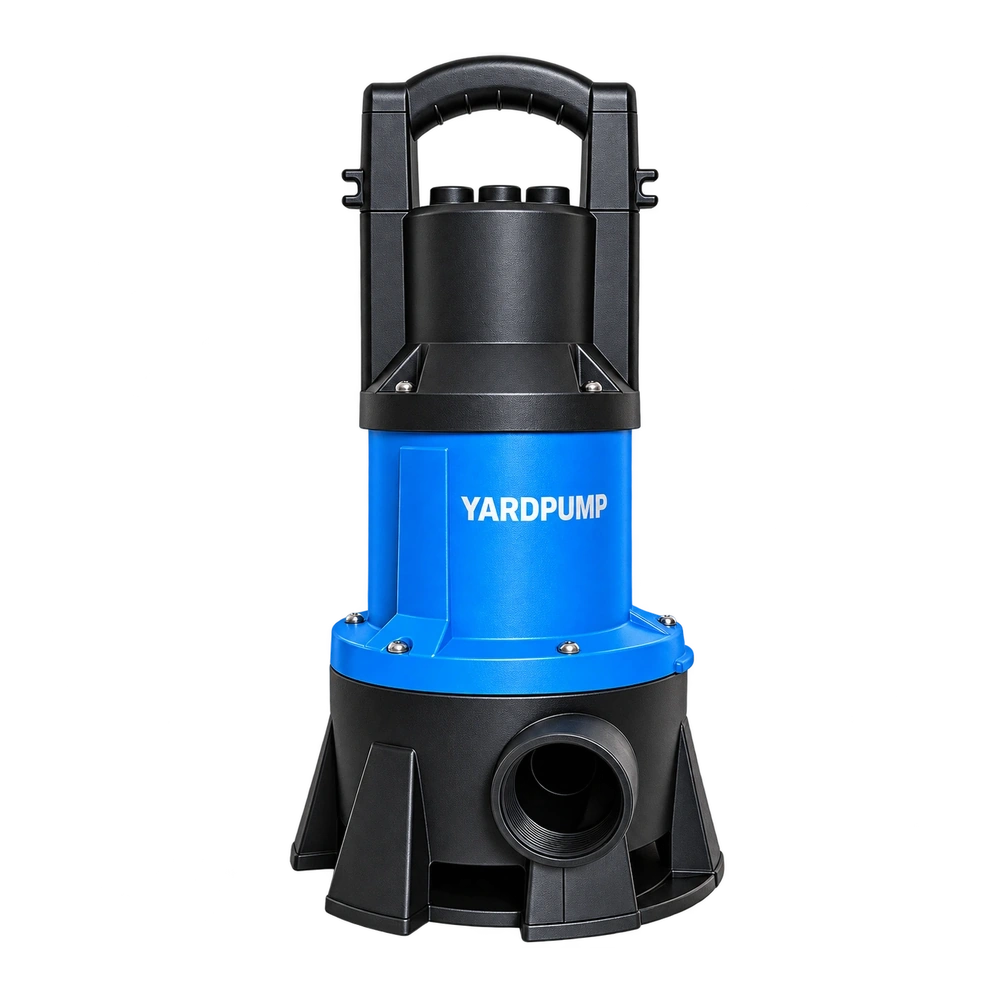
Suppose a plastic submersible pump turns freely during assembly, but a repeating scrape appears during its water test at the specified duty. Treat the association with head as a clue to reproduce. Static clearance does not guarantee running clearance. Pressure on plastic parts, fasteners and gaskets, temperature changes and movement of the shaft assembly under hydraulic load can all change the relative positions of impeller and casing. Clearance may grow in one location and shrink in another. The direction depends on the particular pump and loading.
Record what changes along with pressure
Changing the resistance of the discharge system moves the operating point. Flow, head, motor load and hydraulic forces commonly change together. A change in current need not mean rubbing. Recording only that the pump becomes noisy at higher pressure can mix up recirculation noise, axial thrust, debris and casing deflection. Within the approved test range, the factory or authorized repairer should record flow, total head, inlet and outlet conditions, current or real input, liquid temperature and time together. Look for the symptom at a repeatable, stable condition. Do not deadhead the pump, exceed its limits or keep running a unit known to rub in order to find its failure point.
In one illustrative comparison, a pump becomes noisy immediately at a given duty and becomes quiet when moved back, with comparable cooling. Another runs quietly at first and develops noise later, leaving a change in clearance after stopping. The first prompts a check for load-dependent movement. The second also raises questions about temperature, material and persistent deformation. Neither example establishes a diagnosis. Test sequence, bearing play and hydraulic changes still matter. Repeated witness marks at the same location give a stronger reason to measure the geometry there.
Let the rub marks guide the measurement
Have qualified staff isolate the pump, let it cool and release trapped pressure safely before opening it. Record whether the mark is on a vane tip, a side face or the casing, and its position relative to the outlet, a rib or a fixing. Compare the intended clearances with casing roundness and concentricity, impeller runout and any relevant axial play. Mark the datums used for measurement. Repeated contact in the same direction suggests checking the corresponding support and features first. Marks in several locations should not automatically be assigned to one thin spot.
If a controlled fixture test of casing movement is approved, reproduce the installed support, fastening and temperature as closely as the test permits. Distinguish those results from unloaded geometry. A loose cover that measures well on a bench can behave differently once assembled with a gasket and fasteners. Conversely, marks can also come from misalignment, bearings or handling damage. Compare known good casings, the same shaft arrangement and equivalent hydraulic duty one factor at a time. Replacing three parts together leaves little evidence of which change mattered.
Record gasket thickness and fastening sequence during the comparison. If the gasket changed with the cover, report both changes. The result does not isolate the effect of the cover alone.
Write a conclusion that can be checked
A useful return report gives the duty where the noise began, the temperature and flow, the contact location and which dimension recovered or stayed changed after unloading. If there is noise with no evidence of contact, record it as an unresolved sound. If insufficient running clearance is verified, reassess flow, head, strength, sealing and durability after a design change. Cutting material off an impeller can quiet the contact while increasing internal leakage or moving the pump off its agreed performance. If a user hears unusual scraping, stop using the pump and contact service rather than modifying the impeller or casing.
Frequently asked questions
Does higher head always move the casing toward the impeller?
No. Load direction, support and assembly geometry determine how relative clearance changes.
Does a mark in one fixed place prove the casing is too flexible?
No. Verify repeatability, then check alignment, fasteners, bearings and movement during assembly.
Can a smaller impeller be accepted if it stops making noise?
Only after confirming the design change is allowed and checking the delivered duty, performance and durability. A quiet test alone does not qualify it.