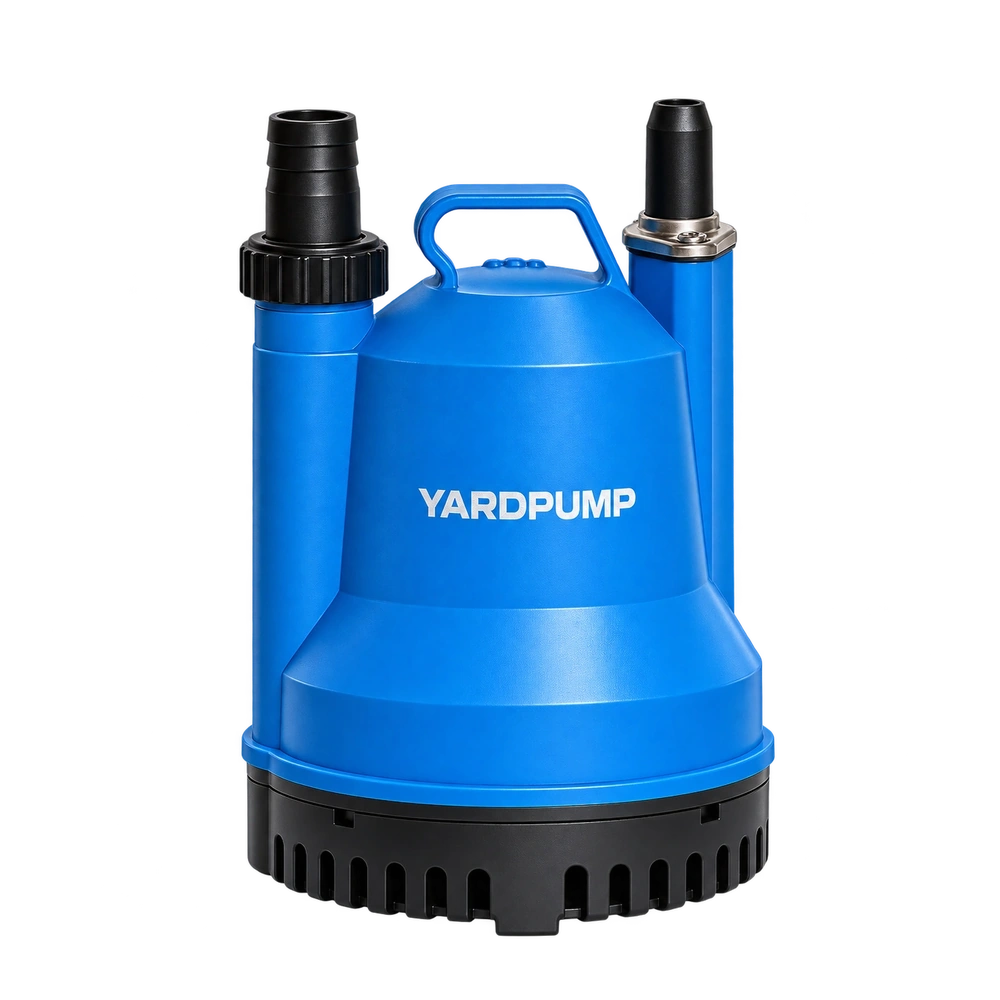
“The plug is out, so the capacitor must be discharged.” That is an unsafe assumption before pump repair. Disconnecting the external supply does not establish that internal stored energy has disappeared. Residual voltage depends on the circuit and its actual condition. Follow the applicable isolation and stored-energy procedure, with confirmation by qualified personnel, rather than relying on elapsed time or touching a terminal.
Isolation and stored energy need separate attention
A capacitor stores electrical energy. After disconnection, the available discharge path, component condition and terminal connections influence the voltage that remains. Even where a design includes a discharge component, a repair procedure should not assume that it functions correctly in every fault condition.
A pump motor, control box or associated device may contain more than one relevant energy source. The visible capacitor does not necessarily represent the complete work area. A stopped motor, extinguished indicator or small nameplate power rating cannot establish that internal conductors are safe to touch.
| Observation | What it establishes | What remains unconfirmed |
|---|---|---|
| Plug removed | Separation at that supply connection | Other supplies and stored energy |
| Motor stopped | No visible rotation | Absence of terminal voltage |
| Time has elapsed | The waiting period occurred | An effective discharge path |
| Indicator is off | The indicator is not illuminated | Safety of every accessible part |
Why a calculation is not a safety clearance
Stored capacitor energy is E = C × V² ÷ 2, with capacitance in farads and voltage in volts. As a hypothetical example, a 20 µF capacitor retaining 350 V stores approximately 1.23 J. This illustrates the squared relationship with voltage. It is not a measured condition for a pump or a universal injury threshold.
A low motor power rating does not replace assessment of actual voltage and stored energy. Likewise, the capacitor's marked voltage rating is not its residual terminal voltage. Without the appropriate confirmation, neither marking establishes that the component is discharged.
The practical question is not whether a calculation gives a reassuring number. It is whether the actual equipment has been isolated, relevant stored energy handled and the intended work area confirmed safe under the applicable procedure. This article deliberately does not provide an improvised discharge method.
Define responsibility before opening equipment
Repair preparation should identify supply, automatic-start and stored-energy sources. Apply the equipment instructions and approved isolation procedure, including measures against reconnection. Work involving capacitor handling and electrical confirmation belongs to competent personnel using suitable equipment.
Confirmation must cover the relevant parts of the work area rather than a single convenient point. A previous check is not a permanent clearance after wiring changes, movement to another station or a changed equipment state. Follow the procedure for rechecking whenever conditions require it.
Do not bridge terminals with a screwdriver, improvise a discharge resistor or infer safety from a spark. Those actions can create arcs, damage equipment or expose someone to injury. The appropriate process depends on the actual circuit and must be carried out by qualified personnel.
Improve purchasing and after-sales instructions
User information should distinguish external observations from professional electrical repair. A support team can collect model, wiring revision, symptoms and safe shutdown information without asking an ordinary user to open a capacitor box. Remote troubleshooting should never require wet-hand testing, bypassed protection or exposed live work.
A repair record can identify the isolation state, whether the applicable stored-energy procedure was completed, the responsible person and the equipment revision. Its purpose is to establish the conditions for the next task. A generic signature sheet cannot replace actual confirmation.
If the correct documentation or qualified personnel are unavailable, keep the equipment out of service and arrange appropriate professional handling. There is no useful reason to convert uncertainty into an assumed safe state.
This discussion concerns stored energy after disconnection. It does not select capacitor values, prescribe live diagnostic tests or establish a universal waiting period. Different pump and controller designs need their own approved repair arrangements.
Frequently asked questions
Will waiting longer always make the capacitor safe?
Elapsed time alone is not sufficient. A discharge path may be absent or faulty. Qualified personnel must follow the procedure applicable to the equipment.
Does an undamaged-looking capacitor mean there is no electrical risk?
No. Appearance cannot prove absence of terminal voltage or satisfactory electrical condition. Visual inspection does not replace safety confirmation.
Can a screwdriver be used to short the terminals?
Do not use that improvised method. It can cause arcing, damage or injury. Stored energy should be handled by qualified personnel using the approved process.