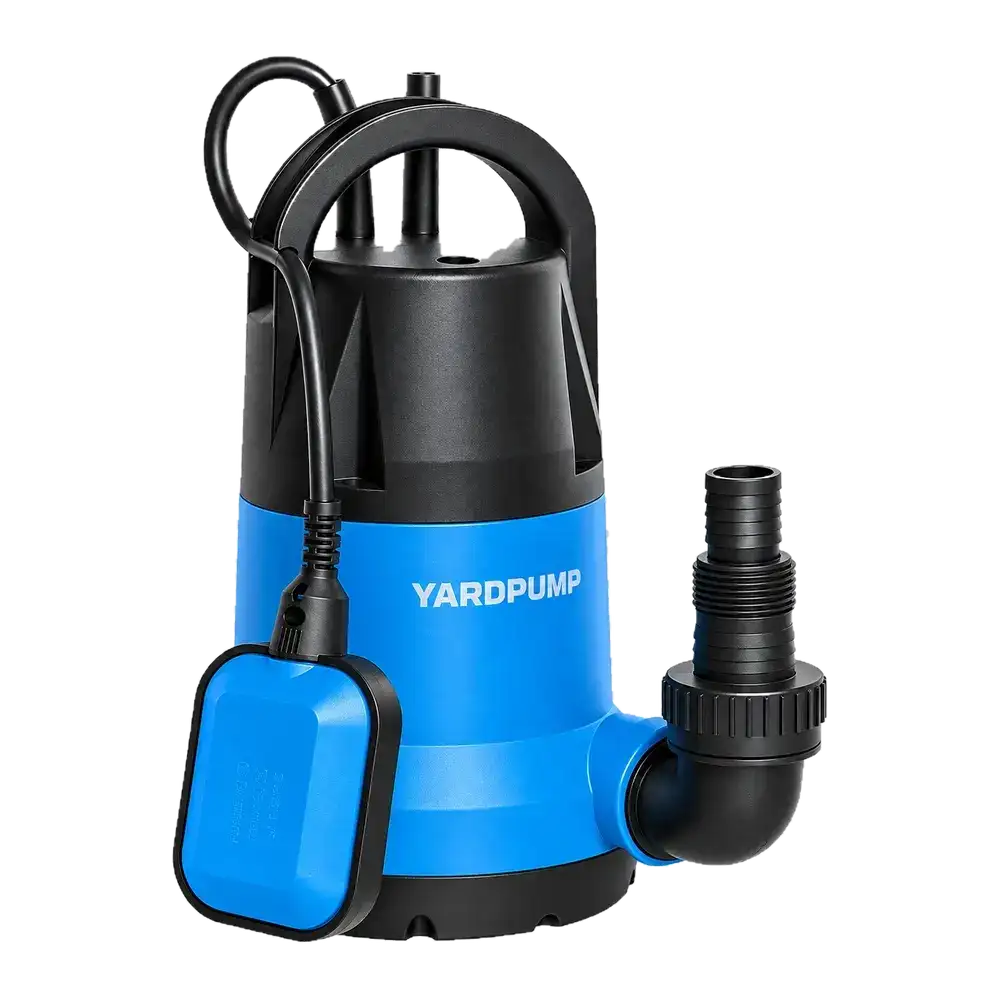
Imagine a submersible drainage pump clearing rainwater. The stream is strong one moment and weak the next, though the pump still sounds as if it is running and the hose shows no obvious kink. A loose piece of liner in a hose with a separate inner layer can move in the flow and reduce the opening. Compare the original with a sound hose under equivalent conditions. That can isolate the hose as the problem; inspection or further evidence is needed to name liner separation as the cause.
Water can meet an obstruction inside a round hose
Some hoses have a wetted inner tube, reinforcement and an outer cover. An intact cover does not establish the condition of the bore. A torn edge or an area that has separated from its backing can change position as water passes. Vegetation can collect against it and change the open area again. Some damage narrows the bore consistently; other damage produces a change with position or flow. A single-layer hose has no separate liner, though it can still suffer internal damage or deformation.
Straightening a hose takes out an external kink but need not restore an internal layer. Air entering the pump inlet, debris gathering against the screen and a check valve that will not stay steady can also cause irregular delivery. Sound alone seldom separates those possibilities. Look for a change you can reproduce while the other conditions stay the same.
Make the hose the only significant change
From a safe, dry position, record the water level relative to the inlet, whether the pump actually stopped, and when the interrupted flow began. Note any history of crushing or tight bends. If the pump is switching off and on, investigate the control or protection behaviour on its own merits. Compare runs at similar source depths. Air entering a recently exposed intake can make a sound hose appear faulty.
Stop and isolate the pump, relieve pressure and follow the instructions before changing anything. Use a sound hose that is suitable for the service, size and pressure. Keep effective bore, length, elevation, bends and fittings as similar as practical. Keep the discharge secure and make sure it cannot return into the source or create a hazard. Do not pinch the live hose to feel for pulses or loosen a connection while pressurised. If the only substitute is shorter and larger, a stronger stream could simply mean reduced friction. That comparison alone does not demonstrate damage inside the original.
Confirm the assembly, then identify the defect
Here is an illustrative comparison. An original and a replacement have comparable bores and routes on the same pump at similar source levels. The original takes between eighteen and forty seconds to fill a ten-litre measure, while the replacement takes about seventeen seconds repeatedly. That points toward the original hose assembly. It does not prove liner separation. Inspect for a displaced fitting gasket, a restricted end or loose debris as well. An edge lifting inside the bore, a raised area or a crack can help a supplier identify the actual defect. Inspect with the system isolated and unpressurised; do not keep running a suspect hose to obtain extra evidence.
Send the service desk the hose markings, the full route, recorded pump and discharge behaviour, and the matched replacement results. If a supplier needs to cut a failed hose open, preserve its original condition and mark the suspect area first. A service provider can carry out the destructive examination after the hose has been removed from use. The evidence can help decide between replacing the same assembly and choosing a hose approved for the expected handling. If both assemblies show the same problem, return to the intake, valve and operating conditions.
Frequently asked questions
Can I reverse the hose and keep using it?
Do not put a hose with suspected internal damage back into service. Reversing it cannot restore the structure and may move a loose piece into another obstruction.
Can a good view from the end clear the entire hose?
No. Damage can sit behind a fitting or farther along the bore. End inspection and a matched hose comparison answer different parts of the problem.
What if a sound substitute still gives irregular flow?
Confirm whether the pump stopped. Then review inlet depth, air, debris and the valve conditions at the time. Isolate suspected electrical faults and refer them to qualified personnel.