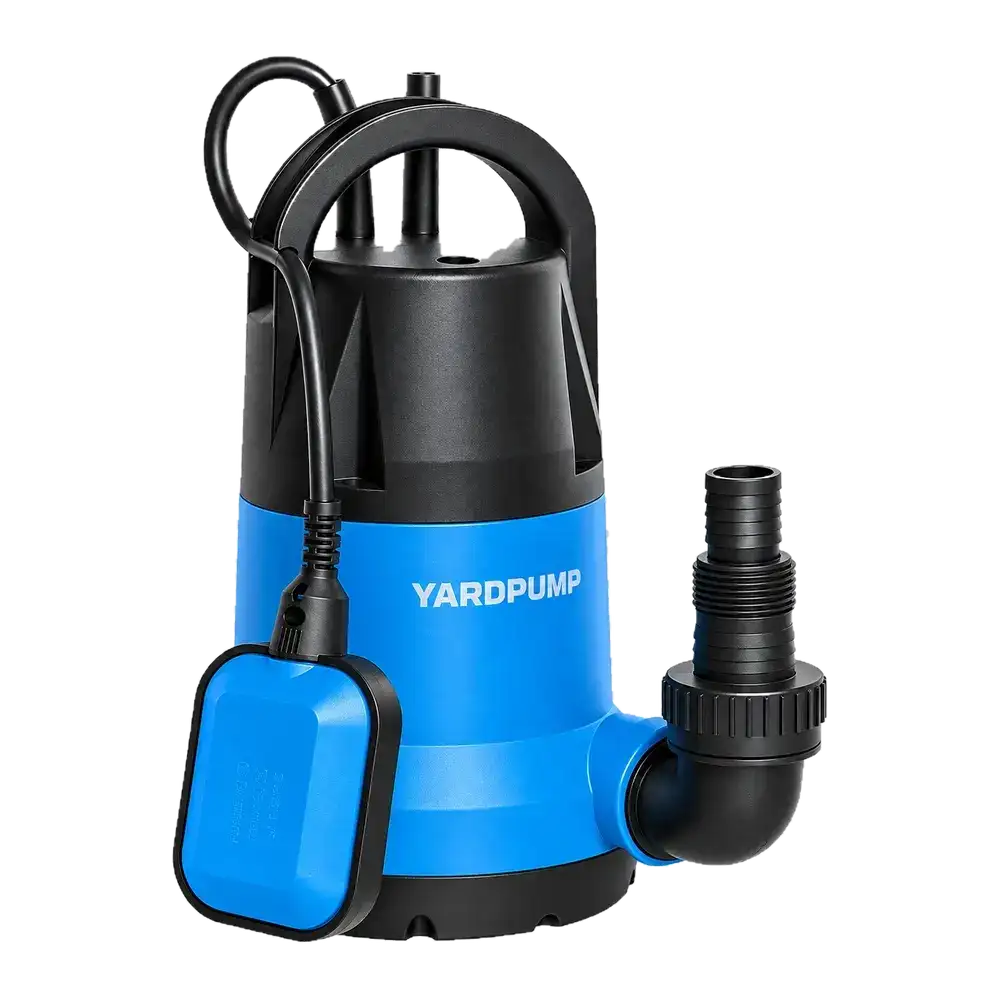
Imagine a portable submersible pump with a layflat discharge hose. During pumping, the hose looks evenly inflated. When the pump stops, most of it slowly relaxes. One section over a wall folds sharply inward and later releases. A layflat hose is designed to flatten when it loses internal pressure. An abrupt inward collapse can also happen when the pressure inside falls below atmospheric pressure. Determine when it happens, where it happens and whether water is still moving before buying a different hose. A high positive pressure rating does not show that a hose can withstand vacuum.
Follow the water after the pump stops
Pump pressure holds layflat hose open during operation. On shutdown, water may keep moving down toward the outlet, drain back toward the pump or be trapped in parts of the line by a check valve or other component. After a high point, a long downward run in a line that remains full can continue pulling water downstream, causing pressure in part of the line to fall below atmospheric pressure. Air entry, separation of the water column and valve timing all affect what follows. A low outlet alone does not prove that a stable siphon has formed.
Consider two illustrative layouts. In the first, the hose settles flat progressively, leaves no new crease and opens normally on the next permitted start. In the second, it folds abruptly at the same high point while the outlet briefly continues discharging. There may also be a sound as air enters. The first pattern fits ordinary loss of pressure. The second warrants investigation for a momentary vacuum. These are clues rather than pressure measurements. Neither is enough to declare a failed check valve or a verified vacuum level.
Document the location, route and timing together
From a dry, safe position, record the hose before and after shutdown. Note the pump model, hose size and length, highest point, outlet level relative to the source water and the check valve arrangement. Distinguish a gradual return to flat from a sudden inward fold. Also look for a spot that is already pinched against an edge before the pump stops. A technician can compare approved hose routes under comparable water levels, outlets and stopping conditions. After the equipment is isolated and trapped pressure has been safely relieved, inspect the hose for whitening, cracking, movement at couplings or permanent distortion. Do not loosen a pressurized connection or reach for a moving hose.
If the route can be changed, start by removing unnecessary high loops and sharp turns and by supporting the crossing. If the route is fixed and pressure may fall below atmospheric pressure, ask the supplier to verify positive operating pressure, allowable vacuum, temperature, bend radius and coupling retention for the exact hose and fitting combination. A hose rated for vacuum can still deform if bent too tightly. Check valve or air inlet changes need qualified review of the entire drainage system. Do not remove the check valve or drill an opening to see whether the symptom goes away.
Know when to stop repeating the test
Ordinary flattening is part of what makes layflat hose easy to store. A deep crease that repeatedly develops at one location, a loose coupling or restricted flow on restart is a drainage problem. An installation with a long elevation drop, permanent plumbing or a shared discharge needs a wider review of the effects of moving water on other equipment. The behaviour of a short portable hose is no design rule for those systems. Give the service team the elapsed time after shutdown, fold location, whether the outlet continued discharging, a sketch of the route and the confirmed ratings for the installed parts. These details help decide whether to reroute the line, test it under controlled conditions or change the hose specification.
Frequently asked questions
Is an empty layflat hose supposed to lie flat?
Yes. Look for a new deep fold, damage or failure to open on the next normal start.
Does a higher positive pressure rating prevent collapse?
It does not establish vacuum resistance. Check the exact hose's allowable conditions for pressure below atmospheric pressure.
Does a low outlet prove the pump line is siphoning?
No. A full line, air entry and valve behaviour matter. Record whether discharge continues and where the hose deforms.