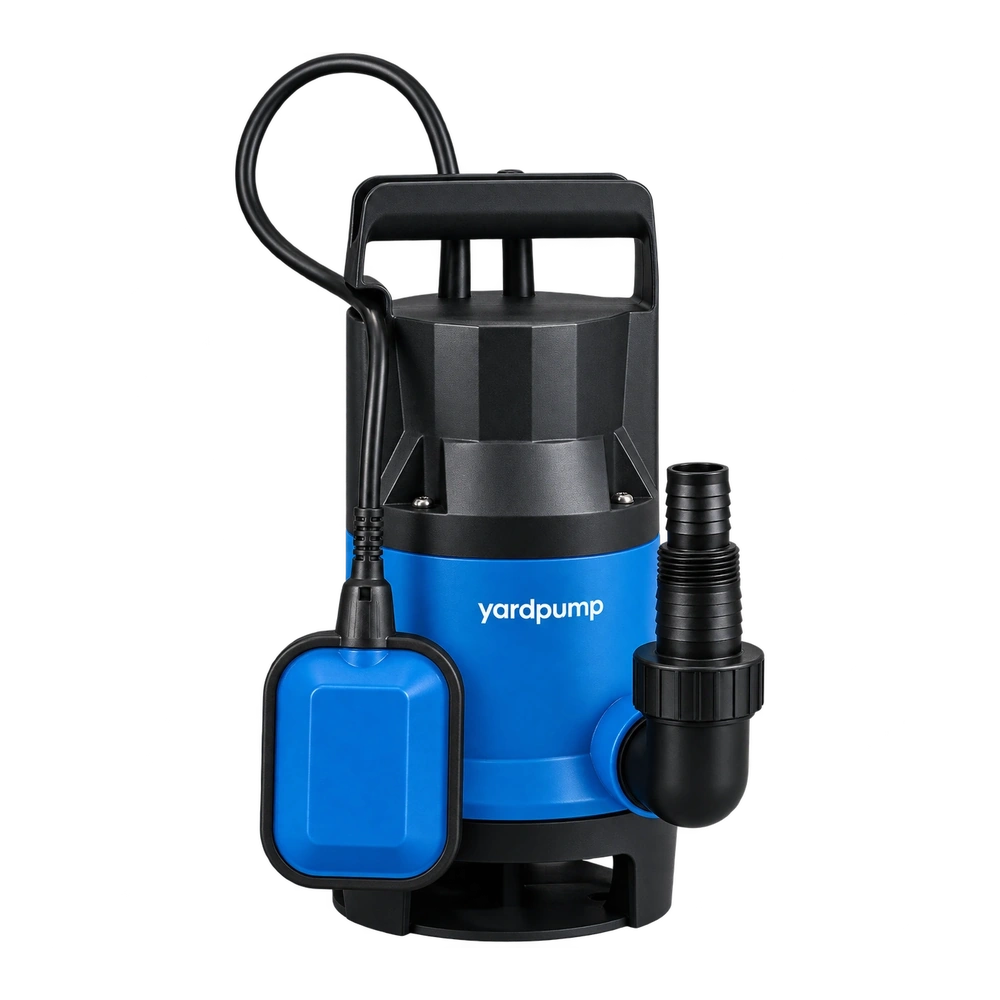
The drainage pump has stopped, yet water continues leaving the hose and the source level keeps falling. In this typical situation, the float may have disconnected the motor correctly. A water-filled hose may be sustaining a siphon. First establish safely that the pump really has stopped, then distinguish continued forward discharge from reverse flow back into the source.
What keeps a siphon moving?
In a common open-source arrangement, an outlet below the source water surface can provide a gravity driving force after shutdown. A sufficiently continuous water column and the absence of an effective air break allow flow to continue. A hose can rise over an intermediate high point and still siphon. Routing it into a high loop does not by itself prevent the mechanism.
A stationary pump’s internal passages may remain open to water. A check valve designed to stop reverse flow may allow a siphon in the normal discharge direction. “Fit a check valve” is therefore not a complete answer. Never disconnect an energised hose to investigate the flow.
Begin with the elevations and direction
For illustration, take the source surface as elevation zero. A hose rises 0.5 metres over a barrel rim and then discharges 1 metre below that source surface. Once the pump fills the hose, the approximately 1-metre difference between source and outlet may sustain flow after the motor stops. Actual flow depends on resistance and air entry.
This example does not establish that every pump will siphon, and it excludes other boundaries such as pressurised vessels or submerged receiving outlets. Its purpose is to show why the highest hose point is not the only elevation that matters.
| Observation after shutdown | Initial direction | Useful check |
|---|---|---|
| Sustained forward discharge | Siphon or another external pressure difference | Outlet relative to source surface |
| Water returns to the pit | Reverse flow | Valve closure and retained pipe water |
| A small volume exits, then stops | Pipe drainage | Final source level |
| Repeated pump starts | Level, control or backflow interaction | Actual motor state, not sound alone |
Investigate without creating another hazard
Isolate electrical power before handling equipment. Record the source surface, highest pipe point and discharge location, including whether the destination can flood or impose backpressure. If the electrical condition is uncertain or equipment has been flooded, a qualified person must make it safe before anyone approaches it through water.
On an approved controlled test arrangement, changing the discharge boundary or admitting air by the manufacturer’s permitted method can help identify a siphon. Do not drill an arbitrary hole in the pump casing or a pressure-containing hose. A diagnostic alteration must not become an unreviewed permanent modification.
Observe the final source level. A siphon may drain below the float’s intended stop level, affecting the next start, retained water or another application requirement. A level switch can disconnect the motor without stopping gravity-driven flow.
Select prevention for the complete installation
Suitable arrangements may involve an air gap, an approved anti-siphon device or a revised discharge route. Each requires assessment of pressure, elevation, water quality, blockage risk and capacity. Applicable separation and backflow requirements should be confirmed by a qualified designer or installer. One suggested hole size cannot safely be copied across unrelated pump models.
Where the intended system requires sealed pipework or a submerged outlet, reassess the complete hydraulic boundary. Small air passages may become obstructed by silt, algae or fibres, so maintenance access matters. Acceptance should cover normal starting, normal stopping, loss of power and changing source levels, with the final retained level recorded.
For a service complaint, request an elevation drawing and photographs of the installed hose. A short video of continuing discharge does not show whether the motor is running or whether gravity is driving water through a stationary pump. Establishing that distinction prevents unnecessary replacement of a float or complete unit.
The receiving location must safely accept the water. Raising an outlet to change siphon behaviour is not useful if overflow returns toward electrical equipment. After rerouting, verify running capacity and outlet restraint as well as shutdown flow. A simple elevation line in the service record is more actionable than an unexplained instruction to replace a valve.
Frequently asked questions
Can a hose siphon over a high loop?
Yes, under suitable pressure and water-column conditions. The loop itself is not a reliable air break.
Does an outlet above the source prevent every drop after shutdown?
No. Retained pipe water may drain, or another pressure source may act. Distinguish a finite discharge from continued extraction.
Will a larger float prevent siphoning?
No. A float changes motor switching. Siphoning concerns the remaining hydraulic driving force after the motor stops.