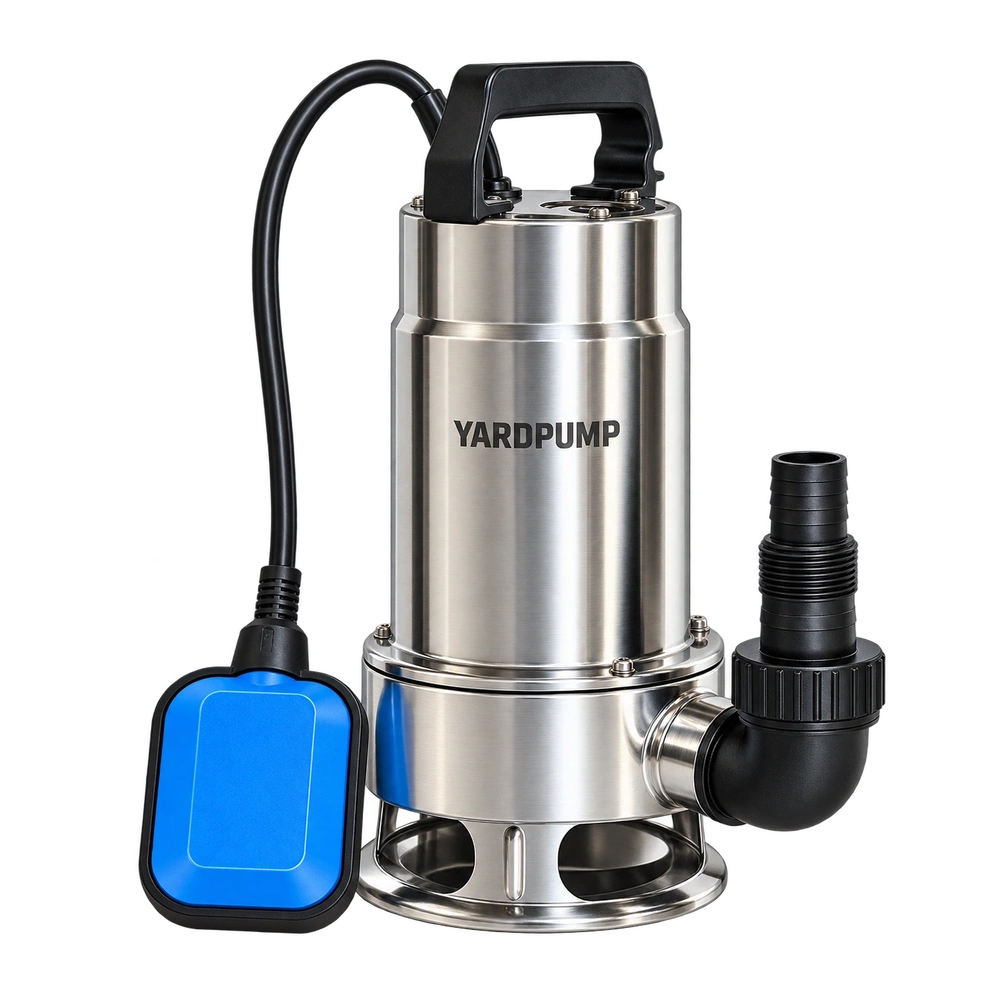
A garden drainage pump starts with a steady stream. After the discharge hose sits in the sun, the stream weakens and a bend over a step looks flatter than it did at startup. Start by checking whether the hose can hold its cross section at that temperature and with that support. Warming can change stiffness and allowable pressure. A hanging, tightly bent or pinched section can then narrow. The timing alone does not tell you whether the hose, inlet, falling water level or pump changed.
Inspect the bend while it is doing the work
A straight section can look full while the bend restricts flow. A flexible hose may look round when laid out and develop a crease at an edge after it is carrying water and has warmed. Material, reinforcement, internal pressure, bend radius, actual temperature and external load all influence its shape. Hoses with the same nominal diameter can have different allowable working pressures, temperatures and routing conditions. Check which temperature and product the pressure rating applies to rather than assuming a room temperature rating applies in direct sun.
A narrower bend adds local loss. With the same pump and elevation, the extra resistance can shift the duty point to a lower flow. For illustration, say the rate falls from 20 to 15 litres per minute with the same water level, outlet elevation and fittings, and the bend visibly flattens. That combination warrants investigation. The numbers do not identify a bend angle or a temperature limit for other hoses. If water level has also fallen or the intake is admitting air, there is more than one variable in the comparison.
Observe from a safe position before changing anything
When the line is properly installed and shows no abnormal bulge, displaced fitting or leak, take pictures of the bend in the cooler and warmer conditions from a safe location. Record the outlet, water level, flow, weather and temperature information that can be obtained safely. Use a similar angle so perspective does not make a round pipe look flat. Shut down and isolate under the equipment procedure if there is a spray leak, distortion or a loose connection. Do not straighten a pressurised hose by hand or move the pump or support while water is running.
After shutdown, electrical isolation and pressure relief as instructed, change one condition within the approved setup. Support the bend on a stable surface, use a gentler route or compare with a suitable approved hose. Keep outlet elevation, length, actual bore and fittings as consistent as possible. Repeated recovery with the bend held open is useful evidence for a routing restriction. If the replacement also has a larger bore, shorter run or lower outlet, it may be a better setup, but the comparison does not isolate heat softening in the old hose.
Make the result useful for buying and service
A dealer specifying a discharge hose should check its service, temperature, working pressure, bend and support needs and the suitability of the fittings and clamps. For a route exposed to sun or crossing a step, validate a sample on the intended arrangement rather than judging the coil in a warehouse. If the supported or replacement hose still delivers poorly, check water level, intake, restricted fittings and the pump operating point in turn. When falling flow is accompanied by overheating or operation of a protection device, do not keep running the pump to collect data. Refer it to qualified service.
Frequently asked questions
Does a warm crease mean the whole hose should be scrapped?
Isolate and inspect it under the approved procedure. Permanent damage, leaks or operation outside its limits need action. A support or routing issue may be corrected with a suitable installation.
Can a stronger pump force the bend open?
Do not treat pressure as the fix. Correct the routing or use a suitable hose within the limits of the pump, hose and fittings.
Does recovery in shade prove temperature was the only cause?
No. Keep level, route and fittings the same and record shape and temperature to see whether warming and support act together.