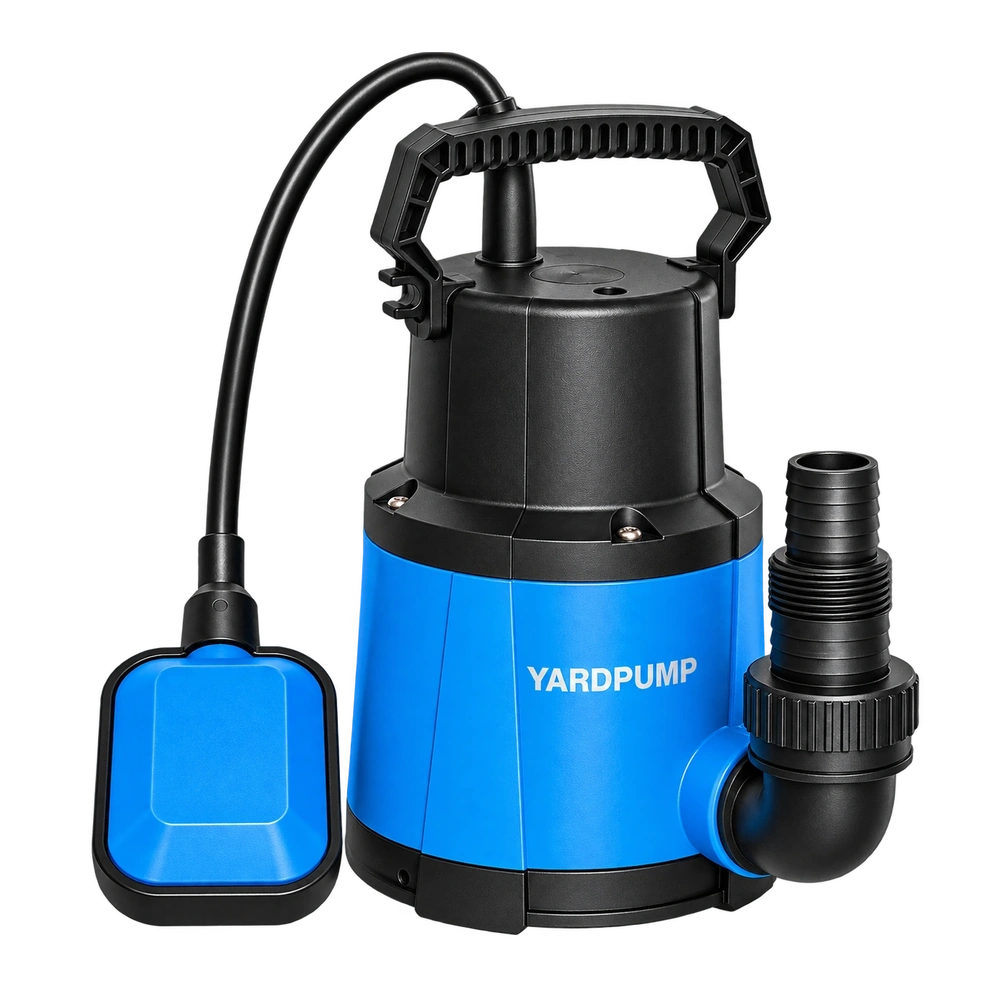
A dirty water pump sends water up over a pit rim and down a sloping line to a lower outlet. At shutdown, the gauge drops and then the pipe bangs. Is a heavier check valve the answer? Hold off ordering parts. A check valve can slam, but moving water in the downhill leg still has momentum when the pump stops. Local pressure can fall first. A later collision of water columns or compression of trapped air can produce another shock. The sound alone cannot establish which event came first.
Map the elevations, valve and pressure point together
Mark the source water level, check valve, high point, downhill leg, outlet arrangement and the point where pressure was measured. A positive reading at a low point says little about conditions at a crest. After shutdown, some water can keep moving downhill. If the upstream side cannot make up that movement, the local absolute pressure may fall. Near the liquid's vapour pressure at the relevant temperature, a vapour cavity can form and separate the water columns. When the cavity shrinks and the columns rejoin, pressure can rebound sharply. Existing air pockets or air admitted from outside can also compress or move. Not every low pressure pulse indicates a vapour cavity.
For illustration, if local atmospheric pressure is 100 kPa and the gauge momentarily shows minus 30 kPa, absolute pressure at that point is about 70 kPa. A negative gauge reading does not prove vaporisation. The liquid temperature, sensor position, installation and response time all matter. A slow instrument may miss the lowest pressure. Those values explain the difference between gauge and absolute pressure; they are not pipe design thresholds.
Keep timing evidence without changing the system
From a safe location, note when the pump stops or loses power, whether water continues out of the pipe, when the valve sound and pipe movement occur, and whether the symptom is limited to certain water levels or outlet arrangements. An impact at the valve followed by upstream movement can point to valve closure. A pressure dip followed by a delayed impact is a reason to have a specialist consider the crest and downhill leg. Both events can happen in one stop. A mechanical gauge may be useful for steady readings; measuring fast transients may require appropriate sensors and synchronised timing selected by qualified personnel.
Repeated impacts, visible hose distortion, displaced fittings or leaks warrant shutdown and isolation under the site procedure. Do not block the outlet, force repeated stops or add a valve to provoke a reading. An ordinary stop and a power failure can have different closure timing, pump deceleration and changes in flow. A specialist may need to evaluate both conditions.
Give the engineer enough information to evaluate the line
Provide the actual internal diameter, length, elevations, pipe material and supports, valve type and position, whether the outlet is submerged and the operating condition before the stop. Ask for both the peak positive pressure and the minimum absolute pressure to be considered. Pipe, fittings and accessories have limits under positive and negative transient pressure. The responsible designer should evaluate any valve, routing or air management change as part of the complete system, including dirty water clogging and service access. Maximum pump head and a steady pressure curve cannot establish transient safety.
If the only symptom is smooth continued flow after shutdown, the useful lead may be siphoning. If there is only a brief impact next to the valve, valve orientation and pipe support are sensible early checks. Keep both observations distinct from a recorded dip followed by a rebound so service staff can decide whether to inspect hardware or request a transient review.
Frequently asked questions
Does negative gauge pressure mean the water vaporised?
No. Compare absolute pressure with the liquid temperature and take measurement location and instrument response into account.
Can check valve slam and column separation both affect one stop?
Yes. Valve movement, water momentum and local pressure can interact. The sequence of events matters.
Will shortening the hose eliminate the shock?
Not necessarily. Elevation, outlet condition, valve response and pipe material also affect the transient.