An OEM buyer wants more flow from a compact centrifugal pump and proposes enlarging the opening at the impeller centre. Will a larger eye solve the problem? Only if the complete inlet and impeller design supports that change. Eye diameter is one geometric variable; it cannot independently set flow or justify cutting material from an existing impeller.
Define the dimension being changed
The impeller eye is the inlet region through which liquid enters the rotating passages. It is different from outside diameter and discharge passage width. Identify the shroud, hub, vane leading edges and inlet opening on the same section drawing. An overall hole diameter can conceal the area occupied by a hub or other features.
For an illustrative geometric comparison, the free area of an annular opening is related to the difference between the outer and hub areas. Enlarging its outside boundary changes that area, but not necessarily the controlling passage farther into the impeller. The calculation describes available geometry, not the new pump curve.
Entry conditions matter as much as area
Liquid approaches the vane leading edges with a particular velocity and direction. Geometry that matches one flow can behave differently at another. Changing the eye can alter entry conditions and internal recirculation, so the improvement at one point cannot be assumed across the operating range.
A restricted strainer, unsuitable intake clearance or poor inflow may also be the real limitation. Enlarging the impeller eye cannot cure an external obstruction or supply missing water. Likewise, larger free area does not automatically establish greater solids capacity: the narrowest downstream passage and the nature of the debris still matter.
Protect strength, clearances and matching
Material removed near a hub or vane root can affect mechanical support. In a moulded plastic impeller, thickness, fibre distribution and manufacturing geometry form part of the design. A hand-machined opening is not automatically equivalent to a newly designed moulded part. Inspect fit, balance and minimum relevant clearances after any approved change.
The casing inlet and impeller should be reviewed together. A mismatch can introduce steps or leakage paths, while altered axial position can create rubbing or change the effective opening. Do not borrow a diameter from a different pump because the outside impeller dimensions look similar.
Validate a proposed design, not an area ratio
Start with the actual required flow and total head. Record the baseline curve, input power, speed and relevant operating behaviour. Test the candidate at multiple points under matched conditions, including the intended duty and applicable limits. Assess starting, cooling, vibration and intake stability where the change can affect them.
For example, a candidate that gains flow at low head but loses useful delivery at the required lift may not improve the customer's task. Lower input power after the change is also insufficient evidence unless the delivered work and thermal results are assessed. Do not apply a simple eye-diameter ratio as if it were an established pump affinity law.
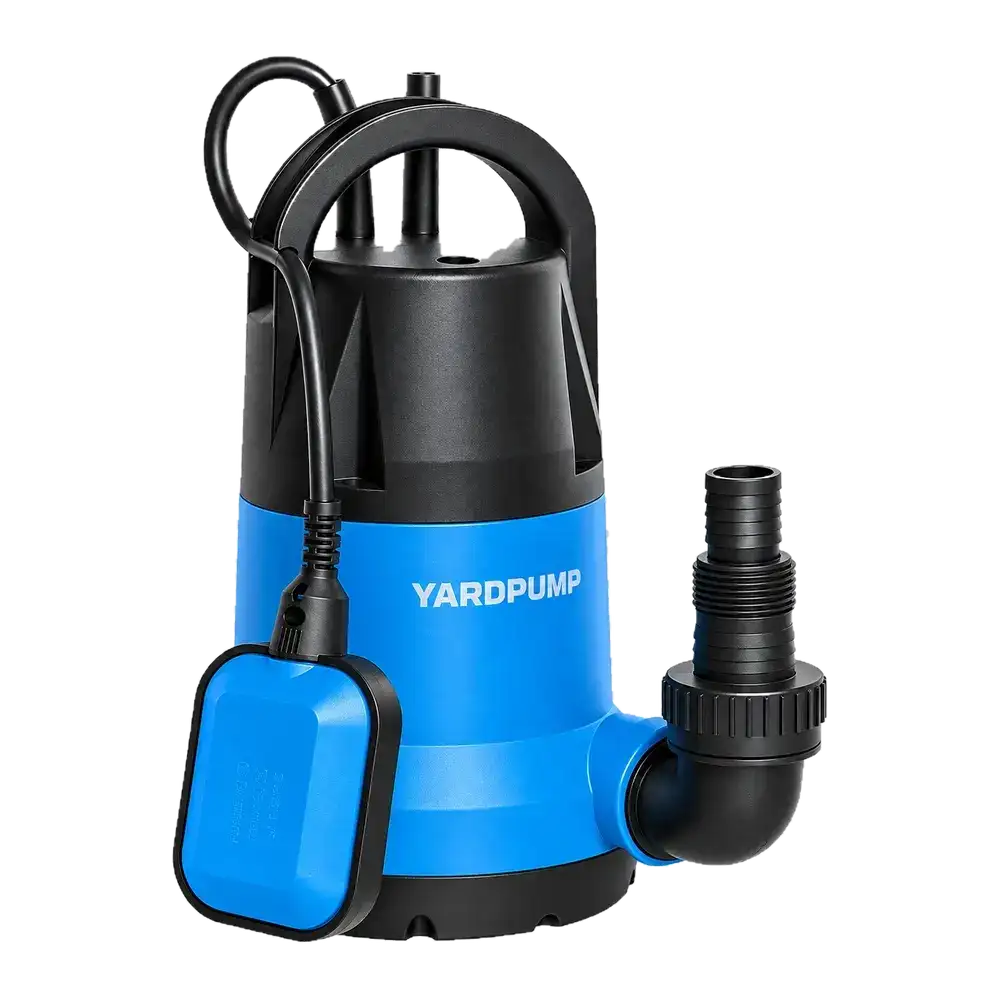
For YARDPUMP small clean-water or clean-and-dirty-water development, use the approved drawing, materials and model-specific verification. This is an engineering-change decision, not a user modification. The useful result identifies whether the inlet was actually limiting performance and whether the revised complete hydraulic assembly meets the duty without sacrificing mechanical or operating margins.
The inlet drawing should state the measurement plane as well as the nominal diameter. A chamfered mouth can look larger while the controlling section farther inside remains unchanged. Comparing photographs or caliper readings at different planes can therefore create a fictitious design improvement. Record the full section and the relevant free passage, so the trial and production inspection evaluate the same geometry.
Frequently asked questions
Is eye diameter the same as impeller outside diameter?
No. They refer to different regions and affect the hydraulic design differently.
Does more eye area guarantee more flow?
No. Vane entry, downstream passages, casing and system resistance still determine the operating point.
Can a buyer ask a workshop to enlarge the existing opening?
Only through a supported engineering change with the required design and testing. Do not treat uncontrolled cutting as an approved performance upgrade.