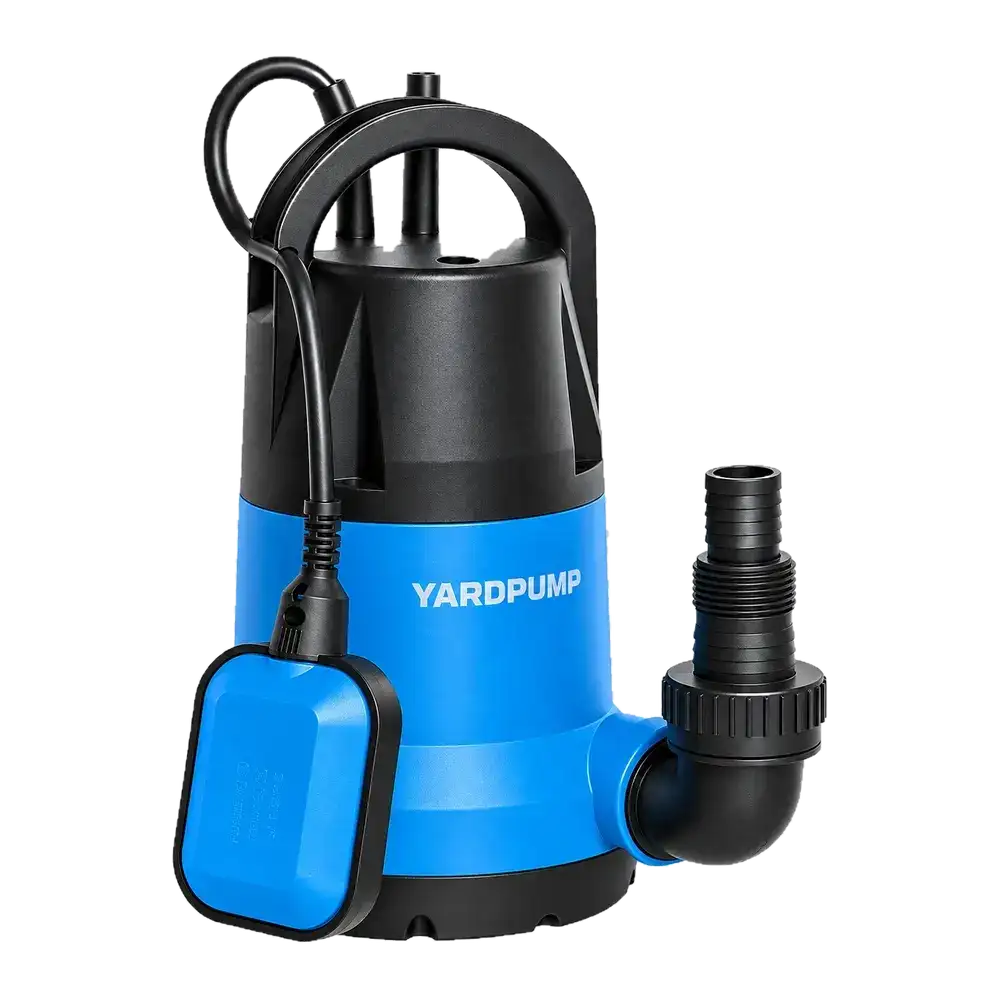
Reducing screen holes from eight millimetres to three may appear to protect the impeller, yet the pump can lose flow sooner. Screen behaviour depends on hole shape, total open area, inlet velocity, debris form and cleanability. Comparing one hole diameter ignores how much effective area remains after partial blockage.
What drives the result
Within the same outer envelope, smaller openings or heavier ribs reduce net open area. At a fixed pump flow, lower area raises average approach velocity and makes leaves and fibres adhere more strongly. Once some openings close, velocity through the remainder increases and blockage accelerates. Screen loss moves the operating point to lower flow and, in severe cases, contributes to air ingestion, noise and reduced cooling.
An illustrative way to check
A screen whose initial open area is several times the internal passage may remain stable after half is obscured. A screen only slightly larger than the inlet can develop substantial loss from a few leaves. Compare net open area and record flow over time with representative debris rather than relying only on a spherical-particle passage test.
A sound investigation of pump inlet screen open area separates hydraulic, motor, structural and installation observations before connecting them. Replacing the first damaged part may restore operation temporarily while leaving the initiating cause untouched. Start with safe isolation and stated operating limits, preserve the original condition, examine the installation and liquid, and only then dismantle internal components. Comparison units must use the same voltage, frequency, piping, water level and running time; otherwise differences in current, temperature or sound have little diagnostic value.
Actions for the site or purchasing team
- Calculate net open area from the developed geometry after ribs, screws and structural shadows are deducted.
- Evaluate round particles, flat leaves, film and long fibres as separate blockage modes.
- Measure flow, power and noise when clean, partly blocked and at the defined maintenance limit.
- Make the screen easy to remove and reinstall correctly without exposure to live parts.
- After changing openings, revalidate housing strength, finger protection and complete hydraulic performance.
Limits and application boundary
The screen can be a mechanical safety barrier. Openings must not be enlarged solely for flow; dimensions follow risk assessment and applicable requirements.
Frequently asked questions
Are smaller holes always better filtration? No. They can reduce open area and accelerate surface blockage.
Does particle passage prove leaves will not block the screen? No. Flat and fibrous debris can bridge many openings.
Is a clean-screen flow test sufficient? No. Evaluate partial blockage and the defined maintenance limit.
Related reading
Rated to Pass Particles but Still Blocking? Sand, Fibres and Sludge Behave Differently
Rain Barrel Filters and Pump Inlets: How to Reduce Clogging Without Restricting Flow