A service order specifies the same shaft diameter and seal height, but the replacement spring winds the opposite way. Can it be fitted? First establish whether the spring only supplies axial loading or also transmits torque to the rotating face. Some conical-spring-driven seals depend on shaft direction, while other arrangements are direction-independent. Matching dimensions or compressibility alone does not establish interchangeability. Spring winding also cannot establish whether the complete pump may run in reverse.
A spring may have two functions
Mechanical seal faces need suitable loading and lubrication. A spring commonly provides axial compensation, but the rotating ring must also receive torque from the shaft. Depending on the design, a pin, drive ring or another feature provides that path. In some conical-spring arrangements the spring participates in transmission, so winding and rotation affect its grip. It is incorrect to classify every single-spring seal as the same construction.
This is different from the small garter spring around a radial lip seal. Distinguish spring winding, the seal's permitted rotation and the observed shaft direction. Calling all three a left-hand seal can leave buyer and supplier discussing different properties. Use the section or assembly drawing to identify the transmission path before choosing a directional spare.
State the viewing end before ordering
The same shaft appears to rotate in opposite directions when viewed from opposite ends. Mark the observation position on the enquiry drawing: for example, looking from the motor toward the wet end, or from the impeller toward the motor. Ask the supplier to place the rotation arrow in that same view. This is not a universal choice of viewing end for every pump; consistency between order, drawing and service record is the requirement.
Next reconcile the complete seal part number, shaft size, installed working length, face pair, secondary-seal compound, drive method and directional requirement. Even a proposed direction-independent replacement needs compatible operating conditions and assembly dimensions. Direction independence is one property. It does not establish universal fit, equivalent face materials, spring loading or sufficient chamber space.
Example: two clockwise notes can disagree
Consider an illustrative document check. A service photograph is taken from the impeller end and labelled clockwise, while the supplier catalogue defines rotation from the drive end. Ordering directly from those words can produce opposing arrows. Resolve the view first, then identify the required seal construction from the approved drawing. This example demonstrates an information error; it is not a method of identifying parts by trial reverse operation.
| Apparent match | Remaining check | Acceptance implication |
|---|---|---|
| Same shaft size and overall height | Working length, faces and drive interfaces | Dimensions alone are insufficient |
| Same spring diameter and winding | Complete seal direction and loading | Part-number or substitution approval remains necessary |
| Direction-independent catalogue description | Materials, space, lubrication and assembly requirements | Does not establish a universal spare |
Separate repair from a rotation change
Hold an unidentified spare until the pump or seal supplier reconciles it with the original BOM. Do not stretch, rewind or shorten a spring to change its apparent direction, or mix loose new and used seal elements. Isolate power before service and use qualified personnel following the approved procedure. A user must not open a sealed motor in a wet location or alter electrical wiring to investigate the spring.
If engineering genuinely changes shaft rotation, review the impeller, retention hardware, seal drive, cooling and control configuration together. An accepted seal substitution also needs the specified static and dynamic leakage, operating and relevant safety verification. A static dry result does not prove transmission compatibility through starting, running and stopping. Set test conditions and limits for the actual construction and application rather than copying a different seal's rating.
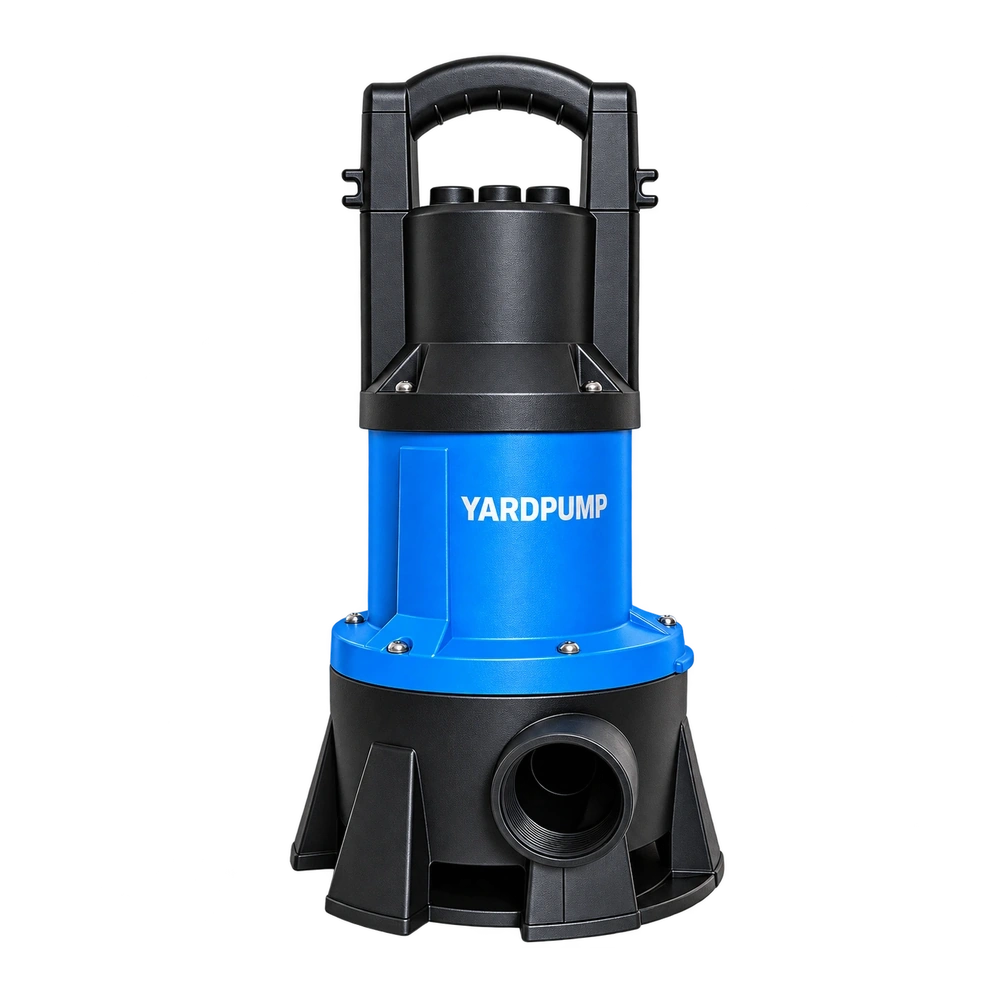
For compact dirty-water pump sourcing, a clear part-number and rotation drawing is more useful than a bag of same-size universal springs. It supports retaining the original specification, ordering a complete approved seal or referring a rotation change to engineering. No directional seal construction is implied for any YARDPUMP model here; the exact version's approved information determines that question.
Frequently asked questions
Are all single-spring seals direction-dependent?
No. The spring's role in torque transmission and the exact seal design determine the requirement, not spring count alone.
Does a direction-independent seal allow the pump to run backward?
No. Impeller hydraulics, retention hardware and other components may still restrict rotation. The complete change needs its own assessment.
Can a distorted old spring be copied for replacement?
Retain it as failure evidence, but obtain dimensions and direction from the original drawing or approved part number rather than copying the damaged shape.