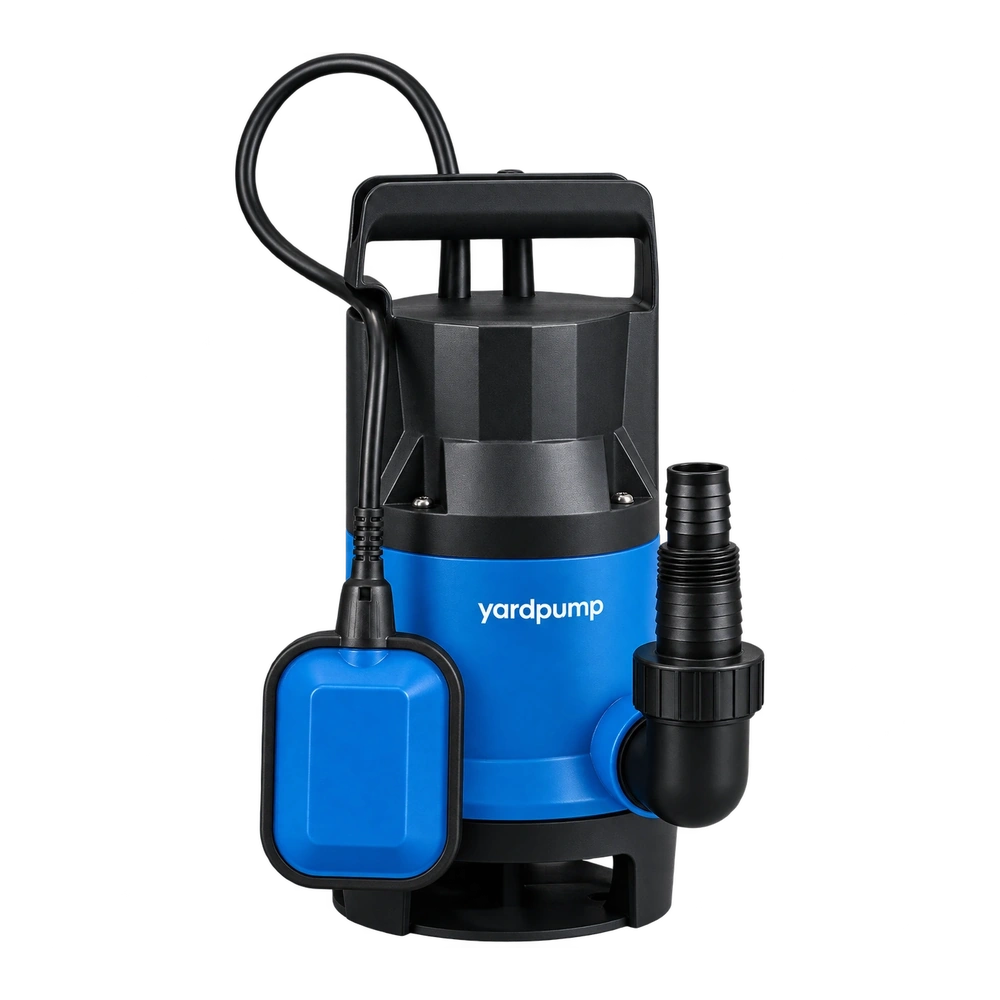
Imagine a pump bench that holds the same flow and head while a technician changes the facility’s power factor correction. The incoming current falls, but the pump’s measured real input changes very little. That does not show that a larger run capacitor would improve the motor. A run capacitor is part of a specified motor circuit. A correction capacitor, where the system is designed for one, changes what the supply must carry. The two devices have different jobs even if both labels show capacitance in microfarads.
Read the circuit before reading the amp display
In a permanent split capacitor motor, the run capacitor works with an auxiliary winding to produce a phase difference between currents. The designer balances starting and running behavior, winding current, heating and capacitor duty. A different capacitance can change the auxiliary current and torque characteristics. Moving a power factor number toward one at the panel does not establish that a motor winding has a suitable current or temperature.
Supply-side correction can provide part of the reactive current locally. When the load and voltage remain comparable, current upstream of that point may fall while the current in the pump branch changes little. The lower current can reduce losses in some upstream conductors or release capacity. It is not proof of reduced copper loss inside the motor or less real electrical energy at the pump. A panel meter reading depends on where it sits in relation to the pump and the correction equipment.
Compare watts at the same duty point
Take a simplified single-phase sinusoidal example. The load draws 600 watts at 230 volts with a power factor of 0.65. The current at the selected supply measurement point is about 4.0 amperes. If effective compensation raises the power factor at that point to 0.95, with real power and voltage unchanged, current is about 2.75 amperes. The assumed 600 watts did not change. These numbers illustrate the relationship between real power, voltage, current and power factor; they do not specify compensation for a real pump or a capacitor size.
Put the measuring points on the drawing. Use a suitable power instrument to record real power, voltage, current and power factor at a clearly identified point. Capture flow, head and speed for the same stabilized interval. If the supply-side reading drops but the branch real power, duty and temperature are unchanged, the improvement is on the supply side. If a vendor proposes changing the motor’s run capacitor, ask for evidence on the actual motor configuration: auxiliary and main winding behavior, starting, hot operation, and model-specific acceptance limits. A single amp reading cannot replace that test.
Keep the approval boundary clear
Electrical systems with non-sinusoidal current, switched loads or drives require attention to actual power factor and the measuring instrument’s method. A capacitor selected only from a target power factor can interact with harmonics, switching and protection. Design and testing belong to qualified staff. Isolate the equipment and follow the approved procedure for stored energy before a circuit or capacitor is touched. Do not add a line capacitor to a pump or swap its internal capacitor as an informal field experiment.
For procurement, distinguish three questions: did the system’s upstream current fall, did the pump’s own real energy use change, and did the approved motor configuration change? Each has its own evidence. When the required flow and head are fixed, the buyer can compare energy using real input over the same work, and record upstream capacity benefits separately.
Frequently asked questions
Can I identify a run capacitor by its microfarad value alone?
No. Confirm its circuit function, construction, voltage and duty from the motor documentation and approved part details.
Does lower current always mean lower energy use?
No. Voltage, power factor, duration and measurement location can change. Compare real power or measured energy at the same duty.
Does line correction make every motor start better?
No. It is a supply-system design decision. Motor starting depends on the motor circuit, load, protection and voltage during the start.